
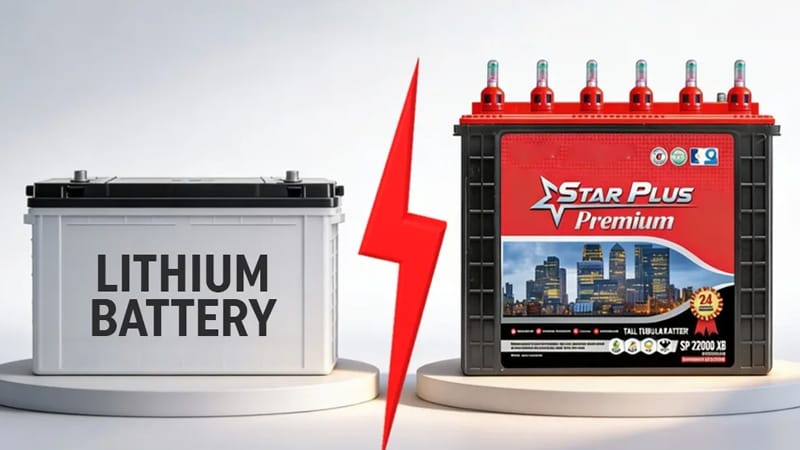
Power backup systems have become one of the most important parts of modern infrastructure. Manufacturing industries, offices, homes, hospitals, telecom systems, commercial buildings, solar projects, automation systems, and digital infrastructure environments all depend on reliable battery backup systems for uninterrupted operational continuity.
Frequent power interruption, unstable voltage conditions, increasing energy demand, and infrastructure expansion are pushing businesses and consumers to invest in better energy storage solutions.
When selecting a battery backup system, one of the most common questions people ask is:
“Which battery is better — tall tubular battery or lithium battery?”
This comparison has become increasingly important because both battery technologies are widely used in:
- Inverter systems
- Solar applications
- Industrial backup infrastructure
- Telecom systems
- Commercial backup environments
- Online ups systems
- Residential backup systems
Both battery types have different advantages, operational behavior, maintenance requirements, charging characteristics, and long-term infrastructure benefits.
Selecting the right battery depends on:
✔ Backup duration requirement
✔ Operational conditions
✔ Charging requirements
✔ Budget planning
✔ Maintenance expectations
✔ Installation space
✔ Long-term operational goals
Understanding the practical difference between tall tubular batteries and lithium batteries helps industries and businesses choose reliable backup infrastructure for uninterrupted operational continuity.
Tall Tubular Battery vs Lithium Battery
Tall tubular batteries are commonly preferred for cost-effective long backup applications and traditional inverter systems.
Lithium batteries are preferred for fast charging, compact installation, low maintenance, high efficiency, and advanced backup infrastructure environments.
The best battery depends on operational requirements, budget, runtime expectations, and future infrastructure planning.
What Is a Tall Tubular Battery?
A tall tubular battery is a lead-acid battery commonly used in inverter systems, industrial backup applications, commercial infrastructure, and residential power backup environments.
These batteries are designed for:
✔ Long backup duration
✔ Deep discharge operation
✔ Frequent power interruption conditions
✔ Continuous inverter applications
Tall tubular batteries are widely used across India because they provide reliable long-duration backup support for inverter systems.
What Is a Lithium Battery?
Lithium batteries are advanced energy storage systems designed for modern backup infrastructure and intelligent power management applications.
Lithium battery systems are widely used in:
- Solar energy storage
- Telecom infrastructure
- Data centers
- Industrial backup systems
- Electric vehicles
- Smart inverter systems
- Commercial power backup infrastructure
Lithium battery technology is becoming increasingly popular because of its compact design, fast charging capability, and low maintenance requirements.
Why Do People Compare Tall Tubular and Lithium Batteries?
Both battery technologies are commonly used for power backup systems.
However, users compare these batteries because they want to understand:
- Which battery lasts longer
- Which battery charges faster
- Which battery requires less maintenance
- Which battery is better for solar systems
- Which battery is better for inverter systems
- Which battery provides better long-term value
The comparison is important because battery infrastructure directly affects operational continuity and backup reliability.
Which Battery Is Better for Home Inverter Systems?
Tall tubular batteries are commonly preferred for long backup inverter applications and cost-sensitive residential environments.
Lithium batteries are preferred for:
- Compact installation
- Fast charging
- Smart inverter systems
- Low-maintenance infrastructure
The best battery depends on backup duration, installation conditions, operational usage, and long-term expectations.
Which Battery Provides Longer Backup Time?
Tall tubular batteries are commonly preferred for long backup applications because they are designed for deep discharge operation and extended runtime conditions.
Lithium batteries also provide reliable backup continuity but are commonly preferred for efficient energy management and compact infrastructure environments.
Backup duration depends on:
- Battery capacity
- Load conditions
- Inverter efficiency
- Infrastructure design
Which Battery Charges Faster?
Lithium batteries charge significantly faster compared to tall tubular batteries.
Fast charging capability is one of the biggest advantages of lithium battery systems.
This improves:
✔ Backup readiness
✔ Operational continuity
✔ Energy efficiency
✔ Solar charging performance
Industries and commercial environments requiring fast backup recovery commonly prefer lithium battery systems.
Which Battery Requires Less Maintenance?
Lithium batteries require very low maintenance compared to tall tubular batteries.
Tall tubular batteries generally require:
- Water level monitoring
- Terminal inspection
- Preventive cleaning
- Ventilation monitoring
Lithium batteries commonly operate with minimal maintenance requirements.
This makes lithium battery infrastructure attractive for modern commercial and industrial environments.
Why Do Many Inverter Systems Still Use Tall Tubular Batteries?
Many homes and commercial environments continue using tall tubular batteries because they provide:
✔ Reliable long backup support
✔ Lower initial investment
✔ Strong inverter compatibility
✔ Cost-effective infrastructure
Tall tubular batteries remain one of the most common inverter battery systems across India.
Why Are Lithium Batteries Becoming More Popular?
Modern infrastructure increasingly prefers lithium batteries because they provide:
✔ Fast charging
✔ Compact infrastructure
✔ Low maintenance
✔ High operational efficiency
✔ Smart battery management
✔ Better energy density
Lithium batteries are becoming increasingly common in:
- Data centers
- Telecom systems
- Solar applications
- Smart buildings
- Enterprise infrastructure
- Industrial backup environments
Which Battery Lasts Longer?
Lithium batteries generally provide longer operational life compared to conventional tall tubular battery systems under proper operational conditions.
Lithium batteries are designed for higher charge-discharge cycle performance and intelligent energy management.
However, battery life also depends on:
- Charging conditions
- Temperature
- Operational load
- Maintenance quality
- Infrastructure design
Why Is Battery Efficiency Important?
Battery efficiency affects:
- Charging speed
- Backup performance
- Energy optimization
- Operational continuity
Higher efficiency helps industries improve long-term energy management and operational reliability.
Lithium batteries generally provide higher charging and discharging efficiency compared to traditional lead-acid battery systems.
Which Battery Is More Energy Efficient?
Lithium batteries commonly provide higher energy efficiency compared to tall tubular batteries.
Higher efficiency helps improve:
✔ Backup performance
✔ Charging efficiency
✔ Operational continuity
✔ Energy optimization
Efficient battery systems help reduce long-term operational losses significantly.
Why Is Battery Weight Important?
Battery infrastructure weight becomes important for:
- Telecom systems
- Commercial buildings
- Portable backup systems
- Compact electrical rooms
- Data center infrastructure
Lithium batteries are significantly lighter and more compact compared to tall tubular batteries.
This improves installation flexibility and infrastructure optimization.
Why Is Battery Space Requirement Important?
Modern infrastructure environments often require compact electrical systems.
Lithium batteries occupy less installation space compared to tall tubular batteries for similar operational capacity.
Compact infrastructure helps improve:
✔ Installation flexibility
✔ Space optimization
✔ Infrastructure planning
✔ Electrical room efficiency
Which Battery Is Better for Solar Systems?
Both battery technologies are used in solar applications.
Tall tubular batteries are commonly used in traditional solar inverter systems because they provide cost-effective long backup support.
Lithium batteries are increasingly preferred for modern solar infrastructure because they provide:
- Fast charging
- Better efficiency
- Smart energy management
- Compact installation
- Intelligent battery monitoring
Modern solar infrastructure increasingly integrates lithium battery systems.
Why Are Lithium Batteries Used in Modern Solar Infrastructure?
Modern solar systems increasingly prefer lithium battery systems because they support:
✔ Faster solar charging
✔ Better energy storage efficiency
✔ Reduced maintenance
✔ Smart energy optimization
✔ Compact infrastructure
Lithium battery systems are becoming increasingly common in advanced rooftop solar and commercial solar infrastructure.
Why Do Telecom Towers Prefer Lithium Batteries?
Telecom infrastructure environments require:
- Reliable backup continuity
- Fast charging capability
- Compact installation
- Reduced maintenance
- Long operational efficiency
Lithium battery systems support these operational requirements effectively.
This is one reason telecom infrastructure increasingly uses lithium battery technology.
Why Do Data Centers Prefer Lithium Battery Infrastructure?
Data centers require:
- Compact infrastructure
- Fast charging capability
- Reduced maintenance
- High operational efficiency
- Reliable backup continuity
Lithium batteries help enterprise infrastructure improve operational continuity and energy efficiency significantly.
Why Is Battery Safety Important?
Battery systems continuously operate under charging and discharging conditions.
Reliable battery safety helps improve:
✔ Operational reliability
✔ Infrastructure protection
✔ Electrical safety
✔ Backup continuity
Modern battery infrastructure increasingly includes intelligent safety management systems.
Why Is Battery Compatibility Important for Inverter Systems?
Battery systems must match inverter specifications properly for reliable operation.
Improper battery compatibility may affect:
- Charging performance
- Backup continuity
- Operational efficiency
- Battery operational life
Proper battery selection improves inverter reliability significantly.
Why Are Modern Industries Moving Toward Smart Battery Infrastructure?
Modern industries increasingly use intelligent battery infrastructure for:
- Remote monitoring
- Predictive maintenance
- Smart charging
- Energy optimization
- Operational analytics
Lithium battery systems commonly support advanced battery management technologies.
Why Is Long-Term Battery Value More Important Than Initial Cost?
Tall tubular batteries usually have lower initial investment cost.
Lithium batteries may have higher initial pricing, but they commonly provide:
- Longer operational life
- Lower maintenance
- Better charging efficiency
- Reduced replacement frequency
Long-term operational planning is important while selecting battery infrastructure.
Battery Selection Checklist for Backup Systems
Before selecting a battery system, industries commonly evaluate:
✔ Backup runtime requirement
✔ Charging speed
✔ Installation space
✔ Maintenance expectation
✔ Operational budget
✔ Solar compatibility
✔ Future scalability
Proper battery selection improves long-term operational reliability significantly.
Tall Tubular Battery vs Lithium Battery Comparison Table
| Feature | Tall Tubular Battery | Lithium Battery |
|---|---|---|
| Initial Cost | Lower | Higher |
| Charging Speed | Moderate | Fast |
| Maintenance | Regular Maintenance | Very Low Maintenance |
| Operational Life | Good | Longer |
| Weight | Heavy | Lightweight |
| Space Requirement | Larger | Compact |
| Efficiency | Moderate | High |
| Solar Compatibility | Good | Excellent |
Battery Charging Speed Comparison
| Battery Type | Approximate Charging Speed |
|---|---|
| Tall Tubular Battery | Moderate Charging |
| Lithium Battery | Fast Charging |
Application-Based Battery Recommendation Table
| Application | Recommended Battery |
|---|---|
| Home Inverter | Tall Tubular / Lithium |
| Solar Energy Storage | Lithium Battery |
| Telecom Infrastructure | Lithium Battery |
| Long Backup Applications | Tall Tubular Battery |
| Compact Commercial Infrastructure | Lithium Battery |
| Smart Energy Systems | Lithium Battery |
Which Battery Is Better for Industrial Applications?
| Application | Preferred Battery Type |
|---|---|
| Long Backup Inverter Systems | Tall Tubular Battery |
| Data Centers | Lithium Battery |
| Telecom Infrastructure | Lithium Battery |
| Cost-Sensitive Backup Systems | Tall Tubular Battery |
| Compact Commercial Infrastructure | Lithium Battery |
| Smart Solar Infrastructure | Lithium Battery |
Common Battery Problems vs Recommended Solution
| Common Battery Problem | Recommended Solution |
|---|---|
| Frequent Water Maintenance | Lithium Battery |
| Limited Installation Space | Lithium Battery |
| Budget Constraints | Tall Tubular Battery |
| Long Backup Requirement | Tall Tubular Battery |
| Fast Charging Need | Lithium Battery |
| Advanced Monitoring Requirement | Lithium Battery |
Benefits of Tall Tubular Batteries
✔ Cost-effective backup solution
✔ Long backup duration
✔ Reliable inverter compatibility
✔ Deep discharge support
✔ Widely available infrastructure
Tall tubular batteries remain highly popular for traditional inverter applications.
Benefits of Lithium Batteries
✔ Fast charging capability
✔ Low maintenance
✔ Compact infrastructure
✔ Lightweight design
✔ High operational efficiency
✔ Smart battery management
✔ Longer operational life
Lithium batteries are becoming increasingly important in modern power infrastructure.
Real Example of Battery Upgrade for Commercial Infrastructure
A commercial office operating inverter systems and communication infrastructure initially used tall tubular battery systems for long backup applications.
As operational requirements increased, the organization experienced challenges related to maintenance, installation space, and charging time.
Later, the facility upgraded to lithium battery infrastructure integrated with smart inverter systems and solar backup support.
This improved charging efficiency, reduced maintenance requirements, optimized installation space, and improved operational continuity significantly.
However, many industries still continue using tall tubular batteries for cost-sensitive long backup applications where traditional infrastructure remains operationally effective.
Why Is Long-Term Battery Planning Important?
Battery infrastructure directly affects:
- Operational continuity
- Backup reliability
- Infrastructure efficiency
- Maintenance planning
- Long-term operational cost
Selecting the right battery technology helps industries improve operational continuity and infrastructure flexibility significantly.
Battery Backup Infrastructure Includes
Modern power backup infrastructure commonly includes:
- Inverter systems
- Online ups systems
- Solar energy systems
- Battery backup infrastructure
- Energy storage systems
- Smart monitoring systems
These systems work together to maintain uninterrupted operational continuity.
Battery Infrastructure Expertise
Battery infrastructure planning requires understanding of:
- Runtime planning
- Charging infrastructure
- Thermal management
- Battery efficiency
- Inverter compatibility
- Backup continuity planning
- Energy storage infrastructure
Manufacturing industries, telecom infrastructure, solar projects, commercial buildings, data centers, automation systems, and industrial environments commonly require reliable battery backup systems for uninterrupted operational continuity.
Vivatek provides inverter systems, battery backup solutions, industrial power infrastructure, lithium battery systems, tall tubular battery solutions, and energy storage support for industrial and commercial applications across India.
Frequently Asked Questions
Which battery is better for inverter systems?
Tall tubular batteries are commonly preferred for long backup inverter applications, while lithium batteries are preferred for fast charging and low-maintenance infrastructure.
Why are lithium batteries becoming popular?
Lithium batteries provide compact infrastructure, fast charging, high efficiency, and reduced maintenance requirements.
Which battery lasts longer?
Lithium batteries generally provide longer operational life compared to conventional tall tubular battery systems.
Which battery charges faster?
Lithium batteries charge significantly faster compared to tall tubular batteries.
Which battery requires less maintenance?
Lithium batteries require very low maintenance compared to tall tubular battery systems.
Which battery is better for solar systems?
Both battery technologies are used in solar applications, but lithium batteries are increasingly preferred for advanced and high-efficiency solar infrastructure.
Talk to Our Technical Team
Industries, commercial buildings, telecom infrastructure, solar projects, offices, automation environments, and backup power applications often require reliable battery backup infrastructure for uninterrupted operational continuity.
Vivatek provides inverter systems, battery backup solutions, industrial power infrastructure, lithium battery systems, tall tubular battery solutions, and energy storage support for industrial and commercial applications across India.
📞 Contact: +91 9566117188 / 9841698180
📧 Email: sales@anushri.info
🌐 Website: https://anushri.info/