
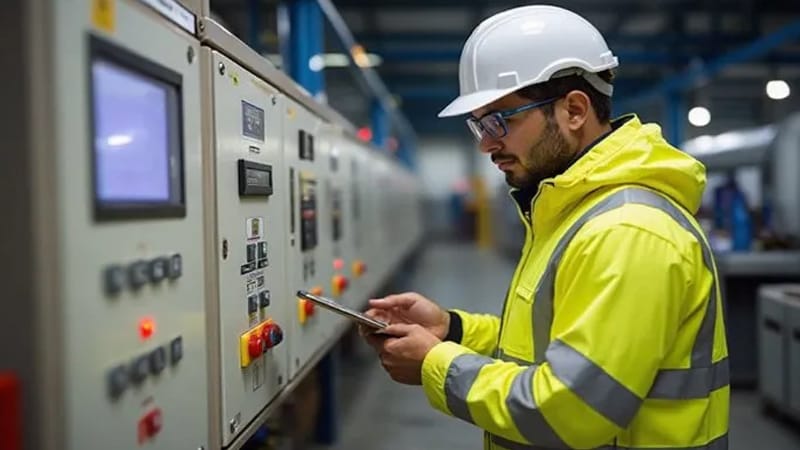
Printing industries, packaging plants, and textile manufacturing facilities depend heavily on stable electrical power for continuous production, automation synchronization, machinery safety, and product quality consistency. Voltage fluctuation, low voltage, high voltage, phase imbalance, and unstable utility supply may affect printing accuracy, textile processing quality, packaging automation systems, industrial motors, servo drives, and overall production continuity.
Modern manufacturing industries use highly sensitive machinery such as printing machines, textile looms, packaging conveyors, servo automation systems, compressors, industrial motors, plc controls, and continuous production infrastructure. These systems require stable voltage for uninterrupted operational performance and manufacturing precision.
Even small voltage variation may create printing defects, color inconsistency, packaging alignment errors, fabric quality variation, servo alarms, machine tripping, motor overheating, and production downtime.
This is why printing industries, packaging units, and textile factories commonly install industrial servo stabilizers for reliable voltage correction and machinery protection.
Why Stable Voltage Is Important in Manufacturing Industries
Modern industrial production facilities operate highly synchronized electrical and automation systems such as:
- Servo drives
- Plc systems
- Printing rollers
- Conveyor systems
- Textile motors
- Packaging automation systems
- Compressors
- Industrial control panels
These systems require stable voltage for continuous production and operational consistency.
Stable voltage helps improve:
✔ Production continuity
✔ Machinery operational reliability
✔ Automation synchronization
✔ Product quality consistency
✔ Reduced downtime conditions
✔ Electrical operational safety
Voltage stability has become extremely important for modern industrial manufacturing operations.
Common Voltage Problems in Printing, Packaging & Textile Industries
Factories operating printing, packaging, and textile machinery commonly experience several electrical supply problems.
Low Voltage Problems in Manufacturing Industries
Low voltage is one of the most common electrical problems faced by industries during peak operational hours and summer periods.
Problems Caused by Low Voltage
Low voltage may create:
- Machine tripping
- Printing speed variation
- Textile motor instability
- Servo drive alarms
- Packaging machine interruption
- Compressor startup failure
- Reduced production speed
Continuous low voltage may reduce operational efficiency significantly.
Voltage Fluctuation Problems in Industrial Machinery
Continuous voltage fluctuation may affect production synchronization and automation reliability.
Problems Caused by Voltage Fluctuation
Voltage instability may create:
- Printing defects
- Packaging alignment variation
- Fabric processing inconsistency
- Servo synchronization errors
- Automation interruption
- Production instability
Stable voltage is important for maintaining manufacturing consistency.
High Voltage Problems in Printing & Textile Machinery
High voltage conditions may damage sensitive industrial electronics and automation systems.
Machinery Sensitive to High Voltage
- Servo drives
- Plc systems
- Textile automation systems
- Printing controllers
- Packaging control panels
- Industrial communication systems
Repeated electrical stress may reduce machinery operational life.
Phase Imbalance Problems in Industrial Machinery
Most printing, textile, and packaging industries operate on three phase electrical systems.
Voltage imbalance may create:
- Motor overheating
- Servo instability
- Reduced machine efficiency
- Electrical operational stress
- Increased machine vibration
Three phase voltage balancing is important for continuous industrial production.
Voltage Spikes and Sudden Power Surges
Sudden voltage spikes are dangerous for industrial automation systems and electronic machinery infrastructure.
Common Causes
- Utility switching operation
- Generator startup conditions
- Power restoration after outage
- Heavy machinery switching
- Lightning conditions
Problems Caused by Voltage Spikes
Voltage spikes may damage:
- Printing machine controllers
- Textile automation systems
- Packaging electronics
- Servo drives
- Industrial pcb boards
- Communication systems
Sudden electrical spikes may create expensive servicing situations inside factories.
Why Printing Machines Need Stable Voltage
Printing machines operate with highly synchronized mechanical and automation systems.
Voltage fluctuation may affect:
- Printing speed consistency
- Color registration
- Ink distribution
- Roller synchronization
- Automation stability
Stable voltage helps maintain printing quality and continuous production operation.
How Voltage Fluctuation Affects Printing Color Accuracy
Printing industries depend heavily on accurate color registration and consistent print quality.
Voltage instability may affect:
- Ink consistency
- Color alignment
- Roller synchronization
- Print sharpness
- Production consistency
Stable voltage helps maintain printing precision and product quality consistency.
Why Stable Voltage Is Important for Printing Roller Synchronization
Printing machines operate with synchronized rollers and automation systems for accurate print registration.
Voltage fluctuation may affect:
- Roller synchronization
- Print alignment
- Ink distribution
- Color consistency
- Print sharpness
Stable voltage helps maintain continuous printing accuracy and production quality.
How Voltage Problems Affect Printing Quality
Unstable voltage may create:
- Color variation
- Printing misalignment
- Uneven print quality
- Ink inconsistency
- Production rejection
Printing industries require stable voltage for accurate production output and quality control.
Why Packaging Industries Need Voltage Stabilizers
Packaging industries operate automation systems for:
- Labeling
- Filling
- Sealing
- Wrapping
- Conveyor synchronization
- Batch processing
Voltage instability may interrupt packaging automation and reduce production efficiency.
Why Packaging Machines Require Stable Voltage
Packaging systems operate with synchronized automation components such as:
- Conveyors
- Filling systems
- Sealing systems
- Labeling machines
- Servo automation controls
Voltage fluctuation may affect automation coordination and packaging accuracy.
Why Packaging Conveyors Need Stable Voltage
Packaging plants use conveyor systems for synchronized material movement and automation coordination.
Voltage fluctuation may affect:
- Conveyor synchronization
- Product alignment
- Packaging speed consistency
- Automation workflow continuity
Stable voltage helps maintain reliable packaging production operation.
How Voltage Problems Affect Packaging Machinery
Packaging machinery may experience:
- Conveyor instability
- Alignment variation
- Sealing inconsistency
- Automation interruption
- Servo drive alarms
Stable voltage improves packaging operational reliability and workflow continuity.
Why Textile Industries Need Stable Voltage
Textile machinery commonly operates continuously for long production hours.
Voltage fluctuation may affect:
- Fabric processing consistency
- Motor operational stability
- Automation synchronization
- Production continuity
- Machine operational reliability
Textile industries generally require stable voltage for continuous manufacturing operation.
How Voltage Fluctuation Affects Textile Machinery
Voltage instability may create:
- Fabric quality variation
- Loom operational instability
- Motor overheating
- Production interruption
- Reduced operational efficiency
Stable voltage helps maintain textile production consistency and machinery reliability.
How Voltage Fluctuation Affects Textile Fabric Quality
Textile machinery requires continuous operational synchronization for proper fabric processing.
Voltage instability may create:
- Fabric inconsistency
- Uneven processing
- Motor instability
- Production variation
- Loom operational interruption
Stable voltage helps maintain textile production quality and operational continuity.
How Voltage Fluctuation Affects Textile Loom Performance
Textile loom systems require stable electrical supply for continuous fabric processing.
Voltage instability may create:
- Loom interruption
- Fabric inconsistency
- Motor instability
- Reduced production continuity
- Uneven operational performance
Stable voltage improves textile operational reliability and fabric quality consistency.
Why Servo Drives Need Stable Voltage
Servo drives control automation synchronization and machine movement accuracy.
Voltage fluctuation may increase:
- Servo alarms
- Automation interruption
- Operational instability
- Repair expenses
Stable voltage helps improve automation reliability and machinery operational continuity.
How Voltage Fluctuation Affects Industrial Automation Systems
Modern manufacturing plants use automation infrastructure for:
- Production synchronization
- Plc communication
- Conveyor coordination
- Servo operation
- Process automation
Voltage instability may affect automation coordination and production reliability.
Why Automation Systems Need Stable Voltage
Modern manufacturing facilities use automation systems for:
- Conveyor coordination
- Servo synchronization
- Plc communication
- Production workflow control
Voltage instability may affect industrial automation accuracy and operational reliability.
Why Industrial Motors Need Voltage Stabilizers
Industrial motors operating under unstable voltage conditions may experience:
- Overheating
- Reduced efficiency
- Starting problems
- Increased electrical stress
Stable voltage improves motor operational life and industrial reliability.
How Voltage Fluctuation Affects Industrial Compressors
Printing, packaging, and textile industries commonly operate compressors for pneumatic systems and automation infrastructure.
Voltage instability may create:
- Compressor startup failure
- Pressure inconsistency
- Motor overheating
- Automation interruption
Stable voltage improves compressor operational stability and production continuity.
Why Continuous Manufacturing Industries Need Voltage Stabilizers
Printing, textile, and packaging industries commonly operate 24×7 production shifts.
Continuous operation under unstable utility power may create:
- Machine overheating
- Production interruption
- Automation instability
- Increased maintenance conditions
Heavy-duty servo stabilizers help maintain continuous industrial production reliability.
Why Stable Voltage Is Important for Continuous Manufacturing
Printing, textile, and packaging industries commonly operate continuous production shifts.
Unexpected voltage fluctuation may create:
- Production interruption
- Machine restarting
- Automation instability
- Reduced operational efficiency
Stable voltage helps industries maintain continuous production workflow.
Why Large Manufacturing Facilities Need Heavy-Duty Stabilizers
Factories operating multiple machines simultaneously generally experience:
- Higher electrical load variation
- Voltage drop during peak production
- Increased startup current
- Transformer overload conditions
Large industrial facilities commonly require industrial-grade stabilizers for continuous operational reliability.
Hidden Financial Losses Caused by Voltage Problems
Voltage instability may increase:
| Voltage Problem | Business Impact |
|---|---|
| Machine Downtime | Production Loss |
| Product Rejection | Material Wastage |
| Servo Drive Failure | Repair Expenses |
| Automation Interruption | Workflow Delay |
| Motor Overheating | Maintenance Cost |
Many industries underestimate the long-term cost of unstable voltage conditions.
How Voltage Problems Increase Product Rejection
Unstable voltage may create:
- Printing defects
- Packaging alignment errors
- Fabric quality variation
- Automation inconsistency
This may increase:
- Product rejection
- Material wastage
- Rework conditions
- Production losses
Stable voltage helps industries improve manufacturing consistency and quality control.
How Voltage Problems Affect Production Timelines
Machine downtime caused by unstable voltage may create:
- Delayed production schedules
- Missed dispatch commitments
- Operator idle time
- Reduced daily production output
Industries operating customer deadline-based production systems are especially affected by voltage instability.
How Voltage Stability Improves Production Workflow
Stable voltage helps industries improve:
- Production continuity
- Machine coordination
- Workflow efficiency
- Automation synchronization
- Operator productivity
Reliable voltage correction helps manufacturing plants maintain stable operational performance.
Real Factory Example of Voltage Problems
A packaging and printing facility experienced repeated machine tripping and automation instability during evening production shifts. Printing registration occasionally became inconsistent, and conveyor synchronization problems affected packaging output.
Initially, the maintenance team focused mainly on machinery servicing, but later electrical analysis identified severe voltage fluctuation and low voltage conditions as the root cause.
After installing properly sized oil cooled servo stabilizers, voltage conditions improved and production continuity became significantly more stable.
This situation is common in manufacturing industries operating under unstable utility power conditions.
Why Industries Use Servo Stabilizers
Servo stabilizers continuously monitor incoming voltage and automatically correct fluctuation before electrical supply reaches industrial machinery.
This helps maintain stable voltage for:
- Servo drives
- Automation systems
- Textile machinery
- Printing machines
- Packaging infrastructure
Stable voltage improves long-term industrial operational reliability.
How Servo Stabilizers Protect Industrial Machinery
Servo stabilizers help reduce:
- Machine tripping
- Automation interruption
- Servo alarms
- Electrical overheating
- Voltage-related downtime
Stable voltage improves production continuity and operational consistency.
Benefits of Oil Cooled Stabilizers in Industrial Production
Manufacturing industries commonly prefer oil cooled stabilizers because they provide:
✔ Better cooling efficiency
✔ Continuous operational reliability
✔ Heavy-load handling capability
✔ Better performance during severe voltage fluctuation
✔ Long operational lifecycle
Oil cooled stabilizers are widely used in continuous industrial manufacturing environments.
Why Printing & Textile Factories Use Oil Cooled Stabilizers
Printing and textile industries commonly operate:
- Continuous production shifts
- Heavy industrial motors
- Automation systems
- Large electrical loads
Oil cooled stabilizers provide better voltage correction reliability under such operational conditions.
Air Cooled vs Oil Cooled Stabilizers for Industries
| Feature | Air Cooled | Oil Cooled |
|---|---|---|
| Cooling Efficiency | Moderate | High |
| Continuous Operation | Moderate | Reliable |
| Heavy Load Capability | Medium | Better |
| Industrial Suitability | Commercial Load | Heavy Industrial Load |
| Operational Life | Good | Long |
Selection depends on industrial load conditions and operational environment.
How Stable Voltage Improves Industrial Machinery Life
Continuous electrical stress caused by voltage fluctuation may gradually reduce operational life of:
- Industrial motors
- Servo drives
- Automation systems
- Production machinery
- Electronic control panels
Stable voltage helps improve long-term machinery operational reliability.
Why Voltage Protection Is Important for Expensive Industrial Machinery
Printing, packaging, and textile machinery involve major industrial investment.
Voltage fluctuation may increase:
- Machine servicing expenses
- Spare replacement cost
- Production downtime
- Automation repair expenses
Stable voltage helps industries protect expensive production infrastructure investments.
Importance of Electrical Planning in Manufacturing Industries
Modern manufacturing facilities commonly include:
- Voltage stabilization systems
- Dedicated electrical infrastructure
- Proper earthing systems
- Load balancing infrastructure
Preventive electrical planning improves long-term operational reliability.
Why Factory Environment Affects Voltage Stability
Industrial environments with:
- High temperature
- Dust conditions
- Continuous machinery operation
- Heavy electrical load
may increase electrical operational stress on industrial machinery systems.
Heavy-duty voltage stabilization becomes more important under such operational environments.
Common Signs Your Factory Has Voltage Problems
Industries should monitor warning signs such as:
- Frequent machine tripping
- Printing inconsistency
- Servo alarms
- Conveyor instability
- Motor overheating
- Automation interruption
- Electrical operational fluctuation
These symptoms often indicate unstable voltage conditions.
Common Mistakes Industries Make
Many factories create operational problems because of:
❌ Ignoring voltage fluctuation severity
❌ Using undersized stabilizers
❌ Selecting commercial stabilizers for industrial machinery
❌ Ignoring future production expansion
❌ Lack of electrical load analysis
Improper voltage correction planning may reduce production reliability.
Why Technical Voltage Analysis Is Important
Proper stabilizer selection requires understanding of:
- Total connected machinery load
- Voltage fluctuation range
- Continuous operational hours
- Motor startup current
- Future expansion planning
Industrial engineers generally recommend proper electrical analysis before stabilizer selection.
Why Wide Voltage Range Stabilizers Are Used in Industries
Factories operating in severe low-voltage industrial zones commonly use wide voltage range stabilizers to maintain stable output during major utility fluctuation conditions.
These stabilizers are especially useful for:
- Printing plants
- Textile industries
- Packaging factories
- Automation infrastructure
- Continuous production systems
Stable voltage becomes extremely important for continuous industrial manufacturing.
Printing, Textile & Packaging Industry Voltage Protection Comparison
| Industry | Common Voltage Problem | Stabilizer Benefit |
|---|---|---|
| Printing Industry | Color & Registration Errors | Stable Print Quality |
| Packaging Industry | Conveyor & Automation Instability | Reliable Production |
| Textile Industry | Motor & Loom Instability | Continuous Fabric Processing |
Stable voltage improves industrial manufacturing reliability and product consistency.
Factory Without Stabilizer vs Factory With Servo Stabilizer
| Factory Without Stabilizer | Factory With Servo Stabilizer |
|---|---|
| Frequent Machine Tripping | Stable Production Operation |
| Printing & Packaging Errors | Better Product Consistency |
| Servo Drive Alarms | Reliable Automation |
| Higher Downtime | Continuous Workflow |
| Electrical Stress | Better Machinery Protection |
Industrial voltage stabilization significantly improves production continuity.
Industries Commonly Using Servo Stabilizers
Industrial stabilizers are widely used in:
- Printing industries
- Packaging plants
- Textile industries
- Automation facilities
- Engineering industries
- Manufacturing plants
- Industrial processing facilities
Stable voltage is important across all continuous production environments.
How Stabilizers Reduce Industrial Operational Losses
Proper voltage stabilization helps industries improve:
- Production continuity
- Machinery protection
- Automation reliability
- Reduced downtime conditions
- Product quality consistency
Stable voltage improves long-term industrial operational performance.
Industrial Manufacturing Voltage Protection Expertise
Voltage stabilization for printing, packaging, and textile industries requires understanding of industrial automation behavior, servo synchronization, continuous production operation, motor performance, manufacturing workflow coordination, and machinery operational reliability requirements.
Factories operating printing infrastructure, textile machinery, packaging automation systems, industrial motors, and continuous manufacturing environments generally prefer proper electrical analysis before selecting stabilizer systems for long-term operational continuity and industrial machinery protection.
Frequently Asked Questions
Why Do Printing Machines Need Servo Stabilizers?
Printing machines require stable voltage for accurate registration, automation synchronization, and print quality consistency.
Can Voltage Fluctuation Affect Textile Machinery?
Yes, unstable voltage may affect motors, loom systems, automation synchronization, and fabric processing quality.
Why Is Stable Voltage Important for Packaging Industries?
Stable voltage improves conveyor synchronization, automation reliability, and packaging operational continuity.
Which Stabilizer Is Best for Industrial Production?
Oil cooled servo stabilizers are commonly preferred for industrial manufacturing applications.
Can Voltage Fluctuation Damage Industrial Automation Systems?
Yes, unstable voltage may damage servo drives, plc systems, and industrial automation electronics.
Why Do Textile Industries Use Oil Cooled Stabilizers?
Oil cooled stabilizers provide better cooling efficiency and continuous heavy-load operational capability.
How Do Stabilizers Improve Production Continuity?
Servo stabilizers maintain stable voltage during fluctuation conditions and reduce operational interruption.
Final Thoughts
Voltage fluctuation is one of the biggest hidden reasons behind production downtime, automation interruption, motor overheating, servo drive failure, printing inconsistency, packaging instability, textile operational problems, and manufacturing losses in industrial environments.
Many factories focus mainly on machinery maintenance while ignoring unstable utility power conditions affecting operational reliability and production continuity.
Proper voltage stabilization helps industries improve production continuity, reduce downtime, protect expensive machinery, maintain product quality, improve automation reliability, and support long-term manufacturing performance.
For factories operating printing machines, textile machinery, packaging automation systems, industrial motors, and continuous production infrastructure, stable voltage has become an essential part of industrial operational safety, machinery protection, and manufacturing reliability.