
Electricity is one of the largest recurring expenses for many businesses. For a manufacturing plant, warehouse, hospital, hotel, office or commercial facility, power consumption directly affects operating costs and day-to-day productivity.
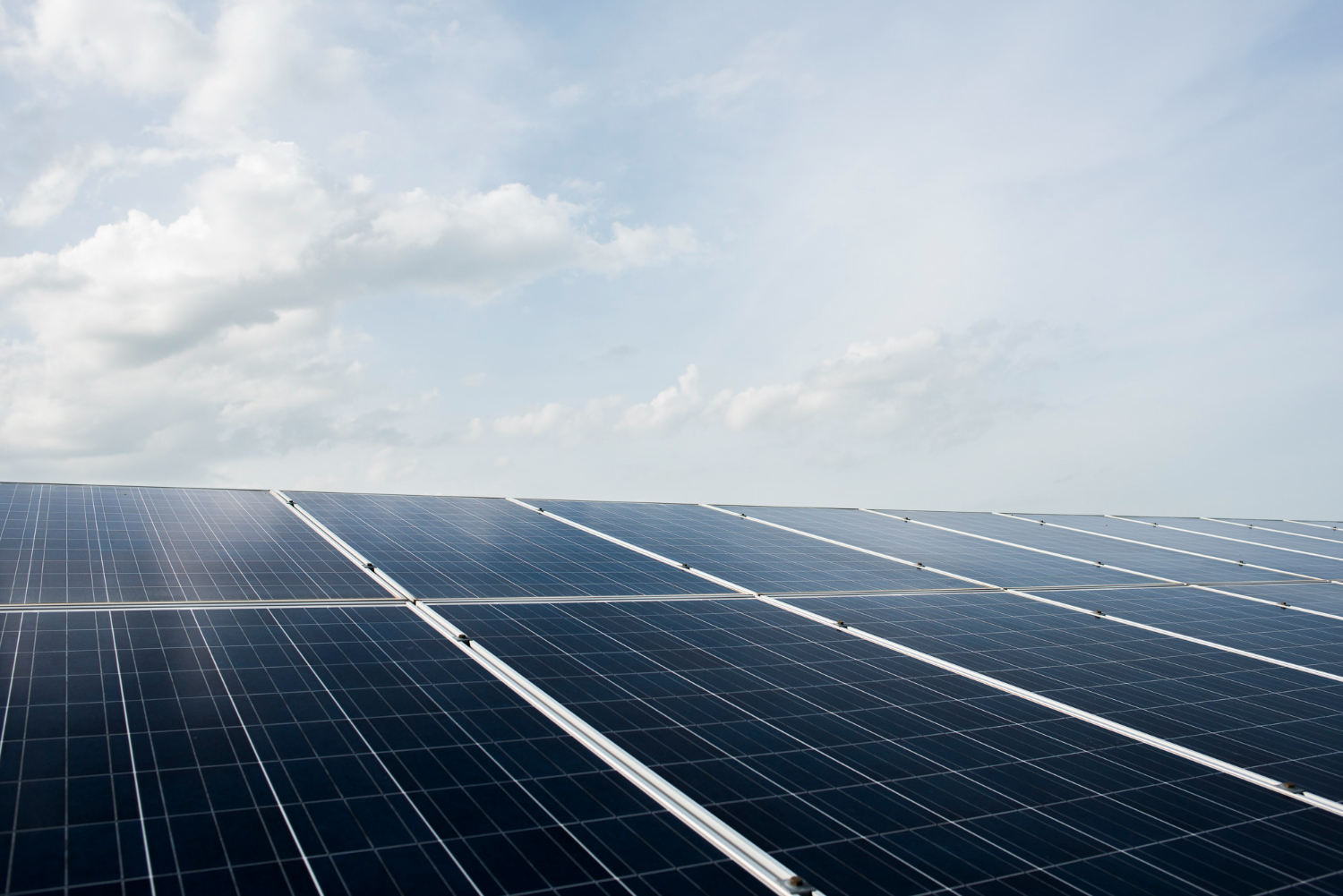
Solar generation can help businesses make better use of available roof or land, reduce dependence on conventional electricity and build a more predictable long-term energy strategy. But a successful project requires more than installing photovoltaic modules.
The system has to match the facility’s electricity consumption, operating schedule, electrical infrastructure, available space and future expansion plans.
Anushri Systech Pvt Ltd supports industrial and commercial power requirements through its own ASPL solar brand and also supplies selected products from other manufacturers through its dealer, supplier and distributor network. This gives businesses flexibility when a project requires a particular technology, specification or brand.
Why Businesses Are Evaluating Solar Energy
Commercial and industrial electricity requirements continue to change as businesses expand production, add equipment and adopt more electrical systems.
A facility may consume electricity through:
- Production machinery
- Motors and drives
- Compressors
- Pumps
- HVAC systems
- Chillers
- Lighting
- Office equipment
- IT infrastructure
- Refrigeration
- Material-handling equipment
Solar can offset a portion of this consumption when generation and the facility’s operating pattern align.
The objective is not simply to install the maximum possible capacity. The better approach is to design a system around actual energy requirements.
Solar Solutions for Industrial and Commercial Facilities
Solar projects can take different forms depending on the customer’s site and electrical requirements.
Rooftop Solar
Uses available roof space to generate electricity close to the point of consumption.
Ground-Mounted Solar
Suitable where sufficient land is available and site conditions support the installation.
Grid-Connected Solar
Works alongside the utility supply and can support daytime facility consumption.
Hybrid Solar
Combines generation with other energy sources or storage depending on the project architecture.
Solar With BESS
Adds battery storage for applications such as energy shifting, selected backup and energy management.
Captive or Open-Access Projects
For eligible larger consumers, other procurement structures may also be evaluated according to applicable regulations and project conditions.
The most appropriate model should be determined after reviewing the customer’s actual requirements.
Start With an Energy Assessment
A good project begins with data.
Before recommending a system, the following information can be useful:
- Recent electricity bills
- Maximum demand
- Sanctioned load
- Operating hours
- Shift pattern
- Daytime consumption
- Night-time consumption
- Major electrical loads
- Existing transformer capacity
- Utility connection details
- Existing generator
- Existing UPS
- Future expansion plans
This information provides a clearer picture of how the facility uses electricity.
Why Load Profile Matters
Two buildings with the same electricity consumption may still require different solar designs.
For example, an office may consume most of its electricity during working hours, while a factory may operate several shifts.
A warehouse may have high daytime lighting and HVAC requirements, while a 24-hour industrial process may continue consuming substantial power after sunset.
Understanding the load profile helps determine how much generation can be directly utilized and whether storage or another power-management solution should be considered.
Energy Audit Before Solar Installation
Solar can reduce the electricity purchased from the grid, but it should not be used to compensate for avoidable energy wastage.
An energy review can identify areas such as:
- Inefficient motors
- Excessive HVAC consumption
- Compressed-air losses
- Poor power factor
- Unnecessary lighting loads
- Equipment operating outside production hours
Improving energy efficiency before or alongside solar can create a stronger overall energy strategy.
Site Feasibility Assessment
The physical site is just as important as the electricity bill.
A feasibility assessment may examine:
- Roof area
- Ground availability
- Solar exposure
- Shading
- Roof condition
- Structural suitability
- Access
- Drainage
- Cable routes
- Electrical equipment locations
- Maintenance access
A large roof does not automatically mean that every available square metre should be covered.
The layout must also leave sufficient space for inspection and maintenance.
Rooftop Solar for Industrial Buildings
Industrial rooftops can provide valuable space for energy generation.
However, factories often have equipment such as:
- Exhaust systems
- Chimneys
- Cooling towers
- Water tanks
- HVAC equipment
- Skylights
- Existing structures
These can create shading or reduce the usable installation area.
The roof’s structural condition should also be checked before mounting a long-term electrical asset.
Ground-Mounted Solar
Ground-mounted projects can be considered where adequate land is available.
The evaluation can include:
- Soil conditions
- Terrain
- Drainage
- Foundation requirements
- Security
- Access roads
- Cable distance
- Maintenance requirements
- Future land use
The available land should therefore be assessed from both an engineering and operational perspective.
Main Components of a Solar Installation
A complete project can include much more than the PV modules.
Solar Modules
Convert sunlight into DC electricity.
Inverters
Convert DC electricity into AC power for the facility.
Mounting Structures
Support the modules and maintain their required position.
DC Protection
Provides appropriate isolation and protection on the DC side.
AC Protection
Protects the AC side and supports safe electrical integration.
Cables and Connectors
Transfer electricity between system components.
Monitoring
Provides information about plant generation and equipment operation.
Transformer and Switchgear
May be required depending on the facility’s electrical configuration.
BESS
Can be added where energy storage is part of the project requirement.
Understanding DC and AC Capacity
One common area of confusion during procurement is the difference between the solar array’s DC capacity and the inverter’s AC capacity.
The modules provide the DC-rated capacity.
The inverter determines the available AC output.
These values do not necessarily have to be identical.
The selected DC/AC configuration can influence equipment utilization, energy production characteristics and project economics.
Therefore, buyers should review the complete design rather than comparing proposals only by the headline kW figure.
Selecting Solar Modules
Module selection should consider the complete project environment.
Factors can include:
- Rated power
- Efficiency
- Temperature characteristics
- Mechanical properties
- Warranty
- Performance warranty
- Environmental conditions
- Availability
- Manufacturer support
The highest-rated module is not automatically the right choice for every installation.
Selecting the Inverter
The inverter should be matched to the solar array and the facility’s electrical system.
Important considerations may include:
- DC voltage range
- MPPT range
- AC output
- Efficiency
- Protection
- Monitoring
- Communication
- Environmental rating
- Service support
For larger industrial projects, the inverter also needs to fit the electrical distribution architecture.
Balance of System
The overall project also includes the Balance of System, commonly referred to as BOS.
This can include:
- Mounting structures
- DC cables
- AC cables
- Connectors
- DCDB
- ACDB
- Surge protection
- Earthing
- Lightning protection
- Monitoring equipment
- Switchgear
- Transformer
- Civil works
A professional quotation should clearly identify what is included in the project scope.
Electrical Integration With Existing Infrastructure
Industrial facilities often have an established power network.
This may include:
Utility Supply → Transformer → Main Panel → Distribution Panels → Facility Loads
The solar system has to be connected appropriately within this architecture.
Engineering may consider:
- Transformer loading
- Panel capacity
- Protection coordination
- Cable capacity
- Interconnection point
- Existing generation
- Future loads
This is one reason industrial solar projects require proper electrical engineering rather than a standard rooftop package.
HT and LT Integration
The electrical arrangement can differ between HT and LT-connected facilities.
For larger installations, the project may require assessment of:
- HT equipment
- Transformers
- LT panels
- Metering
- Protection
- Interconnection
- Cable routes
The final arrangement depends on the customer’s existing electrical system and applicable requirements.
Solar and Diesel Generator
Many industrial facilities already maintain generators for emergency power.
Solar does not necessarily replace this infrastructure.
The technologies can have different roles:
| System | Main role |
|---|---|
| Solar | Energy generation |
| Grid | Normal utility supply |
| Generator | Extended emergency backup |
| BESS | Energy storage and selected backup functions |
| UPS | Critical-load continuity and power protection |
If these systems need to operate together, their controls and electrical interfaces should be properly engineered.
Solar and UPS
UPS systems are commonly used to protect critical equipment.
Examples include:
- Automation systems
- PLCs
- Control rooms
- IT equipment
- Communication systems
- Medical equipment
Solar can reduce the facility’s conventional electricity requirement while the UPS continues serving critical loads.
Therefore, solar and UPS can complement each other rather than replacing one another.
Solar With Battery Energy Storage
BESS can provide additional flexibility where the project has a defined storage requirement.
Potential applications include:
- Solar energy shifting
- Peak-demand management
- Selected-load backup
- Renewable-energy integration
- Microgrid operation
The battery should be sized based on the required power and energy profile.
The size of the solar array alone does not determine the required BESS capacity.
Battery Technology Selection
Different applications may require different battery technologies.
Depending on the project, customers can evaluate:
- Lithium-ion
- LiFePO4
- VRLA
- Ni-Cd
- FIAMM battery solutions
Selection can depend on:
- Backup duration
- Cycling requirements
- Operating temperature
- Space
- Maintenance
- Service life
- Safety
- Total cost of ownership
The technology should be selected according to the application rather than simply following a general market trend.
Solar Generation Is Not Constant
A solar plant does not produce its rated capacity continuously.
Generation changes throughout the day and can be affected by:
- Solar irradiation
- Temperature
- Cloud conditions
- Shading
- Dust
- Module characteristics
- Inverter efficiency
- Electrical losses
- Equipment availability
For this reason, expected annual generation should be estimated using the project’s actual location and system design.
Performance Ratio
Performance Ratio is a useful indicator for evaluating how effectively a solar installation is operating relative to the available solar resource.
Performance can be influenced by:
- Temperature
- Soiling
- Shading
- DC losses
- AC losses
- Inverter losses
- Downtime
- Equipment availability
Monitoring performance over time can help identify abnormal conditions.
Solar Plant Monitoring
Monitoring allows facility teams to understand what is happening after commissioning.
Depending on the system, operators can review:
- Daily generation
- Monthly generation
- Inverter status
- Alarms
- Faults
- Availability
- Historical performance
Monitoring becomes especially valuable for large industrial installations where manual inspection alone is not sufficient.
Managing Solar Losses
Energy losses can occur throughout the system.
Typical sources include:
Module temperature
Dust and soiling
Shading
DC cables
Connectors
Inverter conversion
AC cables
Transformer
Equipment downtime
Good design and maintenance help control avoidable losses.
Solar Safety and Protection
Safety should be considered from the design stage.
The system may require appropriate:
- DC isolation
- AC isolation
- Surge protection
- Earthing
- Lightning protection
- Overcurrent protection
- Equipment labelling
- Safe access
The requirements depend on the project design and applicable electrical standards.
Commercial Evaluation of a Solar Project
Solar investment should be evaluated using actual project information.
Important inputs may include:
- Project cost
- Expected annual generation
- Electricity tariff
- Self-consumption
- Operating cost
- Maintenance cost
- Financing
- System degradation
- Equipment replacement
There is no universal payback period that applies to every business.
A factory in one location can have very different economics from an office or warehouse elsewhere.
Understanding CAPEX and OPEX
The initial project investment is generally referred to as CAPEX.
This can include:
- Equipment
- Structures
- Electrical works
- Installation
- Engineering
- Commissioning
Ongoing costs can include:
- Maintenance
- Cleaning
- Monitoring
- Repairs
- Replacement components
Both should be considered when evaluating long-term project value.
Financing and Project Models
Businesses may evaluate different ways of implementing a renewable-energy project.
Depending on the customer’s eligibility and current regulations, options can include:
- Direct purchase
- EPC project
- Financed installation
- Captive arrangements
- Open-access models
- Other third-party project structures
The appropriate model depends on the customer’s financial objectives, electricity consumption and applicable regulations.
Utility and Regulatory Requirements
Solar projects connected to the utility network may require approvals, metering arrangements or other technical processes.
These requirements can change depending on:
- State
- Utility
- System size
- Connection type
- Project configuration
- Applicable regulations
Therefore, customers should verify current requirements before finalizing the project.
ASPL – Anushri Systech’s Own Solar Brand
ASPL is Anushri Systech’s own solar brand.
It forms part of the company’s solar offering for industrial and commercial applications.
ASPL solutions can be evaluated according to:
- Project capacity
- Application
- Site conditions
- Electrical architecture
- Customer requirements
- Future expansion
The objective is to provide a suitable solution rather than forcing every project into the same configuration.
Other Brands Through Anushri Systech
Anushri Systech also works with selected manufacturers as a dealer, supplier and distributor.
This is useful when a customer needs:
- A particular approved brand
- Consultant-specified equipment
- EPC-approved products
- Replacement equipment
- Compatibility with an existing installation
- Alternative product options
This multi-brand approach allows customers to evaluate both ASPL and other suitable manufacturers according to the project’s technical and commercial requirements.
Support for EPC Contractors
EPC contractors may need assistance with both technical and commercial requirements.
Support can include:
- Product selection
- Technical datasheets
- BOQ support
- Commercial quotations
- SLD coordination
- Equipment supply
- Installation
- Testing
- Commissioning
- Project documentation
This can make procurement and project coordination more efficient.
Solar Installation and Commissioning
A typical project moves through several stages.
Requirement Study
Understand the customer’s energy objective.
Site Survey
Review the physical and electrical conditions.
Feasibility
Evaluate the practical system configuration.
Engineering
Develop the design and equipment selection.
Procurement
Source approved equipment.
Installation
Complete civil, structural and electrical works.
Testing
Verify the installed system.
Commissioning
Place the plant into operation.
Handover
Provide documents and operating information.
Maintenance
Continue monitoring and preventive support.
Roof Life and Solar Life
A solar installation can remain in operation for many years.
The building roof should therefore be evaluated with the same long-term perspective.
If a roof is approaching the end of its useful life, replacing or repairing it before solar installation may be more practical than removing the system later.
This simple planning step can prevent unnecessary future expenditure.
Fire and Emergency Access
Large commercial and industrial rooftops need appropriate access for inspection and emergency response.
The layout should consider:
- Maintenance pathways
- Equipment access
- Safe movement
- Electrical isolation
- Emergency procedures
- Fire-safety requirements applicable to the site
Solar density should not be increased at the expense of safe access.
Warranty and AMC Are Different
A product warranty and an Annual Maintenance Contract are not the same thing.
A warranty generally addresses specified product defects or failures according to the manufacturer’s terms.
An AMC is a service arrangement for inspection, preventive maintenance and technical support.
Customers should understand:
- Warranty duration
- Warranty exclusions
- Claim process
- Service response
- AMC scope
- Preventive maintenance frequency
This becomes particularly important for commercial and industrial installations.
Spare Parts and Service Availability
A solar plant is a long-term asset.
Before choosing equipment, customers should consider whether replacement components and technical service are realistically available.
Important considerations include:
- Inverter support
- Spare parts
- Monitoring equipment
- Protection components
- Service engineers
- Warranty handling
- Replacement timelines
A small difference in initial price may not be meaningful if equipment becomes difficult to service later.
Solar End-of-Life Planning
Long-term planning should also consider what happens when equipment eventually reaches the end of its useful life.
The project owner may eventually need to replace:
- Inverters
- Monitoring equipment
- Electrical components
- Damaged modules
- Other supporting equipment
Modules and other components should be handled through appropriate disposal or recycling channels according to applicable requirements.
Common Solar Project Mistakes
Some avoidable mistakes include:
- Selecting capacity without studying consumption
- Ignoring roof condition
- Comparing quotations only on ₹/kW
- Overlooking transformer capacity
- Using unrealistic generation assumptions
- Ignoring future loads
- Selecting equipment without considering service
- Assuming grid-connected solar provides backup
- Not planning monitoring
- Treating maintenance as an afterthought
Proper planning can reduce many of these risks.
Solar Solutions Throughout the Project Lifecycle
A good power-solutions partner should be able to support more than equipment delivery.
The relationship can continue through:
Planning → Feasibility → Engineering → Procurement → Installation → Testing → Commissioning
→ Monitoring → Maintenance → Upgrade
This lifecycle approach becomes especially valuable for industrial facilities where the energy system is expected to operate for many years.
Frequently Asked Questions
What is the best solar system for an industrial facility?
There is no single configuration suitable for every facility. The choice depends on electricity consumption, operating hours, available space, electrical infrastructure and the customer’s objectives.
Is ASPL Anushri Systech’s own brand?
Yes. ASPL is Anushri Systech’s own solar brand.
Does Anushri Systech supply other solar brands?
Yes. Anushri Systech also works as a dealer, supplier and distributor for selected manufacturers according to project requirements.
Can solar be combined with BESS?
Yes. BESS can be considered for applications such as energy shifting, selected backup, peak management and renewable-energy integration.
Can solar work with a generator?
Yes, but the interaction between solar, generator, grid and storage needs appropriate engineering and controls.
Does grid-connected solar work during a power outage?
A conventional grid-connected system generally does not continue supplying power during a grid outage. Backup operation requires an appropriately designed BESS, UPS, generator or hybrid architecture.
How is solar capacity calculated?
Capacity is evaluated using electricity consumption, load profile, operating schedule, available installation area, electrical infrastructure and project objectives.
What documents are needed for a feasibility assessment?
Electricity bills, maximum demand, site location, operating hours, roof or land information and existing electrical-system details are useful starting information.
What affects solar generation?
Solar irradiation, temperature, shading, dust, system losses, equipment efficiency and plant availability can all influence output.
How should solar quotations be compared?
Compare the complete technical and commercial scope, including equipment, engineering, installation, protection, monitoring, warranty, AMC and service—not just the price per kW.
Conclusion
A solar project for an industrial or commercial facility should begin with the business’s actual energy requirement.
The right system is not necessarily the largest installation and it is not always the lowest-priced quotation. It is the solution that fits the facility’s consumption pattern, site, electrical infrastructure, operating conditions and long-term plans.
For some businesses, that may be an ASPL solar installation.
For others, the solution may combine solar with BESS, UPS, batteries or generator infrastructure.
Where a project requires another manufacturer, Anushri Systech can also supply selected products through its dealer, supplier and distributor network.
The objective is to give industrial and commercial customers the flexibility to choose an appropriate combination of products and services while receiving technical support throughout the project lifecycle.
📞 +91 9566117188 // +91 9841698180
📧 sales@anushri.info
📍2/27, Luz Ave 3rd St, East Abiramapuram, Mylapore, Chennai, Tamil Nadu 600004