
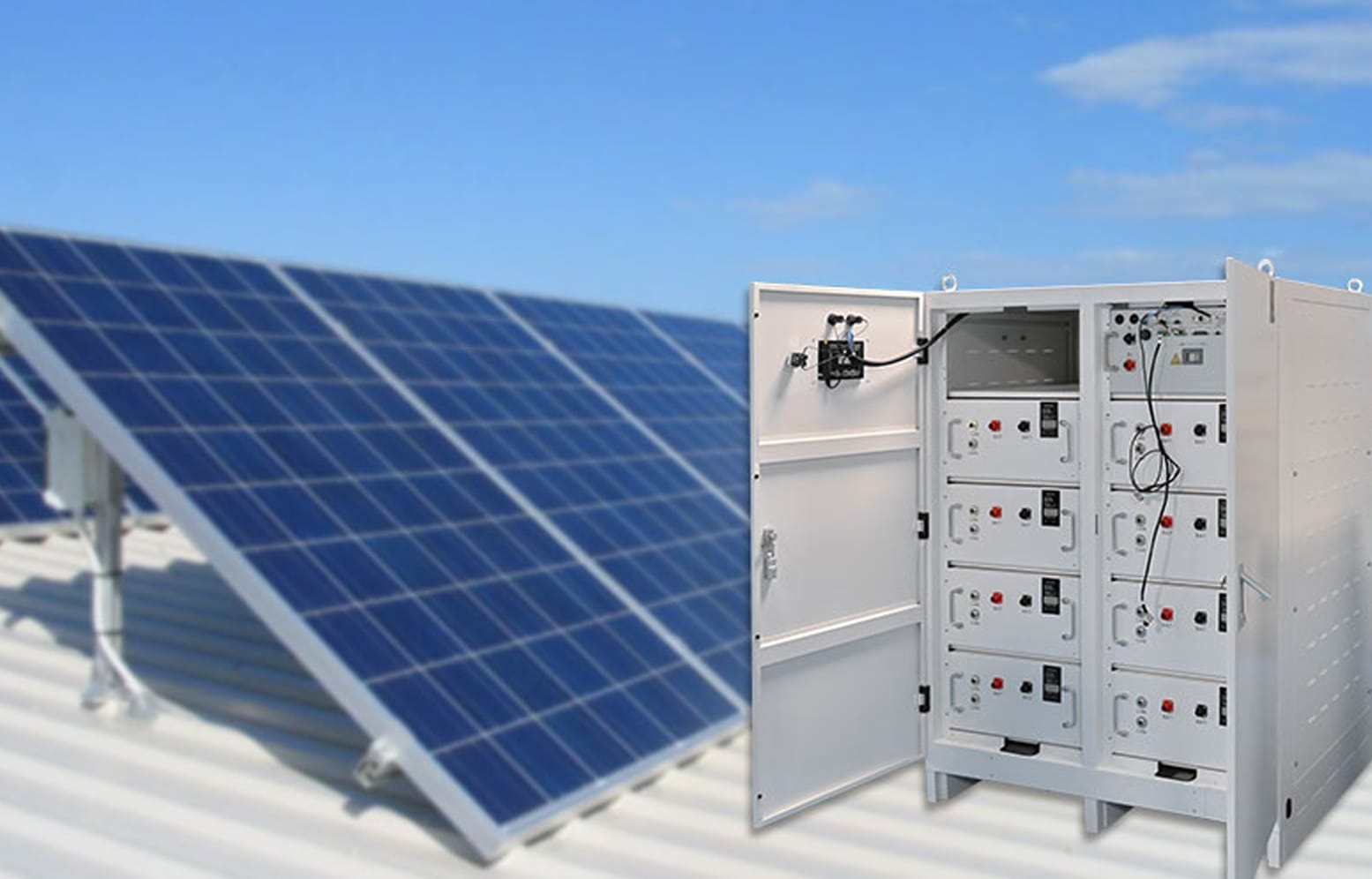
Commercial buildings across India are increasingly adopting solar energy systems to reduce electricity costs, improve energy efficiency, and maintain long-term operational sustainability. However, many commercial facilities quickly realize that solar panels alone cannot provide uninterrupted power continuity during nighttime operation, grid failure conditions, or peak demand periods.
This is why battery storage systems have become one of the most important parts of modern commercial solar infrastructure.
Shopping complexes, office buildings, hospitals, hotels, educational institutions, commercial manufacturing facilities, telecom infrastructure, warehouses, retail environments, and industrial operations increasingly depend on reliable solar battery systems for uninterrupted energy continuity.
One of the most common questions commercial facility owners ask is:
“What is the best battery for commercial solar applications?”
The answer depends on:
✔ Backup runtime requirement
✔ Solar system capacity
✔ Load profile
✔ Commercial operational hours
✔ Battery technology
✔ Future scalability
✔ Infrastructure budget
✔ Maintenance requirements
Proper solar battery selection helps commercial facilities improve:
- Solar energy utilization
- Backup continuity
- Peak load management
- Operational reliability
- Energy optimization
- Long-term return on investment
Modern commercial solar infrastructure increasingly integrates lithium battery systems, battery energy storage systems (BESS), hybrid inverters, smart monitoring systems, and intelligent energy management infrastructure for stable long-term operation.
What Is the Best Solar Battery for Commercial Applications?
The best solar battery for commercial applications depends on backup runtime, energy usage patterns, infrastructure size, maintenance preference, and operational requirements.
Modern commercial facilities increasingly prefer lithium battery systems because they provide higher efficiency, fast charging, longer operational life, compact installation, and lower maintenance requirements.
Why Do Commercial Buildings Need Solar Battery Systems?
Solar panels generate electricity only during sunlight hours.
Battery storage systems help commercial facilities:
✔ Store excess solar energy
✔ Maintain backup continuity
✔ Reduce grid dependency
✔ Improve energy optimization
✔ Support nighttime operation
Battery infrastructure improves overall commercial solar system reliability significantly.
What Happens Without Solar Battery Storage?
Without battery infrastructure, excess solar energy generated during daytime may not be fully utilized.
Commercial facilities may still depend heavily on utility supply during:
- Night operation
- Grid failure
- Peak demand conditions
- Utility instability
Battery storage helps improve overall solar energy utilization significantly.
Why Is Battery Selection Important in Commercial Solar Systems?
Improper battery selection may create:
✔ Reduced backup runtime
✔ Frequent battery replacement
✔ Charging instability
✔ Operational downtime
✔ Poor solar energy utilization
Commercial facilities require properly selected battery infrastructure for reliable long-term performance.
What Types of Batteries Are Used in Commercial Solar Systems?
Commercial solar infrastructure commonly uses:
- Lithium batteries
- Lead-acid batteries
- Gel batteries
- Tubular batteries
- Battery energy storage systems
Battery technology selection depends on infrastructure requirement and operational conditions.
Why Are Lithium Batteries Becoming Popular in Commercial Solar Applications?
Modern commercial solar environments increasingly prefer lithium battery systems because they provide:
✔ High energy density
✔ Compact installation
✔ Fast charging
✔ Low maintenance
✔ Longer operational life
✔ Better charging efficiency
Lithium battery systems improve overall solar infrastructure performance significantly.
Why Do Some Commercial Facilities Still Use Lead-Acid Batteries?
Lead-acid batteries are still used in some commercial environments because of lower initial investment cost.
However, lead-acid systems may require:
- More maintenance
- Larger installation space
- Frequent replacement cycles
Commercial facilities increasingly compare long-term operational cost before selecting battery infrastructure.
Why Is Battery Capacity Important in Solar Systems?
Battery capacity determines how much energy can be stored and used during backup operation.
Proper capacity planning helps commercial facilities maintain:
✔ Backup continuity
✔ Nighttime operation
✔ Critical load support
✔ Energy optimization
Improper capacity planning may reduce operational reliability significantly.
Why Is Backup Runtime Important for Commercial Solar Infrastructure?
Different commercial applications require different backup durations.
Examples include:
| Commercial Application | Typical Backup Requirement |
|---|---|
| Hospitals | Continuous backup |
| Office Buildings | Essential load support |
| Retail Stores | Billing system continuity |
| Hotels | Guest comfort continuity |
| Telecom Infrastructure | Communication continuity |
Runtime planning is one of the most important aspects of solar battery selection.
Why Is Depth of Discharge Important?
Depth of discharge refers to how much battery energy is used before recharging.
Frequent deep discharge conditions may reduce battery operational life.
Modern lithium batteries generally provide better discharge performance compared to traditional lead-acid systems.
Why Is Charging Speed Important in Commercial Solar Systems?
Fast charging improves battery readiness during variable solar generation conditions.
Fast charging helps commercial facilities improve:
✔ Solar utilization
✔ Backup readiness
✔ Operational continuity
Lithium battery systems commonly provide faster charging performance.
Why Is Battery Efficiency Important?
Battery efficiency directly affects:
- Energy storage performance
- Runtime continuity
- Solar energy optimization
- Infrastructure operating cost
Higher efficiency battery systems help improve long-term energy savings significantly.
Why Is Battery Lifecycle Important?
Battery lifecycle refers to the operational lifespan of battery infrastructure.
Commercial facilities generally prefer batteries with:
✔ Longer operational life
✔ Reduced replacement frequency
✔ Stable charging performance
Lithium battery systems commonly provide longer lifecycle performance.
Why Is Maintenance Important in Commercial Battery Systems?
Improper battery maintenance may reduce:
- Backup reliability
- Runtime stability
- Battery operational life
Commercial environments often prefer low-maintenance battery infrastructure for operational convenience.
Why Is Space Availability Important in Battery Selection?
Commercial buildings often have limited installation space.
Compact battery systems help improve:
✔ Infrastructure flexibility
✔ Installation efficiency
✔ Energy density optimization
Lithium batteries commonly require less installation space compared to traditional lead-acid systems.
Why Is Thermal Management Important in Solar Battery Infrastructure?
Battery systems generate heat during charging and discharging operation.
Improper thermal management may increase:
✔ Battery degradation
✔ Charging instability
✔ Operational risk
Commercial battery rooms should maintain proper ventilation and temperature management.
Why Is Smart Battery Monitoring Important?
Modern commercial solar systems increasingly use smart battery monitoring infrastructure for:
- Remote diagnostics
- Runtime analysis
- Battery health monitoring
- Predictive maintenance
- Energy optimization
Smart monitoring improves operational efficiency significantly.
Why Is Hybrid Inverter Compatibility Important?
Battery infrastructure must work properly with solar inverter systems.
Improper compatibility may affect:
✔ Charging efficiency
✔ Backup continuity
✔ Solar energy utilization
Commercial solar systems require compatible energy management infrastructure for stable operation.
Why Is Battery Scalability Important?
Commercial energy demand often increases over time.
Scalable battery infrastructure helps facilities support:
✔ Future expansion
✔ Additional solar capacity
✔ Growing operational load
Future-ready infrastructure improves long-term investment flexibility significantly.
Why Are Commercial Facilities Investing in Battery Energy Storage Systems (BESS)?
Battery Energy Storage Systems (BESS) help commercial environments improve:
✔ Energy optimization
✔ Peak load management
✔ Backup continuity
✔ Solar energy utilization
✔ Grid stability support
BESS infrastructure is becoming increasingly important in modern commercial energy systems.
Why Is Peak Load Management Important?
Commercial buildings often experience high electricity demand during peak operational hours.
Battery systems help reduce utility dependency during peak demand conditions and improve energy optimization significantly.
Why Is Renewable Energy Integration Growing in Commercial Infrastructure?
Commercial facilities increasingly adopt solar energy systems to reduce operational electricity costs and improve sustainability.
Battery storage systems help maximize renewable energy utilization and improve long-term infrastructure reliability.
Commercial Solar Battery Infrastructure Components
Modern commercial solar systems commonly include:
| Infrastructure Component | Operational Function |
|---|---|
| Solar Panels | Energy generation |
| Battery Systems | Energy storage |
| Hybrid Inverters | Power management |
| Battery Monitoring Systems | Performance diagnostics |
| BESS Infrastructure | Energy optimization |
| Smart Controllers | Operational management |
Common Solar Battery Problems vs Recommended Solution
| Solar Battery Problem | Recommended Solution |
|---|---|
| Reduced Runtime | Increase battery capacity |
| Battery Overheating | Improve ventilation |
| Charging Instability | Check inverter compatibility |
| Frequent Maintenance | Upgrade battery technology |
| Space Limitation | Use compact lithium systems |
| Poor Solar Utilization | Install smart energy management |
Benefits of Proper Solar Battery Selection
✔ Improved solar energy utilization
✔ Better backup continuity
✔ Reduced electricity dependency
✔ Improved operational reliability
✔ Better peak load management
✔ Long-term operational savings
Proper battery selection helps commercial facilities improve overall solar infrastructure performance significantly.
Real Commercial Solar Example
A commercial office building operating centralized air conditioning systems, elevators, lighting infrastructure, server rooms, and communication systems experienced high electricity costs and poor backup continuity during grid instability conditions.
The facility later integrated:
- Rooftop solar infrastructure
- Lithium battery storage systems
- Smart hybrid inverters
- Intelligent energy monitoring infrastructure
This significantly improved:
✔ Solar energy utilization
✔ Backup reliability
✔ Peak load management
✔ Operational continuity
✔ Long-term energy optimization
The facility also reduced dependency on utility power during peak operational hours.
Why Is Long-Term Solar Battery Planning Important?
Commercial solar infrastructure directly affects:
- Energy efficiency
- Operational continuity
- Backup reliability
- Utility dependency
- Long-term operational cost
Proper solar battery planning helps facilities improve infrastructure reliability and renewable energy performance significantly.
Commercial Solar Energy Expertise
Commercial solar battery planning requires understanding of:
- Solar energy generation
- Battery storage systems
- Hybrid inverter infrastructure
- Runtime planning
- Energy optimization
- Backup continuity
- Battery lifecycle management
Commercial buildings, hotels, hospitals, telecom systems, office infrastructure, retail environments, industrial facilities, and commercial operations commonly require reliable solar battery infrastructure for uninterrupted operational continuity and renewable energy optimization.
Vivatek provides commercial solar battery solutions, lithium battery infrastructure, battery energy storage systems, hybrid solar infrastructure, smart monitoring systems, and energy continuity solutions for industrial and commercial applications across India.
Frequently Asked Questions
What is the best battery for commercial solar applications?
Lithium batteries are increasingly preferred because they provide fast charging, low maintenance, compact installation, and longer operational life.
Why are battery systems important in commercial solar infrastructure?
Battery systems help store excess solar energy and maintain backup continuity during utility failure conditions.
Why is battery capacity important in solar systems?
Battery capacity determines how much energy can be stored and used during backup operation.
Why are lithium batteries becoming popular in commercial solar applications?
Lithium batteries provide better efficiency, faster charging, compact design, and longer operational life.
What is a Battery Energy Storage System (BESS)?
BESS is an energy storage infrastructure used to store electricity for backup continuity and energy optimization.
Why is smart monitoring important in solar battery systems?
Smart monitoring helps improve battery diagnostics, runtime analysis, predictive maintenance, and energy optimization.
Talk to Our Technical Team
Commercial buildings, hospitals, hotels, telecom infrastructure, office environments, retail systems, warehouses, and industrial facilities often require reliable solar battery infrastructure for uninterrupted operational continuity and renewable energy optimization.
Vivatek provides commercial solar battery solutions, lithium battery infrastructure, battery energy storage systems, hybrid solar infrastructure, smart energy monitoring systems, and backup continuity solutions for industrial and commercial applications across India.
📞 Contact: +91 9566117188 / 9841698180
📧 Email: sales@anushri.info
🌐 Website: https://anushri.info/