
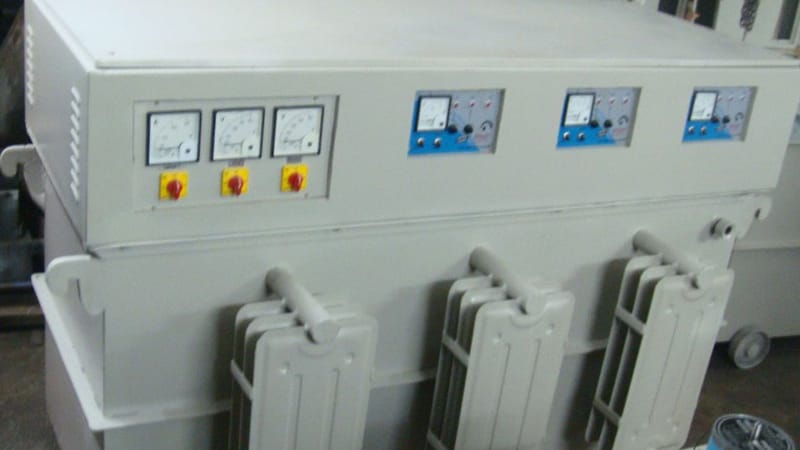
Servo stabilizers have become an important part of industrial and commercial electrical infrastructure across india. Manufacturing plants, cnc machine operators, hospitals, automation systems, textile industries, printing facilities, telecom infrastructure, engineering industries, and commercial buildings use servo stabilizers to protect equipment from voltage fluctuation, low voltage, high voltage, phase imbalance, and unstable utility power conditions.
One of the most common questions industries ask before purchasing a stabilizer is:
What Is the Servo Stabilizer Price in India?
However, servo stabilizer pricing depends on much more than only kva capacity. Stabilizer cost varies based on cooling type, voltage correction range, copper winding quality, industrial load conditions, operational environment, installation requirements, and continuous operational capability.
Many factories compare only price quotations without understanding technical suitability. Improper stabilizer selection may increase machine downtime, electrical stress, production interruption, and maintenance expenses.
This guide explains industrial servo stabilizer pricing factors, buying considerations, industrial applications, and how industries select stabilizer systems for long-term operational reliability.
What Is a Servo Stabilizer?
A servo stabilizer is an automatic voltage correction system designed to maintain stable output voltage during utility fluctuation conditions.
Servo stabilizers continuously monitor incoming voltage and automatically correct low voltage and high voltage before electrical supply reaches machinery and equipment.
Servo stabilizers are widely used for:
- Cnc machines
- Vmc machines
- Compressors
- Hospitals
- Textile machinery
- Printing systems
- Automation infrastructure
- Commercial buildings
- Manufacturing plants
- Telecom systems
Stable voltage helps improve machinery protection and industrial operational continuity.
Why Industries Use Servo Stabilizers
Modern industries operate highly sensitive electrical systems such as:
- Servo drives
- Plc systems
- Automation controls
- Industrial motors
- Sensors
- Communication infrastructure
Voltage fluctuation may create:
- Machine tripping
- Electrical overheating
- Servo drive failure
- Automation interruption
- Production downtime
- Reduced machinery operational life
Servo stabilizers help maintain stable voltage and reduce operational risk.
What Affects Servo Stabilizer Price in India?
Servo stabilizer pricing depends on several technical and operational factors.
KVA Capacity
Kva capacity is one of the biggest factors affecting stabilizer pricing.
Higher capacity stabilizers require:
- Larger transformers
- Higher copper usage
- Heavy-duty load handling capability
- Bigger cooling systems
- Stronger electrical infrastructure
Common Industrial Stabilizer Capacities
| Stabilizer Capacity | Common Applications |
|---|---|
| 5kva – 10kva | Small Commercial Applications |
| 15kva – 30kva | Small Machinery & Automation |
| 50kva – 100kva | Manufacturing Industries |
| 150kva – 500kva | Heavy Industrial Operations |
Higher kva stabilizers generally involve higher manufacturing and installation cost.
Approximate Servo Stabilizer Price Range in India
Industries often search approximate pricing before contacting suppliers.
| Stabilizer Capacity | Approximate Industrial Application |
|---|---|
| 5kva – 10kva | Small Commercial Infrastructure |
| 15kva – 30kva | Offices & Small Machinery |
| 50kva – 100kva | Medium Manufacturing |
| 100kva – 500kva | Heavy Industrial Operations |
Actual stabilizer pricing depends on voltage range, cooling type, copper quality, application conditions, and industrial operational requirements.
Air Cooled vs Oil Cooled Stabilizer Price Difference
Cooling type significantly affects stabilizer pricing.
Air Cooled Stabilizers
Generally used for:
- Commercial buildings
- Medium industrial applications
- Compact installation areas
Benefits
✔ Compact design
✔ Lower initial cost
✔ Easier maintenance
✔ Space-saving installation
Oil Cooled Stabilizers
Generally preferred for:
- Heavy machinery
- Continuous production operation
- High kva industrial loads
- Severe voltage fluctuation conditions
Benefits
✔ Better cooling efficiency
✔ Heavy-load operational capability
✔ Long operational life
✔ Continuous operational reliability
Oil cooled stabilizers usually cost more because of larger infrastructure and heavy-duty cooling systems.
Why Industrial Stabilizer Prices Vary So Much
Many buyers compare only kva capacity, but pricing differences may occur because of:
- Copper winding quality
- Voltage correction range
- Cooling system design
- Servo motor quality
- Transformer design
- Industrial load capability
- Protection systems
- Operational reliability
Two stabilizers with the same kva rating may perform very differently under industrial operational conditions.
Input Voltage Range
Input voltage range also affects stabilizer price.
Factories operating in severe low-voltage industrial zones often require wide input voltage stabilizers.
Common Voltage Ranges
| Voltage Range | Suitable Conditions |
|---|---|
| 340v – 460v | Moderate Voltage Fluctuation |
| 300v – 470v | Severe Voltage Conditions |
| 360v – 480v | Standard Industrial Supply |
Wider voltage range stabilizers generally involve higher design complexity and cost.
Why Wide Voltage Range Stabilizers Cost More
Factories operating in severe low-voltage areas commonly use wide voltage range stabilizers because they provide stable output during major utility fluctuation conditions.
These stabilizers generally require:
- Larger transformer capability
- Higher correction range
- Better operational design
- Heavy-duty voltage correction systems
Wide-range stabilizers improve industrial operational continuity during unstable utility conditions.
Copper Winding Quality
Copper winding quality directly affects:
- Stabilizer efficiency
- Operational reliability
- Voltage correction performance
- Long-term operational life
Industries usually prefer copper wound stabilizers for better operational durability and voltage correction stability.
Why Copper Winding Is Important in Stabilizers
Industrial stabilizers operating under continuous load conditions require reliable electrical conductivity and thermal performance.
Copper winding improves:
- Electrical efficiency
- Operational reliability
- Heat handling capability
- Long-term stabilizer performance
Heavy industrial operations generally prefer copper wound stabilizer systems for stable long-term operation.
Single Phase vs Three Phase Stabilizer Price
Three phase stabilizers generally cost more because they are designed for industrial and heavy-load applications.
Single Phase Stabilizers
Commonly used for:
- Offices
- Commercial shops
- Small medical equipment
- Retail operations
Three Phase Stabilizers
Used for:
- Cnc machines
- Compressors
- Textile machinery
- Manufacturing industries
- Heavy automation systems
Industrial three phase stabilizers require more advanced electrical design and operational capability.
Servo Stabilizer Price Based on Application
Different industrial applications require different stabilizer configurations.
| Application | Common Stabilizer Type |
|---|---|
| CNC Machines | Oil Cooled Servo Stabilizer |
| Hospitals | Servo Stabilizer |
| Commercial Buildings | Air Cooled Stabilizer |
| Textile Industries | Three Phase Stabilizer |
| Printing Machinery | Industrial Servo Stabilizer |
| Automation Systems | Wide Voltage Range Stabilizer |
Application type directly affects stabilizer configuration and pricing.
Servo Stabilizer Price for CNC Machines
Cnc machines generally require:
- Three phase stabilizers
- Stable voltage correction
- Better overload handling
- Continuous operational capability
- Reliable electrical protection
Servo stabilizer pricing for cnc applications depends on:
- Spindle load
- Connected machinery
- Voltage fluctuation severity
- Continuous operational hours
Cnc industries generally prefer industrial-grade stabilizers for reliable machining operation.
Stabilizer Price for Hospitals & Medical Equipment
Healthcare infrastructure commonly requires stabilizers for:
- Mri machines
- Ct scan systems
- Ventilators
- Laboratory analyzers
- Monitoring systems
Hospital stabilizer pricing depends on equipment sensitivity, operational continuity requirements, and healthcare infrastructure load conditions.
Stable voltage is important for uninterrupted healthcare operation.
Heavy Machinery Stabilizer Pricing
Heavy machinery such as:
- Compressors
- Injection molding machines
- Textile equipment
- Printing systems
- Production machinery
generally require:
- Heavy-duty stabilizers
- Better cooling systems
- Continuous operational capability
- Industrial-grade transformer design
Heavy-load industrial applications generally require more advanced stabilizer configurations.
Real Industrial Example of Wrong Stabilizer Selection
A manufacturing facility selected a low-cost stabilizer without proper load analysis for cnc machine operation. Initially, the stabilizer operated under moderate conditions, but during continuous production shifts, overheating and voltage instability started affecting machine performance.
Later, after technical load analysis, the factory upgraded to properly sized oil cooled servo stabilizers. Machine stability improved and production interruption reduced significantly.
Many industries face operational issues because stabilizer selection is based only on low pricing instead of technical suitability.
Why Cheapest Stabilizer Is Not Always Economical
Low-cost stabilizers may later increase:
- Machine downtime
- Repair expenses
- Electrical operational failures
- Maintenance cost
- Production interruption
Industries usually prefer long-term operational reliability instead of only lower initial investment cost.
Initial Stabilizer Cost vs Long-Term Operational Value
Low-cost stabilizers may appear economical initially, but industries often evaluate:
- Operational continuity
- Downtime reduction
- Machinery protection
- Electrical reliability
- Long-term maintenance expenses
Reliable voltage stabilization is generally considered a long-term industrial infrastructure investment.
Why Production Downtime Costs More Than Stabilizer Investment
Machine downtime caused by voltage fluctuation may create:
- Production delays
- Operator idle time
- Missed dispatch schedules
- Material wastage
- Increased maintenance expenses
For many factories, a single major electrical interruption may cost more than stabilizer investment itself.
Why Industries Prefer Servo Stabilizers
Servo stabilizers are widely preferred because they provide:
✔ Automatic voltage correction
✔ Stable output voltage
✔ Reliable machinery protection
✔ Continuous operational support
✔ Better load handling capability
✔ Long operational life
Servo stabilizers are commonly used across industrial and commercial infrastructure applications.
How Stabilizer Capacity Affects Price
Higher kva stabilizers require:
- Larger transformer design
- Higher copper usage
- Bigger servo motor systems
- Better cooling infrastructure
- Heavy-duty operational capability
This directly affects overall stabilizer manufacturing cost and industrial suitability.
Why Oil Cooled Stabilizers Cost More
Oil cooled stabilizers involve:
- Transformer oil cooling systems
- Heavy-duty transformer design
- Larger cooling structure
- Better heat dissipation capability
These stabilizers are generally preferred for heavy industrial operational conditions and continuous production shifts.
Why Continuous Industrial Operation Affects Stabilizer Selection
Factories operating:
- 24×7 production lines
- Continuous process plants
- Multi-shift manufacturing systems
- Heavy automation infrastructure
generally require industrial stabilizers designed for continuous operational load conditions.
Continuous industrial operation significantly affects stabilizer design and pricing.
Why Factory Environment Affects Stabilizer Selection
Industrial environments with:
- High temperature
- Dust conditions
- Heavy machinery operation
- Continuous electrical load
may require heavy-duty stabilizers with better cooling and industrial-grade operational capability.
Environmental conditions directly affect stabilizer reliability and long-term operational performance.
Hidden Costs of Wrong Stabilizer Selection
Improper stabilizer selection may create long-term operational losses such as:
| Problem | Business Impact |
|---|---|
| Machine Downtime | Production Loss |
| Servo Drive Failure | Repair Expenses |
| Voltage Instability | Operational Interruption |
| Overheating | Reduced Equipment Life |
| Frequent Tripping | Maintenance Cost |
Long-term operational losses are often much higher than initial stabilizer investment.
Why Industries Upgrade Stabilizers Later
Industries often replace stabilizers because of:
- Increased production load
- Additional machinery installation
- Severe voltage fluctuation
- Continuous operational shifts
- Improper earlier stabilizer sizing
Proper stabilizer planning during initial installation helps reduce future replacement expenses.
Why Industries Select Higher Capacity Stabilizers for Future Expansion
Many factories install additional machinery after operational expansion.
To avoid future replacement cost, industries often select stabilizers considering:
- Future production growth
- Additional machinery load
- Expansion planning
- Operational scalability
Future-ready stabilizer planning helps improve long-term industrial flexibility.
Why Service Support Matters in Industrial Stabilizers
Industrial operations generally require reliable technical support for:
- Installation guidance
- Commissioning assistance
- Preventive maintenance
- Emergency support services
Technical support availability is an important factor during industrial stabilizer purchasing decisions.
Additional Costs Industries Should Consider
Servo stabilizer investment may also include:
- Transportation
- Installation support
- Cable infrastructure
- Electrical panel integration
- Commissioning support
Heavy industrial stabilizers generally require proper site planning before installation.
Air Cooled vs Oil Cooled Stabilizer Maintenance Cost
| Stabilizer Type | Maintenance Requirement |
|---|---|
| Air Cooled Stabilizer | Lower Maintenance |
| Oil Cooled Stabilizer | Periodic Oil & System Inspection |
Maintenance planning is important for long-term operational reliability.
Importance of Stabilizer Efficiency in Industrial Operation
Industrial stabilizers operating continuously may affect overall electrical efficiency.
Efficient stabilizer systems help improve:
- Voltage correction performance
- Electrical operational stability
- Energy utilization
- Long-term operational reliability
Industries operating large infrastructure commonly consider efficiency during stabilizer selection.
Common Signs Your Stabilizer Is Not Suitable
Factories should monitor warning signs such as:
- Frequent machine tripping
- Stabilizer overheating
- Voltage instability
- Servo drive alarms
- Electrical burning smell
- Reduced machine performance
These conditions often indicate wrong stabilizer sizing or poor voltage correction capability.
Common Mistakes Industries Make While Buying Stabilizers
Many factories create operational problems because of:
❌ Selecting stabilizers only based on low price
❌ Ignoring voltage fluctuation severity
❌ Wrong kva selection
❌ Ignoring future expansion planning
❌ Choosing commercial stabilizers for industrial loads
❌ Ignoring cooling requirement
Technical suitability is more important than only initial pricing.
Industrial Stabilizer Evaluation Checklist
Before finalizing stabilizer systems, industries commonly evaluate:
✔ Kva capacity
✔ Voltage range
✔ Copper winding quality
✔ Cooling type
✔ Operational load capability
✔ Future expansion support
✔ Service support availability
✔ Industrial application suitability
Technical evaluation helps improve long-term stabilizer operational reliability.
What Industrial Buyers Check Before Finalizing Stabilizer Price
Industrial procurement teams generally evaluate:
- Voltage correction capability
- Cooling performance
- Copper quality
- Heavy-load handling capability
- Warranty support
- Future expansion support
- Technical service availability
Technical suitability is generally more important than only lowest quotation value.
Low-Cost Stabilizer vs Industrial-Grade Stabilizer
| Low-Cost Stabilizer | Industrial-Grade Stabilizer |
|---|---|
| Basic Voltage Correction | Stable Industrial Performance |
| Limited Load Capability | Heavy Load Handling |
| Higher Downtime Risk | Better Operational Reliability |
| Shorter Operational Life | Long-Term Industrial Use |
| Lower Initial Cost | Better Long-Term Value |
Industrial-grade stabilizers generally improve long-term operational continuity.
Why Technical Consultation Is Important
Selecting the correct stabilizer requires understanding of:
- Industrial load behavior
- Voltage fluctuation severity
- Startup current conditions
- Continuous operational load
- Environmental conditions
Technical consultation helps industries avoid operational problems caused by incorrect stabilizer selection.
Industries Commonly Using Servo Stabilizers
Servo stabilizers are widely used in:
- Manufacturing industries
- Textile industries
- Hospitals
- Printing industries
- Engineering industries
- Packaging plants
- Automation facilities
- Commercial buildings
- Telecom infrastructure
Stable voltage is important across industrial and commercial infrastructure applications.
How Servo Stabilizers Reduce Operational Losses
Proper voltage stabilization helps industries improve:
- Production continuity
- Machinery protection
- Electrical operational reliability
- Reduced downtime conditions
- Long-term operational stability
Stable voltage improves industrial operational efficiency and machinery safety.
Industrial Servo Stabilizer Buying Expertise
Servo stabilizer selection requires understanding of industrial load behavior, machinery sensitivity, voltage fluctuation severity, cooling requirements, operational continuity, infrastructure conditions, and future production expansion planning.
Industries operating cnc machinery, compressors, automation systems, hospitals, printing infrastructure, textile machinery, and continuous manufacturing systems generally prefer technical consultation before selecting stabilizer systems for long-term operational reliability and voltage protection.
Frequently Asked Questions
What Affects Servo Stabilizer Price in India?
Pricing depends on kva capacity, cooling type, voltage range, copper quality, and industrial application type.
What Is the Industrial Servo Stabilizer Price in India?
Industrial stabilizer pricing depends on kva rating, cooling type, operational capability, and voltage correction requirements.
Which Stabilizer Is Better for CNC Machines?
Oil cooled servo stabilizers are commonly preferred for cnc and heavy machinery applications.
Why Are Oil Cooled Stabilizers More Expensive?
Because they involve larger cooling infrastructure and heavy-duty industrial operational design.
Why Do Wide Voltage Range Stabilizers Cost More?
They require higher correction capability and larger transformer operational design.
Which Stabilizer Is Better for Industries?
Three phase servo stabilizers are widely used for industrial applications.
Can Stabilizers Reduce Industrial Downtime?
Yes, stable voltage helps improve machinery operational continuity and reduce electrical interruption.
Why Is Copper Winding Important in Stabilizers?
Copper improves electrical efficiency, operational reliability, and long-term stabilizer durability.
How Do Industries Select Servo Stabilizer Capacity?
Industries evaluate machinery load, voltage fluctuation range, startup current, and future expansion planning before selecting capacity.
Final Thoughts
Servo stabilizer pricing in india depends on much more than only kva rating. Proper stabilizer selection requires understanding of industrial load conditions, voltage fluctuation severity, operational hours, cooling requirements, machinery sensitivity, and future expansion planning.
Many industries experience machine downtime, electrical operational stress, production interruption, and increased maintenance expenses because of improper stabilizer selection based only on low pricing.
For factories operating cnc machines, compressors, automation systems, hospitals, textile machinery, printing equipment, and manufacturing plants, proper voltage stabilization has become an important part of operational reliability, machinery protection, and long-term industrial performance.