
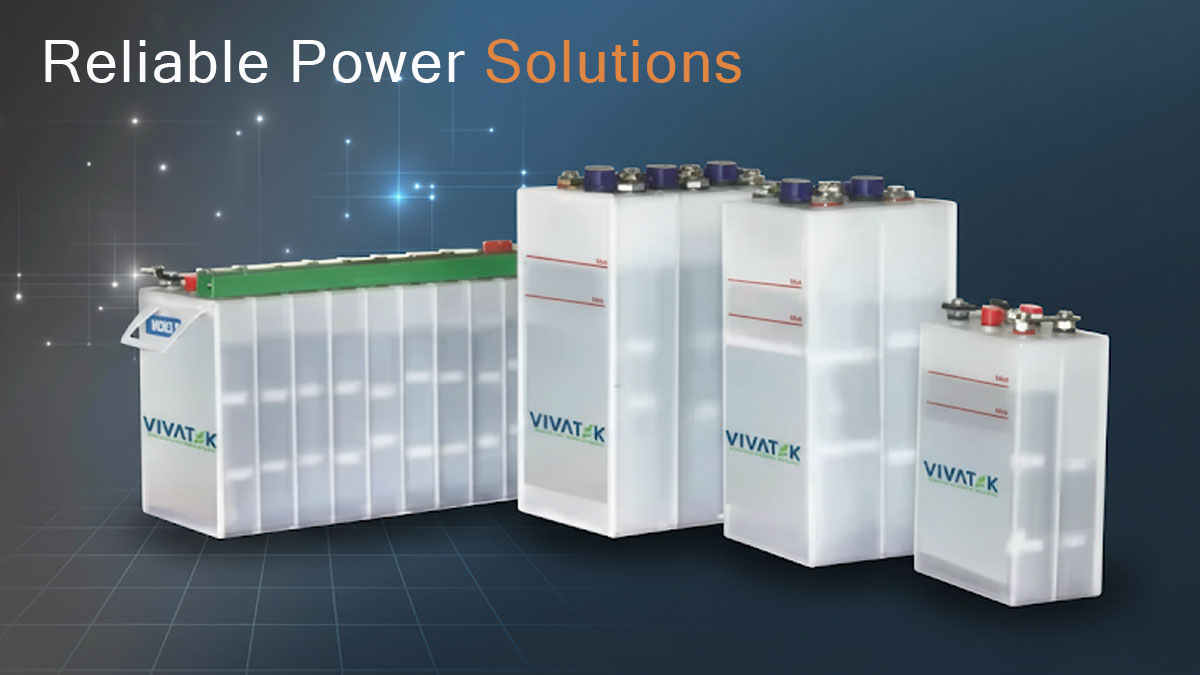
Reliable DC power is an essential part of many industrial and commercial facilities. In a substation, telecom site, manufacturing plant, mining operation or critical infrastructure project, the battery system may remain on standby for long periods and then be expected to deliver dependable power immediately when the normal supply is interrupted.
This makes battery selection an engineering decision rather than simply a purchasing decision.
Nickel-cadmium, commonly known as Ni-Cd, is one of the established battery technologies used in critical DC power applications. Its long history in utility and industrial installations has made it a consideration for projects where environmental conditions, operating life and reliability are important.
For customers in the Middle East, Africa and other international markets, the right solution depends on the application, electrical configuration, operating environment and lifecycle expectations.
Anushri Systech Pvt Ltd supports industrial and commercial customers through its own VIVATEK brand and selected products from other established brands, depending on project requirements, technical specifications and applicable brand arrangements.
Why Battery Selection Matters in Critical Power Systems
A battery bank is often expected to remain ready for an event that may occur only occasionally.
During normal operation, the battery may simply remain connected to the charging system. During a power interruption, however, it can become the primary source of DC power for important equipment.
A failure at that moment can have consequences far beyond the battery itself.
Depending on the installation, loss of DC power can affect:
- Protection systems
- Circuit breaker operation
- Communication equipment
- Control systems
- Monitoring infrastructure
- Emergency equipment
- Industrial automation
The objective of proper battery engineering is therefore to ensure that the system can support the required load for the specified duration under the actual site conditions.
What Is a Ni-Cd Battery?
A nickel-cadmium battery is a rechargeable battery technology that uses nickel-based and cadmium-based electrodes with an alkaline electrolyte.
Industrial cells are designed for stationary applications and are assembled into strings to achieve the required DC voltage.
A complete battery installation normally involves more than the cells themselves. The system may include:
- Battery cells
- Inter-cell connectors
- Battery rack
- DC cables
- Protection equipment
- Charger
- Monitoring system
- Battery isolation arrangement
The complete installation should therefore be evaluated as a DC power system, rather than treating the battery as an isolated product.
How a Ni-Cd Battery Works
The operating principle is straightforward.
During normal conditions:
AC source → Charger → DC bus → Connected loads
The charger maintains the DC system and keeps the battery ready.
When the normal source becomes unavailable:
Battery → DC bus → Critical loads
The stored energy is then delivered to the connected equipment.
After the normal source returns, the charger restores the battery according to the applicable charging procedure.
The exact charging characteristics depend on the selected battery and charger.
Ni-Cd Cell Construction
Industrial Ni-Cd cells contain several internal components designed to support repeated charging and discharge.
Depending on the product design, these can include:
- Positive electrode
- Negative electrode
- Alkaline electrolyte
- Separator
- Cell container
- Terminals
- Venting arrangement
Different industrial designs may be optimized for different discharge characteristics.
For this reason, the construction should be considered together with the required application rather than selected independently.
Pocket Plate and Other Cell Designs
Industrial Ni-Cd batteries are available in different constructions.
Pocket-plate designs have historically been used in demanding industrial and stationary applications.
Other designs can be developed for specific discharge characteristics, space requirements and operating conditions.
When comparing products, engineers should examine:
- Discharge capability
- Service conditions
- Temperature range
- Expected operating life
- Physical dimensions
- Maintenance requirements
- Manufacturer’s technical data
The construction should match the project’s actual duty rather than simply the preferred battery brand.
Standby and Cycling Applications
One of the first questions during battery selection should be:
How will the battery actually be used?
Standby application
The battery normally remains charged and is used when the primary power source fails.
Examples include:
- Electrical substations
- Telecom infrastructure
- Emergency DC systems
- Control systems
- Protection equipment
Cycling application
The battery is regularly charged and discharged during normal operation.
This may occur in:
- Renewable-energy systems
- Hybrid power systems
- Remote energy installations
A battery suitable for standby service should not automatically be assumed to be suitable for intensive daily cycling.
48V, 110V, 125V and 220V DC Systems
Industrial facilities use different DC voltage architectures.
Common configurations include:
48V DC
Often associated with telecom and communication infrastructure.
110V / 125V DC
Commonly considered in utility and industrial control and protection systems.
220V DC
Used in selected larger electrical installations and infrastructure applications.
The required cell count is determined by the battery cell characteristics and the operating voltage range of the DC system.
It should not be selected simply by dividing the nominal system voltage by an assumed cell voltage.
The engineering calculation must consider:
- Nominal voltage
- Float voltage
- Minimum system voltage
- Charger voltage
- End-of-discharge voltage
- Connected equipment requirements
Battery Sizing: The Most Important Engineering Step
Battery capacity should be determined from the actual load profile.
A proper sizing exercise considers:
DC voltage + duty cycle + autonomy + end voltage + temperature + ageing requirements
The load should be separated into continuous and intermittent requirements.
For example:
| Load Type | Example |
|---|---|
| Continuous | Control and monitoring |
| Intermittent | Communication equipment |
| Short-duration | Breaker operation |
| Emergency | Selected critical systems |
The battery must support the complete sequence.
Why a Simple Ah Calculation Is Not Enough
Suppose a facility has a 40A load and requires one hour of backup.
A simple calculation would be:
40A × 1 hour = 40Ah
This can be useful as an initial estimate, but it is not enough for final battery selection.
The actual requirement can change because of:
- Discharge rate
- Minimum allowable voltage
- Temperature
- Duty cycle
- Battery ageing
- Manufacturer discharge characteristics
For a critical system, the final selection should be checked against the manufacturer’s discharge curves.
Temperature and Battery Capacity
Temperature is an important part of battery selection.
A project in Saudi Arabia, the UAE, Oman or another hot region may experience significantly different conditions from an installation in a controlled indoor facility.
The engineering team should identify:
- Minimum site temperature
- Normal operating temperature
- Maximum battery temperature
- Enclosure temperature
- Ventilation conditions
The manufacturer’s temperature-related performance information should then be considered during sizing.
Battery Charger and Battery Coordination
The battery and charger should be treated as a coordinated system.
Before selecting or replacing a battery, check:
- Charger output voltage
- Charger current
- Number of cells
- Float charging requirements
- Boost charging requirements, where applicable
- Recharge requirements
- Existing DC load
- Alarm configuration
An apparently compatible battery may still require charger modifications.
This is particularly important during retrofit projects.
Float Charging
In many standby installations, the charger maintains the battery in a ready condition.
The charger supplies the normal DC load while maintaining the required battery charge.
The correct float voltage depends on the selected battery technology and manufacturer’s recommendations.
Incorrect charging conditions can affect battery performance and service life.
Recovery and Boost Charging
Following a significant discharge, the battery may require a controlled recharge procedure.
The charging approach depends on:
- Battery design
- Charger configuration
- Discharge depth
- Operating conditions
- Manufacturer recommendations
The charging system should be configured according to the approved technical documentation rather than using generic charging values.
Battery Rack and Installation Design
Battery installation requires mechanical as well as electrical planning.
The project team should evaluate:
- Battery weight
- Rack capacity
- Cell arrangement
- Floor loading
- Maintenance clearance
- Cable routing
- Terminal accessibility
- Ventilation
The battery rack should be suitable for the selected cells and the installation environment.
DC Cable and Voltage-Drop Considerations
Battery cables carry high current during discharge.
Cable selection should therefore consider:
- Maximum current
- Cable length
- Voltage drop
- Ambient temperature
- Installation method
- Short-circuit requirements
The objective is to ensure that the critical load receives the required voltage during the battery discharge period.
DC Protection
The battery system should have appropriate protection and isolation.
Depending on the project design, this can include:
- DC fuses
- DC circuit breakers
- Battery isolators
- Short-circuit protection
- Cable protection
Protection coordination should be reviewed as part of the overall DC-system design.
Battery Room and Ventilation
Battery installations require appropriate consideration of the physical environment.
Depending on the selected technology and applicable requirements, the project may need:
- Suitable ventilation
- Temperature management
- Safe access
- Adequate lighting
- Battery rack clearance
- Electrical isolation
- Safety procedures
The final design should comply with applicable local requirements, project standards and manufacturer instructions.
Safety and Environmental Considerations
Ni-Cd batteries contain cadmium, so responsible handling is important.
The project should establish appropriate procedures for:
- Storage
- Transportation
- Installation
- Maintenance
- Damaged cells
- Replacement
- End-of-life collection
- Recycling
Personnel should follow the manufacturer’s safety documentation and the regulations applicable to the installation country.
Battery Commissioning
A newly installed battery should be checked before being placed into critical service.
Commissioning can include:
- Visual inspection
- Cell identification
- Polarity verification
- Terminal inspection
- Cell voltage measurement
- String voltage measurement
- Charger verification
- Alarm testing
- Monitoring verification
- Functional testing
Initial readings should be recorded as a baseline.
Factory Acceptance Testing
Large infrastructure projects may require Factory Acceptance Testing (FAT) before shipment.
Depending on the project specification, FAT may include:
- Product inspection
- Documentation review
- Dimensional verification
- Electrical checks
- Performance verification
- Quality records
The FAT procedure should be agreed between the project owner and supplier before testing.
Site Acceptance Testing
After installation, Site Acceptance Testing (SAT) can verify that the system has been correctly integrated.
This may include:
- Installation inspection
- Battery voltage checks
- Charger verification
- Alarm checks
- Monitoring checks
- Functional testing
- Documentation review
The completed results should become part of the site’s technical records.
Battery Monitoring
Battery monitoring can provide useful visibility into the condition of a critical battery bank.
Depending on the system, monitoring may include:
- Individual cell voltage
- String voltage
- Temperature
- Internal resistance
- Charger condition
- Alarm status
For remote infrastructure, monitoring can be particularly useful because physical inspection may not always be convenient.
Identifying a Weak Cell
A battery string can contain many individual cells.
One cell showing unusual behaviour can eventually affect the complete string.
Possible warning signs include:
- Abnormal cell voltage
- Temperature variation
- Unexpected charging behaviour
- Reduced discharge performance
- Increasing resistance
Trend analysis is generally more useful than reacting to a single measurement.
Battery Capacity Testing
For critical installations, a controlled capacity test can provide information about the battery’s actual performance.
A test can evaluate:
- Starting condition
- Discharge current
- Duration
- End voltage
- Cell behaviour
- Available capacity
The procedure should follow the relevant project specification, manufacturer instructions and applicable standards.
Common Industrial Battery Problems
Reduced Backup Duration
Possible causes include:
- Battery ageing
- Increased load
- Weak cells
- Charging problems
- High temperature
- Incorrect original sizing
Unequal Cell Voltage
Possible causes can include cell condition, charging behaviour or connection issues.
High Temperature
Possible causes may include environmental conditions, charging conditions or connection resistance.
Charger Alarm
Possible causes include charger faults, incorrect configuration or abnormal battery conditions.
A proper diagnosis should be completed before deciding that the battery bank requires replacement.
Ni-Cd vs VRLA vs Lithium-Ion
Different applications require different technologies.
| Factor | Ni-Cd | VRLA | Lithium-Ion |
|---|---|---|---|
| Industrial history | Extensive | Extensive | Growing |
| High-temperature capability | Generally strong | More sensitive | Chemistry-dependent |
| Energy density | Moderate | Lower | High |
| Maintenance | Application-dependent | Generally low | Generally low |
| Cycling | Suitable for selected designs | Application-dependent | Generally strong |
| Monitoring | Application-dependent | Recommended | Usually important |
| Typical applications | Utility, industrial DC, telecom | UPS, telecom | UPS, BESS, energy storage |
The right choice should be based on the actual application rather than assuming one technology is suitable for every project.
Industrial Battery Replacement Projects
Replacement projects need a different approach from new installations.
Before removing the existing bank, evaluate:
Existing battery → Charger → DC bus → Connected loads → Installation space → Operating history
The engineering team should determine whether:
- A direct replacement is possible
- The charger needs modification
- The load has increased
- Additional autonomy is required
- The rack can be reused
- The DC protection needs upgrading
This can prevent unexpected problems during commissioning.
EPC and Project Documentation
Industrial and infrastructure projects often require technical documentation before procurement approval.
Depending on the contract, this may include:
- Technical datasheet
- Battery sizing calculation
- Discharge curves
- Cell arrangement
- General arrangement drawing
- Dimensions
- Weight
- Charger requirements
- Installation manual
- Maintenance manual
- Warranty information
- Applicable compliance documentation
Providing the correct documentation early can make technical approval easier.
Industrial and Commercial Applications
The requirement for dependable power backup is not limited to heavy industry.
Battery systems can also be considered for commercial facilities where critical electrical loads need protection.
Applications may include:
- Office buildings
- Commercial complexes
- Healthcare facilities
- Data and IT infrastructure
- Retail operations
- Hotels
- Educational institutions
- Telecom facilities
- Industrial plants
- Utility infrastructure
The required technology and capacity will depend on the importance and characteristics of the connected loads.
VIVATEK: Our Own Power Solutions Brand
VIVATEK is the own power-solutions brand of Anushri Systech Pvt Ltd.
The brand supports industrial and commercial power requirements across areas such as:
- UPS systems
- Battery solutions
- Power protection
- Energy storage
- Other critical-power applications
The exact product selection depends on the application, capacity, operating environment and project requirements.
Multi-Brand Supply for Project Requirements
Not every customer has the same specification.
Some projects require VIVATEK products, while others may specify a particular manufacturer or technology.
Anushri Systech also works with selected established brands as a dealer, supplier or distributor where applicable.
This gives industrial and commercial customers greater flexibility when they need:
- A specified brand
- A particular battery technology
- Replacement products
- Project-specific configurations
- Alternative technical options
The company should always clearly identify whether a product is supplied under the VIVATEK brand or sourced from another manufacturer.
How We Approach Product Selection
The selection process should begin with the application.
Application → Load requirement → Electrical configuration → Operating environmentBackup requirement
→ Technology evaluation → Product selection → Quotation → Supply and project support
This approach helps avoid selecting equipment simply because it has a particular capacity or attractive price.
Battery Lifecycle Management
The battery should be considered throughout its operating life.
A practical lifecycle approach is:
Specification → Procurement → Installation → Commissioning → Operation → Maintenance → Testing → Replacement → Recycling
This helps organizations plan not only for today’s requirement but also for future replacement and maintenance.
Frequently Asked Questions
What is a Ni-Cd battery?
It is a rechargeable battery technology using nickel-based and cadmium-based electrodes with an alkaline electrolyte. It has been used extensively in industrial and critical DC applications.
Where are Ni-Cd batteries commonly considered?
They can be considered for utility substations, telecom, power plants, mining, railway, oil and gas and selected industrial applications.
Are Ni-Cd batteries suitable for commercial facilities?
They can be considered where the facility has an appropriate critical DC backup requirement. The technology should be selected based on the application.
What is VIVATEK?
VIVATEK is Anushri Systech Pvt Ltd’s own power-solutions brand.
Does Anushri Systech supply other brands?
Yes. The company can supply selected products from other established brands as a dealer, supplier or distributor where applicable.
Does Anushri manufacture every product it supplies?
No. VIVATEK products should be identified separately from products sourced from other manufacturers.
How is battery capacity determined?
Capacity is selected based on the load profile, duty cycle, autonomy, end voltage, temperature and manufacturer discharge data.
Can I select a battery only by Ah rating?
No. The required discharge conditions and system requirements must also be considered.
Can an existing charger be used with a new battery?
It may be possible, but compatibility must be technically verified before installation.
How do I know whether my existing battery needs replacement?
Capacity-test results, cell condition, age, operating history, temperature and changes in load should all be evaluated.
What information should I provide for a quotation?
Provide the application, DC voltage, load, autonomy, temperature, existing charger details and project location.
Does Anushri Systech serve only India?
The company can support industrial and commercial requirements across international markets, subject to product availability, project scope and applicable commercial arrangements.
Conclusion
Industrial battery selection should begin with the application rather than the product catalogue.
The required DC voltage, load profile, duty cycle, autonomy, temperature, charger configuration and maintenance conditions all influence the final choice.
Ni-Cd remains a relevant technology for selected critical-power applications, particularly where its characteristics match demanding industrial requirements.
At the same time, VRLA, lithium-ion and other technologies may be more suitable for different applications.
Anushri Systech Pvt Ltd provides industrial and commercial power solutions through its own VIVATEK brand and selected third-party brands, giving customers the flexibility to evaluate solutions according to their technical and project requirements.
The goal is not simply to supply a battery.
It is to help customers select a power solution that fits the electrical system, operating environment and long-term business requirement.
📞 +91 9566117188 // +91 9841698180
📧 sales@anushri.info
Location: 2/27, Luz Ave 3rd St, East Abiramapuram, Mylapore, Chennai, Tamil Nadu 600004