
Introduction
Africa’s infrastructure sector continues to expand rapidly across power generation, utilities, telecommunications, mining, transportation, oil and gas, renewable energy, and industrial development projects.
As these sectors grow, the demand for reliable backup power systems becomes increasingly important.
Many critical facilities operate in challenging environments where high temperatures, unstable electrical grids, remote locations, and limited maintenance access place significant demands on energy storage systems.
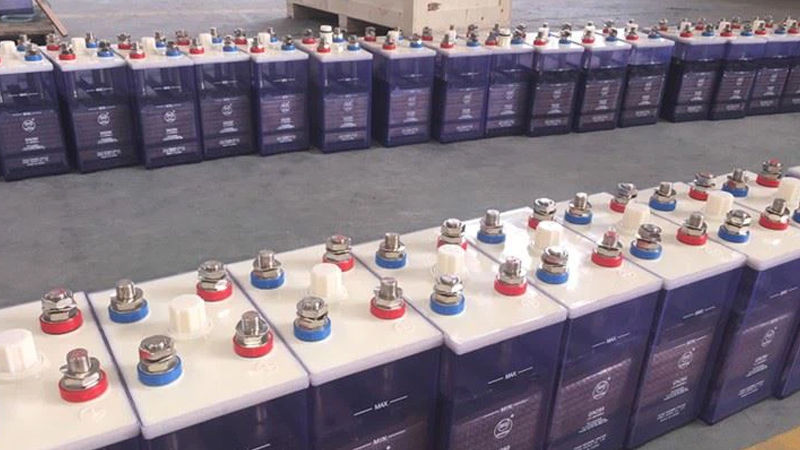
For these applications, industrial Nickel Cadmium (NiCad) batteries continue to be one of the most trusted and widely used battery technologies.
Their ability to deliver dependable performance under demanding operating conditions has made them a preferred choice for mission-critical infrastructure throughout Africa.
For project owners, utilities, EPC contractors, consultants, telecom operators, and industrial organizations, selecting the right battery solution is not simply a procurement decision. It is a long-term infrastructure investment that directly affects reliability, safety, and operational continuity.
Why Reliable Battery Systems Matter in African Infrastructure Projects
Many infrastructure projects across Africa operate in environments where power interruptions are common and operational reliability is essential.
Substations require dependable DC power for protection systems.
Telecom towers require continuous backup to maintain communication services.
Mining facilities depend on battery-supported safety systems and process controls.
Renewable energy projects require reliable energy storage support.
In these applications, battery performance directly influences operational continuity.
A battery failure can affect communication networks, utility operations, production activities, safety systems, and critical infrastructure.
This is why infrastructure owners place such a strong emphasis on proven battery technologies capable of delivering reliable long-term performance.
Understanding Africa’s Power Reliability Challenges
Power infrastructure conditions vary significantly across different regions of Africa.
Many projects operate under demanding circumstances that require robust energy storage solutions.
Common challenges include:
• High ambient temperatures
• Grid instability
• Frequent outages
• Remote installation locations
• Dust and environmental contamination
• Limited maintenance access
• Long operating cycles
Battery technologies selected for these environments must be capable of maintaining reliable performance despite these challenges.
NiCad batteries have a long history of supporting critical infrastructure under precisely these conditions.
Why NiCad Batteries Continue to Be Trusted Across Industries
Despite the introduction of newer battery technologies, NiCad batteries continue to be widely used throughout industrial applications.
Their reputation has been built through decades of field performance across utilities, telecom networks, mining operations, transportation systems, oil and gas facilities, and infrastructure projects.
Organizations continue choosing NiCad technology because reliability often matters more than product trends.
For critical infrastructure, proven performance frequently becomes the most important selection criterion.
Key Advantages of Industrial NiCad Batteries
Industrial NiCad batteries offer several advantages that make them suitable for demanding environments.
High Temperature Performance
Many African regions experience elevated temperatures throughout the year.
NiCad batteries maintain reliable performance in high-temperature environments where other battery technologies may experience accelerated degradation.
Long Service Life
Infrastructure projects require solutions capable of supporting operations for many years.
NiCad batteries are widely recognized for their long operational lifespan and dependable performance over extended periods.
Deep Discharge Capability
NiCad batteries can tolerate deep discharge conditions more effectively than many alternative battery technologies.
This makes them particularly valuable in applications where outages may be prolonged or charging conditions may be inconsistent.
Low Maintenance Requirements
Many industrial sites operate in remote locations where maintenance resources may be limited.
NiCad batteries are often selected because they can support long-term operation with relatively low maintenance requirements.
Reliable Operation in Harsh Conditions
Dust, vibration, temperature variation, and demanding industrial environments are common across many African infrastructure projects.
NiCad batteries are designed to withstand these conditions while continuing to deliver dependable performance.
Why Reliability Matters More Than Battery Price
When evaluating industrial battery systems, initial purchase price is often only one part of the overall decision.
Infrastructure owners increasingly focus on long-term reliability because the consequences of battery failure can be far more expensive than the equipment itself.
Potential impacts include:
• Operational downtime
• Communication interruptions
• Safety risks
• Production losses
• Emergency replacement costs
• Infrastructure disruption
For mission-critical applications, reliability often delivers greater long-term value than short-term procurement savings.
Industrial Applications of NiCad Batteries
NiCad batteries support a wide range of industrial and infrastructure applications throughout Africa.
Telecom Networks & Communication Infrastructure
Telecommunication networks depend on continuous power availability.
NiCad batteries are widely used in:
• Telecom towers
• BTS sites
• Switching facilities
• Transmission infrastructure
• Remote communication stations
Reliable battery support helps ensure uninterrupted communication services even during grid failures.
Utility & Substation DC Systems
Utilities require dependable DC power for:
• Protection relays
• Circuit breaker operations
• SCADA systems
• Control panels
• Monitoring infrastructure
NiCad batteries continue to play an important role in maintaining utility system reliability.
Mining & Heavy Industrial Operations
Mining projects often operate in harsh and remote environments.
Battery systems support:
• Process controls
• Monitoring systems
• Safety infrastructure
• Emergency backup systems
• Operational communications
Reliability is particularly important in these applications because maintenance access may be limited.
Oil & Gas Facilities
Oil and gas operations depend on continuous power for critical systems.
Applications include:
• Safety systems
• Emergency shutdown systems
• Monitoring infrastructure
• Control panels
• Communication equipment
Battery reliability directly contributes to operational safety and continuity.
Renewable Energy & Solar Hybrid Projects
Renewable energy projects increasingly require dependable battery support.
NiCad batteries are used in:
• Solar hybrid systems
• Remote microgrids
• Renewable infrastructure
• Hybrid power installations
Their durability and temperature tolerance make them suitable for demanding renewable energy applications.
Transportation & Infrastructure Applications
Transportation systems, railway projects, airports, ports, and other infrastructure developments frequently depend on battery-supported control and safety systems.
NiCad batteries help maintain reliable operation within these critical environments.
Why Industries Choose NiCad Batteries Over Other Technologies
Industrial battery selection is rarely based on specifications alone.
Utilities, telecom operators, EPC contractors, and infrastructure owners typically evaluate battery technologies based on long-term reliability, lifecycle performance, maintenance requirements, and operational risk.
NiCad batteries continue to be selected because they offer proven performance in demanding environments where system failure is not an option.
Key reasons industries continue choosing NiCad technology include:
• Excellent high-temperature tolerance
• Long operational life
• Resistance to deep discharge
• Reliable performance during frequent outages
• Suitability for remote installations
• Low maintenance requirements
• Proven performance in critical infrastructure
For many infrastructure projects across Africa, the objective is not simply purchasing batteries. The objective is securing dependable backup power for decades of operation.
Supporting Remote & Unmanned Installations
Many critical infrastructure projects across Africa operate in locations where regular maintenance access is difficult.
Telecom towers may be located hundreds of kilometers from service centers.
Renewable energy installations often operate in remote regions.
Mining projects and utility substations may be situated in isolated industrial zones.
These environments require battery systems capable of operating reliably with minimal intervention.
NiCad batteries are widely used because they can tolerate demanding operating conditions while maintaining dependable performance over long periods.
This makes them particularly suitable for:
• Remote telecom towers
• Solar hybrid systems
• Rural substations
• Off-grid infrastructure
• Mining operations
• Pipeline monitoring stations
• Remote communication facilities
Understanding the Challenges of African Operating Conditions
Selecting the correct battery technology requires understanding the realities of African operating environments.
High Ambient Temperatures
Many regions experience sustained temperatures that place significant stress on electrical equipment.
Battery technologies must maintain reliable performance despite prolonged exposure to elevated temperatures.
Unstable Grid Conditions
Frequent voltage fluctuations, power interruptions, and inconsistent utility supply are common challenges in many locations.
Battery systems must be capable of supporting repeated charge-discharge cycles while maintaining operational reliability.
Remote Locations
Distance from maintenance personnel and replacement resources increases the importance of battery durability.
Equipment selected for remote installations must be capable of long-term operation with minimal intervention.
Dust & Industrial Environments
Mining facilities, industrial zones, infrastructure projects, and utility installations often operate in harsh environments.
Battery systems must be capable of supporting operations despite environmental challenges.
How to Select the Right Industrial Battery Solution
Every project has unique requirements.
Battery selection should always be based on operational requirements rather than choosing a standard product.
Important considerations include:
• System voltage
• Required backup duration
• Critical load requirements
• Environmental conditions
• Maintenance accessibility
• Future expansion plans
• Operational objectives
A properly engineered battery system provides better performance, improved reliability, and stronger long-term value.
Information Required for Accurate Battery Selection
To provide accurate recommendations, project teams should typically share:
• Project location
• Application type
• System voltage
• Load details
• Required backup time
• Environmental conditions
• Existing infrastructure details
This information helps engineers determine the most suitable battery configuration for the application.
Battery Sizing Considerations
Battery sizing is one of the most important stages of project planning.
An undersized battery may fail to support critical operations during an outage.
An oversized battery may increase project costs unnecessarily.
Battery sizing should consider:
• Connected load
• Duty cycle requirements
• Backup duration objectives
• Future expansion plans
• Charging system capability
• Operational criticality
Accurate sizing ensures that the battery system supports operational requirements while optimizing investment value.
Why Early Battery Planning Reduces Project Risk
Battery systems are often treated as a procurement item late in the project lifecycle.
However, involving battery specialists during early project planning can reduce risk significantly.
Early planning helps:
• Improve system design
• Prevent sizing errors
• Simplify integration
• Support compliance requirements
• Reduce commissioning challenges
• Improve project timelines
For utilities, telecom operators, EPC contractors, and infrastructure developers, early battery planning often contributes to smoother project execution.
Battery Replacement & Retrofit Projects
Many facilities across Africa operate battery systems that have been in service for many years.
As infrastructure expands and operational requirements evolve, battery replacement projects become increasingly important.
Vivatek supports:
• Existing battery replacement
• Capacity upgrades
• Retrofit projects
• Charger compatibility assessments
• DC system modernization
• Infrastructure expansion projects
The objective is to improve reliability while minimizing disruption to ongoing operations.
Charger Compatibility & Existing Infrastructure Integration
Battery replacement projects often involve integration with existing chargers, DC systems, and control infrastructure.
Before implementation, engineers should evaluate:
• Charger specifications
• Existing battery configuration
• System voltage
• Protection settings
• Load requirements
Proper integration helps ensure reliable operation while protecting existing infrastructure investments.
EPC, Tender & Project Support
Large infrastructure projects frequently involve EPC contractors, consultants, utilities, and project management teams.
Vivatek supports project stakeholders through:
• Technical consultations
• Battery sizing support
• Tender specification reviews
• Project documentation
• Engineering coordination
• Technical compliance assistance
• Installation guidance
• Commissioning support
This helps ensure that battery systems align with project requirements and operational objectives.
Export, Logistics & Cross-Border Supply Support
Supplying battery systems across Africa often requires extensive logistics coordination.
Vivatek supports:
• Export documentation
• Industrial packaging
• Project-based dispatch planning
• International shipping coordination
• Cross-border logistics support
• Delivery planning for remote locations
Effective logistics planning helps reduce delays while supporting project schedules.
Compliance, Documentation & Technical Support
Industrial projects often require extensive technical documentation and compliance support.
Vivatek assists with:
• Technical datasheets
• Project submittals
• Compliance documentation
• Engineering drawings
• Installation recommendations
• Commissioning guidance
• Technical consultations
This support helps project teams simplify approvals, audits, inspections, and project execution activities.
Reliability for Mission-Critical Infrastructure
Mission-critical infrastructure depends on uninterrupted power availability.
Utilities, telecom operators, mining companies, oil and gas facilities, transportation networks, and renewable energy projects all rely on battery systems to support essential operations during power disturbances and emergency conditions.
In these environments, battery failure can affect safety systems, communication networks, operational continuity, and critical control functions.
This is why reliability remains one of the most important factors when selecting industrial battery technologies.
NiCad batteries have earned their reputation through decades of dependable operation across some of the world’s most demanding industrial applications.
Their ability to perform consistently under harsh environmental conditions continues to make them a preferred choice for mission-critical infrastructure projects across Africa.
Why Utilities Continue Choosing NiCad Batteries
Power utilities require battery systems capable of supporting critical DC loads under all operating conditions.
Substation protection systems, switchgear operations, control panels, SCADA systems, communication equipment, and emergency backup systems all depend on reliable battery performance.
Utilities continue selecting NiCad batteries because they offer:
• Proven field performance
• Long operational life
• High reliability during outages
• Excellent tolerance to temperature variations
• Strong deep discharge capability
• Low maintenance requirements
For utility operators, dependable battery performance is essential to maintaining grid stability and operational safety.
Why EPC Contractors Prioritize Proven Technologies
Engineering, Procurement, and Construction (EPC) contractors are responsible for delivering projects that meet performance, safety, and reliability expectations.
Battery system selection directly influences project success.
EPC teams often prioritize technologies with established operational records because project risks increase when unproven solutions are deployed in critical applications.
NiCad batteries continue to be specified because they provide:
• Predictable performance
• Long-term reliability
• Compatibility with industrial applications
• Strong lifecycle value
• Proven acceptance within utility and infrastructure sectors
These factors help EPC contractors reduce project risk while supporting successful project delivery.
Supporting Renewable Energy Growth Across Africa
Renewable energy investment continues expanding throughout Africa.
Solar plants, hybrid energy systems, rural electrification programs, microgrids, and infrastructure projects increasingly require dependable battery support.
Battery systems help support:
• Renewable energy integration
• Hybrid power solutions
• Remote energy projects
• Utility modernization initiatives
• Rural power development
NiCad batteries remain an important solution for many renewable energy applications because of their durability, reliability, and ability to perform under challenging environmental conditions.
Total Cost of Ownership Advantage
Industrial battery selection should never be based solely on purchase price.
The true value of a battery system is determined by its Total Cost of Ownership (TCO).
TCO considerations include:
• Operational lifespan
• Maintenance costs
• Replacement frequency
• Downtime risk
• Reliability performance
• Lifecycle operating expenses
A battery with a higher initial investment may ultimately provide greater value if it delivers longer service life and lower long-term operating costs.
This is one of the reasons many infrastructure owners continue selecting NiCad technology.
Lifecycle Value Beyond Initial Cost
Procurement decisions often focus on capital expenditure.
However, industrial infrastructure owners increasingly evaluate solutions based on lifecycle performance rather than acquisition cost alone.
Factors influencing lifecycle value include:
• Reliability over time
• Maintenance requirements
• Operational continuity
• Replacement intervals
• Infrastructure protection
• Long-term performance stability
When evaluated over many years of operation, dependable battery technologies often provide greater overall value than lower-cost alternatives.
Why Long Service Life Matters
Many infrastructure projects are designed to operate for decades.
Replacing battery systems prematurely can create additional costs, operational disruption, and project complexity.
Long service life helps organizations:
• Reduce replacement costs
• Simplify maintenance planning
• Improve investment returns
• Support operational continuity
• Lower lifecycle expenses
For remote installations and critical infrastructure, long battery life becomes particularly valuable.
Building Long-Term Infrastructure Reliability
Reliable infrastructure is built through careful planning, proper engineering, and dependable technology selection.
Battery systems play an important role in supporting:
• Utility reliability
• Communication networks
• Industrial operations
• Transportation infrastructure
• Renewable energy systems
• Public services
Organizations that prioritize reliability during project planning often achieve stronger long-term operational outcomes.
Future of Industrial Backup Power in Africa
Africa’s infrastructure landscape continues evolving.
Growing populations, industrial development, renewable energy investment, digital transformation, and utility modernization are increasing demand for reliable backup power solutions.
Future projects will continue emphasizing:
• Higher reliability standards
• Renewable energy integration
• Remote monitoring capabilities
• Improved operational efficiency
• Long-term sustainability
Industrial battery technologies will remain an important part of this infrastructure evolution.
NiCad batteries are expected to continue playing a significant role in applications where reliability, durability, and long service life remain critical requirements.
Example Industrial Battery Deployment Scenario
A utility infrastructure project operating in a remote region required a dependable battery solution to support protection systems, communication equipment, and control infrastructure.
The site experienced:
• High ambient temperatures
• Limited maintenance access
• Unstable utility conditions
• Long operational requirements
Following detailed technical evaluation, a NiCad battery solution was selected based on environmental conditions, backup duration requirements, and lifecycle expectations.
The result was a robust battery system designed to support long-term reliability while minimizing maintenance challenges.
This example reflects the type of decision-making process used by many utility, telecom, and infrastructure projects throughout Africa.
Why Organizations Partner with Vivatek
Vivatek supports industrial battery projects with a strong focus on technical expertise, application-specific engineering, and long-term reliability.
Our support includes:
• Industrial battery consultation
• Battery sizing assistance
• Utility and telecom applications
• EPC project support
• Tender specification assistance
• Retrofit and replacement planning
• Export and logistics coordination
• Technical documentation support
• Commissioning guidance
• Long-term project assistance
We work closely with utilities, telecom operators, EPC contractors, consultants, mining companies, renewable energy developers, and infrastructure owners to deliver battery solutions aligned with operational requirements.
Frequently Asked Questions
What is a NiCad battery?
A Nickel Cadmium (NiCad) battery is a rechargeable industrial battery technology widely used in utilities, telecom, transportation, infrastructure, renewable energy, and industrial applications because of its reliability and long service life.
Why are NiCad batteries used in substations?
NiCad batteries provide dependable DC backup power for protection systems, relay operations, SCADA infrastructure, and control equipment within substations.
Are NiCad batteries suitable for telecom towers?
Yes. NiCad batteries are widely used in telecom applications because they perform reliably in remote locations and under challenging environmental conditions.
Can NiCad batteries operate in high temperatures?
Yes. One of the key advantages of NiCad batteries is their ability to maintain reliable performance under elevated temperature conditions.
What is the expected service life of industrial NiCad batteries?
Service life varies by application and operating conditions, but industrial NiCad batteries are widely recognized for their long operational lifespan.
Can NiCad batteries replace existing battery banks?
Yes. Many projects involve replacing aging battery systems with properly engineered NiCad battery solutions while utilizing existing infrastructure where appropriate.
Does Vivatek support EPC and utility projects?
Yes. Vivatek provides technical consultation, battery sizing, project support, documentation assistance, and application-specific guidance for EPC contractors, utilities, and industrial organizations.
Conclusion
For utilities, telecom operators, mining companies, renewable energy developers, infrastructure owners, and EPC contractors, battery selection is a critical infrastructure decision.
NiCad batteries continue to be trusted because they deliver dependable performance under demanding operating conditions while supporting long-term operational reliability.
From substations and telecom networks to mining operations and renewable energy projects, NiCad technology remains one of the most proven solutions for mission-critical backup power applications across Africa.
By combining technical expertise, project support capabilities, and application-focused engineering, Vivatek helps organizations deploy battery solutions designed for reliability, longevity, and long-term operational success.
Request a Technical Consultation
Planning a utility, telecom, mining, renewable energy, or infrastructure project?
Speak with our technical team for expert guidance on battery technology selection, system design, and project planning.
Request Battery Sizing Assistance
Receive professional support for:
• Battery sizing calculations
• Backup duration planning
• DC voltage requirements
• Load analysis
• System optimization
Request a Project-Based Quotation
Share your project requirements and receive a customized technical and commercial proposal tailored to your application.
Download NiCad Battery Datasheet
Access detailed product information, technical specifications, application guidance, and project support documentation.
Contact Vivatek Today
Whether you are developing a new infrastructure project, upgrading an existing battery system, planning a utility installation, expanding a telecom network, or evaluating renewable energy applications, Vivatek is ready to help.
Contact our team today to discuss your project requirements and discover reliable NiCad battery solutions engineered for African operating conditions.
📞 Contact: +91 9566117188 / 9841698180
📧 Email: sales@anushri.info
🌐 Website: https://anushri.info/