
businesses are becoming increasingly dependent on reliable electrical infrastructure. Manufacturing equipment, data systems, telecom networks, healthcare facilities, warehouses and commercial buildings all rely on power that is available when it is needed.
A conventional backup system may be sufficient for an occasional outage. However, some facilities need batteries that can support frequent cycling, renewable-energy integration, remote monitoring or longer-term energy-storage strategies.
This is where lithium-ion technology has become an important option.
However, selecting a suitable system is not simply a matter of choosing a battery with a larger kWh rating. The chemistry, load profile, operating temperature, depth of discharge, charging requirements, BMS, inverter or UPS compatibility, installation environment and lifecycle cost all influence the final decision.
Anushri Systech Pvt Ltd provides industrial and commercial power solutions through its own VIVATEK brand and selected products from other established brands, depending on the application, project specification and customer requirement.
The focus is on finding a practical solution for the electrical system rather than recommending the same technology for every project.
Why Businesses Are Looking at Lithium-Ion Energy Storage
The role of batteries has changed considerably.
Previously, many commercial installations used batteries primarily to provide short-term backup during a power failure. Today, storage can also form part of a wider energy strategy.
Depending on the project, a battery system may be used for:
- UPS backup
- Solar energy storage
- Hybrid power systems
- Microgrids
- Peak-demand management
- Load shifting
- Telecom backup
- Remote-site power
- Industrial energy management
A facility that cycles its battery every day has a completely different requirement from one that may use it only a few times each year.
Understanding this operating profile should be the starting point for battery selection.
What Is a Lithium-Ion Battery?
Lithium-ion describes a group of rechargeable battery technologies that use lithium-based electrochemical systems.
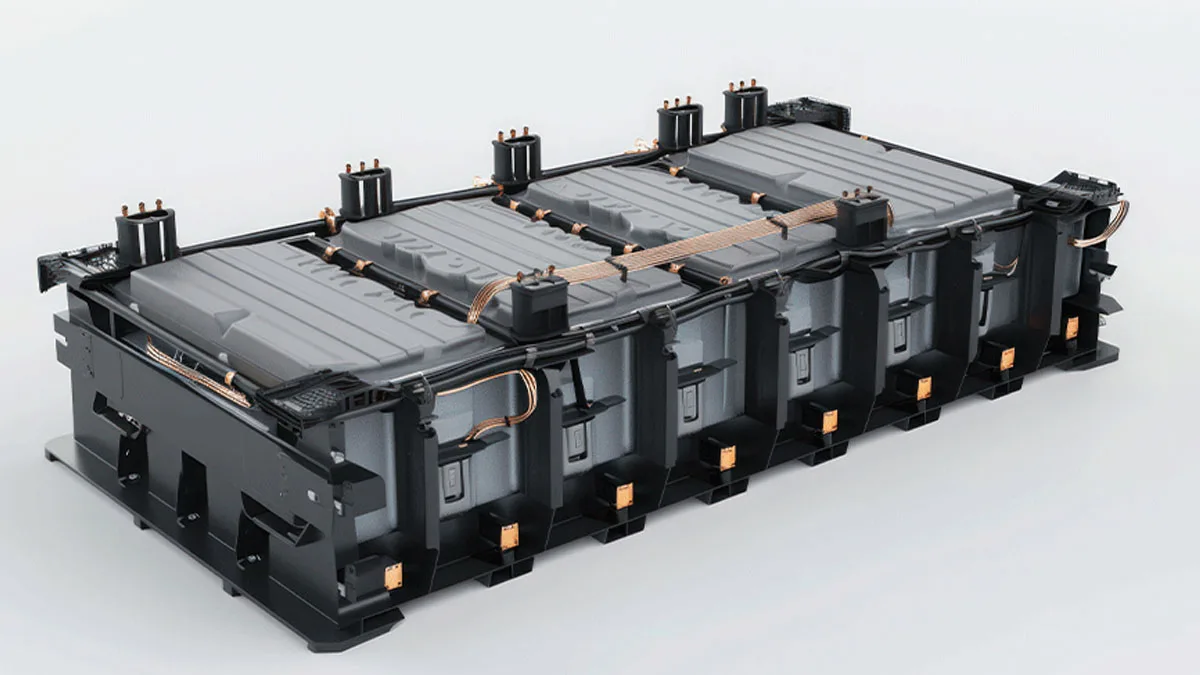
A stationary energy-storage installation normally contains much more than individual cells.
A complete solution can include:
Cells → Modules → Battery Pack → Rack/Cabinet → BMS → Protection → Monitoring → UPS/Inverter
Each part has a role in the overall system.
The battery cells determine the basic electrochemical characteristics, while the BMS manages operating conditions and protection. The inverter or UPS determines how stored DC energy is converted and delivered to the connected load.
This is why compatibility between components is essential.
Lithium Battery, Lithium-Ion and LiFePO4
These terms are sometimes used as though they mean exactly the same thing.
They do not.
Lithium battery is a broad term.
Lithium-ion battery generally refers to rechargeable lithium-based battery technologies.
LiFePO4, or Lithium Iron Phosphate, is one specific lithium-ion chemistry.
Different chemistries can have different characteristics relating to:
- Energy density
- Cycle performance
- Temperature behaviour
- Power capability
- Safety characteristics
- Cost
For a commercial or industrial project, the exact chemistry should be identified in the technical proposal and datasheet.
Understanding the Battery Management System
The Battery Management System, commonly called the BMS, is one of the most important components of a modern lithium-based battery system.
It can monitor parameters such as:
- Individual cell voltage
- Pack voltage
- Current
- Temperature
- State of Charge
- State of Health
- Charging condition
- Discharge condition
- Fault status
Depending on the design, the BMS can also control protection functions when abnormal conditions are detected.
For industrial users, this monitoring capability provides greater visibility into the condition of the battery system.
Why Cell Balancing Matters
Individual cells within a battery pack do not always behave identically.
Small differences can develop during operation and charging.
Cell balancing helps maintain the cells within appropriate operating limits.
Two common approaches are:
Passive Balancing
Excess energy from higher-voltage cells is dissipated through a balancing circuit.
Active Balancing
Energy is transferred between cells to improve balance.
The method depends on the battery architecture and BMS design.
For project evaluation, buyers should check whether cell-level monitoring and balancing are included in the proposed system.
Battery Voltage and Configuration
Industrial battery systems can be designed at different voltage levels depending on the application.
Modules may be connected in series to increase voltage and in parallel to increase capacity or current capability.
For example:
Series connection → Higher system voltage
Parallel connection → Greater capacity/current capability
The final configuration must be compatible with the UPS, inverter, charger and protection system.
The nominal voltage alone should therefore not be used to determine compatibility.
kW, kWh and kVA: What Buyers Need to Understand
These three terms describe different electrical characteristics.
kW represents power.
kWh represents stored energy.
kVA represents apparent power in an AC system.
Suppose a critical facility requires 100 kW for two hours.
The preliminary energy requirement would be:
100 kW × 2 hours = 200 kWh
But this does not automatically mean a 200 kWh battery will be sufficient.
System losses, usable capacity, temperature, operating limits and reserve requirements must also be considered.
Rated Capacity vs Usable Capacity
The nameplate capacity is not necessarily the amount of energy that should be used during normal operation.
Usable energy can depend on:
- Depth of discharge
- Minimum SOC
- Maximum SOC
- Temperature
- Discharge rate
- Battery efficiency
- BMS settings
- Ageing
Therefore, procurement teams should ask for both rated capacity and usable capacity under the intended operating conditions.
What Is Depth of Discharge?
Depth of Discharge, or DoD, describes how much of the available battery capacity has been used.
A system operating within a controlled SOC window may have different lifecycle characteristics from one that is regularly discharged very deeply.
The correct DoD should therefore be determined from the manufacturer’s specifications and the required duty cycle.
Understanding C-Rate
C-rate indicates the charge or discharge rate relative to battery capacity.
For example, a 100 kWh battery delivering approximately 100 kW is operating around a 1C discharge rate.
A project with high power requirements may therefore need a battery designed for a higher discharge rate even if its total energy requirement is relatively modest.
This is particularly relevant to industrial systems where high-power loads may occur for short periods.
Standby Applications and Daily-Cycling Applications
This distinction is essential.
Standby Battery
The battery normally remains charged and is used when the main power source fails.
Typical applications include:
- UPS
- Telecom
- Emergency backup
- Control systems
Cycling Battery
The battery is regularly charged and discharged.
Typical applications include:
- Solar storage
- Peak shaving
- Load shifting
- Energy management
- Hybrid systems
Battery selection should reflect the actual operating pattern.
Lithium-Ion for Industrial UPS Systems
Industrial UPS systems may protect critical equipment such as:
- PLC systems
- Automation controls
- Servers
- Networking
- Industrial computers
- Security systems
- Medical electronics
Lithium-ion batteries can be considered when a project places importance on compact installation, monitoring capability, cycling performance or specific lifecycle requirements.
However, the battery must be compatible with the UPS and charging architecture.
Lithium-Ion for Data Centers
Data centers depend on stable electrical infrastructure.
Battery-backed UPS systems can support:
- Servers
- Storage
- Network equipment
- Security systems
- Critical control systems
Important design considerations include:
- Required autonomy
- UPS architecture
- Redundancy
- Battery footprint
- Thermal management
- Monitoring
- Fire protection
- Future capacity requirements
Battery selection should be part of the wider data-center power design.
Lithium-Ion for Manufacturing Facilities
Factories increasingly rely on automation.
Production environments may contain:
- PLCs
- CNC machines
- Robotics
- Sensors
- Industrial networks
- Control panels
A power interruption can stop processes or cause equipment to enter an unexpected state.
A battery-backed system can be used to support selected critical loads and maintain control-system continuity.
The facility should first identify which loads genuinely require backup.
Lithium-Ion for Telecom Infrastructure
Telecom sites may be located in urban areas, rural locations or remote regions.
Some installations have limited physical space and restricted maintenance access.
A suitable energy-storage system may support:
- BTS equipment
- Communication systems
- Transmission equipment
- Network controls
Remote monitoring can be particularly useful where physical access is difficult.
Lithium-Ion for Commercial Buildings
Commercial applications can include:
- Office buildings
- Hotels
- Shopping facilities
- IT parks
- Business centres
- Educational campuses
Battery systems can support critical loads or form part of a solar and energy-management strategy.
The design should be based on the facility’s actual load profile rather than assuming that the entire building needs battery backup.
Lithium-Ion for Warehouses and Logistics
Warehouses increasingly depend on digital systems and automated processes.
Examples include:
- Warehouse-management systems
- Barcode infrastructure
- Networking
- Security
- Automation
- Material-handling controls
A targeted backup system can help maintain critical operations during interruptions.
Lithium-Ion for Hospitals and Healthcare
Healthcare facilities may depend on uninterrupted operation of selected electrical and electronic systems.
Battery applications can support:
- IT infrastructure
- Monitoring systems
- Communication
- Critical electronic equipment
- Security infrastructure
The system design should follow the facility’s electrical architecture and applicable safety requirements.
Solar Energy Storage
Solar generation and battery storage can be combined to improve energy flexibility.
During solar production:
Solar → Load + Battery
When solar generation falls:
Battery → Load
The exact operating strategy depends on the inverter and energy-management system.
A solar-storage project should therefore consider both the battery and the complete power-conversion architecture.
Battery Energy Storage Systems
A Battery Energy Storage System, or BESS, is more than a collection of batteries.
A complete BESS can include:
- Battery racks
- BMS
- Power Conversion System
- Energy Management System
- Protection
- Monitoring
- HVAC or thermal management
- Safety systems
- Enclosures
BESS projects require system-level engineering rather than simply selecting a battery module.
Peak Shaving and Demand Management
Some commercial and industrial facilities experience high demand during specific periods.
A battery may be used to discharge during selected peak periods.
Whether this provides a financial benefit depends on:
- Tariff structure
- Demand charges
- Load profile
- Battery efficiency
- Battery degradation
- Operating strategy
A financial assessment should be performed before choosing storage specifically for demand management.
Load Shifting
Energy can be stored at one time and used later.
For example, a facility may store excess solar energy during the day and use it later when solar production decreases.
This can improve the utilization of renewable energy.
The economic benefit depends on the difference between charging and discharging periods and the facility’s electricity tariff.
Hybrid Power Systems
A hybrid system may combine:
Grid + Solar + Generator + Battery
The battery can provide flexibility between different power sources.
Possible applications include:
- Remote industrial facilities
- Commercial buildings
- Telecom infrastructure
- Solar plants
- Microgrids
Control and energy-management logic are particularly important in these systems.
Generator and Battery Integration
A generator may provide long-duration backup while the battery handles shorter-duration requirements.
For example:
Battery → Immediate support
Generator → Extended backup
This arrangement can reduce dependence on immediate generator response and provide a more flexible backup architecture.
Generator compatibility should be checked during system design.
Battery Thermal Management
Temperature can significantly influence battery performance and ageing.
The installation should consider:
- Ambient temperature
- Battery temperature
- Ventilation
- Cooling
- Cabinet temperature
- Solar exposure
- Seasonal variations
The battery should operate within the manufacturer’s specified temperature range.
Indoor and Outdoor Installation
The installation environment must be assessed before selecting the battery enclosure.
Indoor
Consider:
- Room temperature
- Ventilation
- Floor loading
- Clearance
- Access
- Cable routing
Outdoor
Consider:
- Dust
- Rain
- Humidity
- Solar radiation
- Temperature
- Enclosure protection
- Security
The enclosure and environmental protection should match the actual site conditions.
Battery Cabinet and Rack Design
Large installations may require multiple battery modules.
The engineering team should evaluate:
- Rack dimensions
- Module weight
- Floor loading
- Cable routing
- Service access
- Ventilation
- Protection
- Expansion space
Good physical planning makes installation and future maintenance easier.
Electrical Protection
A battery system should have suitable protection against abnormal electrical conditions.
Depending on the architecture, this may include:
- Fuses
- DC breakers
- Isolators
- Over-current protection
- Short-circuit protection
- Over-voltage protection
- Under-voltage protection
Protection coordination should be evaluated with the wider electrical system.
Earthing and Grounding
Battery cabinets, racks and associated equipment may require appropriate grounding or earthing arrangements.
The exact configuration depends on:
- System design
- Electrical architecture
- Equipment specifications
- Local standards
- Installation requirements
Earthing should be addressed during engineering rather than after installation.
Safety and Emergency Isolation
Industrial energy-storage installations should include appropriate safety procedures.
Depending on the project, this may involve:
- Emergency isolation
- Clearly identified disconnects
- BMS protection
- Temperature monitoring
- Fault alarms
- Emergency procedures
- Fire detection
- Site-specific response procedures
The actual requirements should be determined according to the battery technology, installation and applicable regulations.
Battery Room Planning
A dedicated battery room or equipment area should provide sufficient space for:
- Installation
- Inspection
- Maintenance
- Cable access
- Ventilation
- Emergency access
Floor loading and equipment weight should also be considered.
Battery Commissioning
Commissioning confirms that the installed system is working as intended.
The process may include:
- Visual inspection
- Mechanical checks
- Polarity verification
- Voltage verification
- BMS checks
- Communication testing
- Alarm testing
- Charger/inverter integration
- Protection testing
- Functional testing
The final procedure should follow the manufacturer’s instructions and project requirements.
Factory Acceptance Testing
For larger industrial projects, Factory Acceptance Testing (FAT) may be included.
Depending on the project, FAT can verify:
- Product configuration
- Electrical characteristics
- BMS operation
- Communication
- Protection
- Alarms
- Documentation
The FAT scope should be defined before manufacturing or supply.
Site Acceptance Testing
Once the system is installed, Site Acceptance Testing (SAT) can verify integration with the facility.
Testing may cover:
- Battery voltage
- BMS communication
- UPS/inverter communication
- Alarm functions
- Protection
- Monitoring
- Operational response
Proper documentation of testing is important for project handover.
Battery Efficiency
Battery efficiency is another important consideration.
Energy can be lost during:
- Charging
- Discharging
- DC conversion
- Inverter conversion
- Cooling
- Auxiliary operation
For energy-storage projects, buyers should understand the difference between battery-level efficiency and complete system-level efficiency.
Round-Trip Efficiency
Round-trip efficiency compares the energy supplied to the storage system with the energy that can later be recovered.
For example:
Energy charged → Storage system → Energy recovered
Losses occur during the process.
For solar-storage and BESS projects, round-trip efficiency can influence operating economics.
Battery Ageing
Battery performance changes over time.
Two important ageing mechanisms are:
Calendar Ageing
Changes that occur with time, even when the battery is not heavily cycled.
Cycle Ageing
Changes associated with repeated charge and discharge.
Temperature, depth of discharge and operating conditions can influence both.
Battery Capacity Retention
A battery’s usable capacity can gradually decline during its service life.
This is why commercial buyers should ask:
- What capacity-retention level is expected?
- Under what temperature?
- At what cycle rate?
- At what DoD?
- Under what charging conditions?
A cycle-life number without the associated test conditions is difficult to compare meaningfully.
Warranty Considerations
A battery quotation should clearly identify the warranty terms.
Check:
- Product warranty
- Performance warranty
- Capacity-retention guarantee
- Cycle limitations
- Temperature conditions
- Installation requirements
- Warranty exclusions
- Service response
The longest warranty is not automatically the best warranty if its conditions are restrictive.
Service and Spare Parts
For critical applications, after-sales support matters.
Customers should consider whether the supplier can support:
- Replacement modules
- BMS components
- Protection devices
- Communication equipment
- Diagnostics
- Technical support
- Preventive maintenance
Long-term service availability contributes to the overall value of the installation.
Battery Replacement and Retrofit
Existing facilities may already have VRLA, Ni-Cd or another battery technology.
Replacing it with lithium-ion requires an engineering review.
Check:
- UPS compatibility
- Charger characteristics
- DC voltage
- Battery current
- BMS communication
- Cabinet dimensions
- Protection
- Required autonomy
A retrofit should not be treated as a simple battery substitution.
Lithium-Ion vs VRLA
| Factor | Lithium-Ion | VRLA |
|---|---|---|
| Energy density | Generally higher | Generally lower |
| Footprint | Often smaller | Often larger |
| Monitoring | BMS commonly included | Monitoring available depending on system |
| Cycling | Often suitable for frequent cycling | Depends on application |
| Initial cost | Often higher | Often lower |
| Maintenance | Generally low | Generally low |
| Typical applications | UPS, BESS, solar, hybrid systems | UPS, telecom, standby |
The correct choice depends on the application and total lifecycle cost.
Lithium-Ion vs Ni-Cd
Ni-Cd has a long history in demanding industrial and utility applications.
Lithium-ion may offer advantages in:
- Compact installation
- Energy density
- Digital monitoring
- Certain cycling applications
Ni-Cd may remain attractive where proven industrial performance and demanding environmental tolerance are important.
Neither technology should automatically be selected without an application assessment.
Common Battery Procurement Mistakes
Choosing Only by Price
Initial cost does not represent total ownership cost.
Comparing Only kWh
Power capability is equally important.
Ignoring the Duty Cycle
Standby and daily cycling are different applications.
Not Checking BMS Compatibility
Communication problems can prevent correct integration.
Ignoring Temperature
Environmental conditions can affect performance and ageing.
Not Checking Warranty Conditions
A headline warranty period does not tell the complete story.
Failing to Plan for Expansion
Future load growth should be considered where practical.
VIVATEK – Anushri Systech’s Own Brand
VIVATEK is the own brand of Anushri Systech Pvt Ltd.
The brand is focused on power solutions for industrial and commercial applications.
Depending on the product category and current range, VIVATEK solutions can support requirements related to:
- UPS
- Battery systems
- Power backup
- Energy storage
- Industrial power infrastructure
Product specifications should always be confirmed from the applicable current technical documentation.
Other Brands Supplied by Anushri Systech
Not every customer wants the same brand.
An EPC contractor may have a specified manufacturer.
A replacement project may require compatibility with an existing installation.
A procurement department may have an approved vendor list.
For such requirements, Anushri Systech can supply selected products from other established brands where applicable, alongside its own VIVATEK range.
This gives industrial and commercial customers greater flexibility.
The quotation should clearly identify the brand, manufacturer, model and supply scope.
Industries We Support
Power and energy-storage requirements can arise across:
- Manufacturing
- Data centers
- Telecom
- Healthcare
- Warehousing
- Logistics
- IT infrastructure
- Commercial buildings
- Renewable energy
- Mining
- Oil and gas
- Utilities
- Transportation
- Infrastructure projects
The technical solution should be selected according to the specific operating conditions of each industry.
Total Cost of Ownership
The financial evaluation should go beyond the purchase price.
Consider:
CAPEX
Equipment + installation + integration
OPEX
Maintenance + energy losses + service
Lifecycle
Replacement + degradation + support
Risk
Downtime + operational disruption
This provides a more realistic view of the investment.
Why Lifecycle Value Matters
A battery can remain part of a facility’s infrastructure for many years.
During this period, businesses need:
- Stable performance
- Predictable maintenance
- Service support
- Spare parts
- Monitoring
- Replacement planning
A slightly higher initial investment may provide better long-term value if the system is better suited to the operating profile.
Scalability and Future Expansion
Industrial and commercial facilities often grow.
Additional:
- Machinery
- Servers
- Solar capacity
- Buildings
- Communication equipment
may be added later.
A scalable energy-storage design can make future expansion easier.
Planning for expansion during the initial project stage may reduce later modification costs.
A Practical Project Workflow
A typical project can follow:
Requirement discussion → Load assessment → Application evaluation → Battery chemistry selection
→ Sizing calculation → BMS and equipment compatibility → Technical proposal → Commercial quotation
→ Order confirmation → Supply → Installation → Commissioning → Monitoring and support
This process helps reduce the risk of selecting equipment based only on a catalogue rating.
Frequently Asked Questions
What are lithium-ion batteries used for?
They can be used for UPS backup, solar storage, BESS, telecom, industrial power, commercial facilities and hybrid energy systems.
Is lithium-ion suitable for industrial applications?
It can be suitable when the chemistry, capacity, power rating, BMS, installation environment and connected equipment are properly matched.
What is LiFePO4?
LiFePO4, or Lithium Iron Phosphate, is a lithium-based rechargeable chemistry used in various energy-storage applications.
What does BMS mean?
BMS stands for Battery Management System. It monitors and manages battery operating conditions and provides protection functions according to the system design.
Can lithium-ion be used with an existing UPS?
Potentially, but the UPS, charger, DC voltage, current requirements and BMS communication must be checked first.
Is lithium-ion better than VRLA?
Not for every application. The correct choice depends on duty cycle, footprint, investment, operating environment and lifecycle requirements.
Is lithium-ion better than Ni-Cd?
There is no universal answer. Both technologies have different characteristics and may be suitable for different industrial applications.
How is battery capacity calculated?
A preliminary calculation can use load multiplied by required operating time, but actual sizing must account for efficiency, DoD, temperature, ageing and system losses.
Does battery temperature affect lifespan?
Yes. Operating outside the manufacturer’s recommended temperature range can affect performance and ageing.
Can lithium-ion be used for solar storage?
Yes. It can be integrated into suitable solar and hybrid energy-storage systems when the battery and power-conversion equipment are compatible.
What is BESS?
BESS means Battery Energy Storage System. It normally includes batteries, power conversion, controls, monitoring and protection.
Does Anushri Systech supply only VIVATEK products?
No. VIVATEK is the company’s own brand. Selected products from other established brands can also be supplied depending on project requirements.
Does Anushri Systech support industrial and commercial projects?
Yes. The solutions are intended for industrial, commercial and infrastructure applications, subject to the product and project requirements.
Can I request a project quotation?
Yes. Sharing the application, load, voltage, backup duration and existing equipment details helps the technical team evaluate the requirement.
Conclusion
Lithium-ion technology has opened new possibilities for industrial and commercial energy storage.
It can support UPS systems, solar installations, BESS projects, telecom infrastructure, hybrid power systems and other critical applications.
But the battery itself is only one part of the solution.
Successful projects depend on correct sizing, suitable chemistry, BMS functionality, electrical protection, thermal conditions, system compatibility, installation quality, commissioning and long-term service.
For this reason, businesses should avoid selecting a battery solely because it has a higher capacity or lower purchase price.
The better approach is to evaluate the complete requirement:
Application + Load + Power + Energy + Duty Cycle + Temperature + Compatibility + Safety + Lifecycle Cost
Anushri Systech Pvt Ltd supports this process through its own VIVATEK brand and selected products from established third-party brands, acting as a supplier, dealer or distributor where applicable.
For industrial and commercial customers, the goal is simple:
Select the right technology, integrate it correctly and build a power-storage system that can support the facility throughout its operating life.
📞 +91 9566117188 // +91 9841698180
📧 sales@anushri.info
📍 2/27, Luz Ave 3rd St, East Abiramapuram, Mylapore, Chennai, Tamil Nadu 600004