
Introduction
Electricity is no longer just a utility expense for industrial businesses. It has become a strategic business cost that directly impacts profitability, competitiveness, and long-term growth.
Across India, manufacturing facilities, engineering industries, textile mills, food processing units, warehouses, and industrial parks are facing increasing electricity tariffs, rising demand charges, and growing pressure to improve operational efficiency.
As a result, industrial solar power systems have become one of the most practical investments available for businesses seeking to reduce operating costs while improving energy independence.
Unlike conventional cost-cutting initiatives that may offer limited returns, a properly engineered industrial solar power system can continue generating savings for more than two decades.
For many industries, solar energy is no longer viewed as an alternative power source. It is becoming an essential part of long-term business planning.
Why Electricity Costs Are Becoming a Strategic Business Issue
For most industrial facilities, electricity is one of the largest recurring operating expenses.
Production machinery, HVAC systems, compressors, pumps, process equipment, automation systems, lighting, and utility infrastructure all contribute to significant energy consumption throughout the year.
As electricity tariffs continue to increase, businesses face growing pressure to maintain profitability without compromising production capacity or product quality.
The challenge becomes even greater for facilities operating multiple shifts or energy-intensive manufacturing processes.
Every increase in electricity cost affects operating margins. Unlike raw material costs, energy expenses are often difficult to control without making strategic investments.
This is why more businesses are evaluating industrial solar power as a long-term solution rather than a short-term cost-saving measure.
Why Industries Are Moving Toward Solar Energy
Industrial solar adoption is accelerating because it addresses multiple business objectives simultaneously.
First, solar energy helps reduce dependence on utility electricity, resulting in lower monthly power costs.
Second, solar power provides greater predictability for long-term energy planning. Instead of being exposed entirely to future tariff increases, businesses can generate a significant portion of their electricity requirements internally.
Third, many organizations are incorporating sustainability initiatives into their operational strategies. Solar power helps reduce carbon emissions while supporting environmental goals and corporate sustainability commitments.
Most importantly, solar installations transform unused roof space or available land into productive assets capable of generating measurable financial returns.
What Is an Industrial Solar Power System?
An industrial solar power system is a large-scale solar installation specifically designed to meet the energy requirements of commercial and industrial facilities.
Unlike residential solar systems, industrial projects require detailed engineering, load analysis, electrical integration, safety coordination, regulatory approvals, and long-term performance planning.
These systems are designed around actual facility energy consumption rather than standard package sizes.
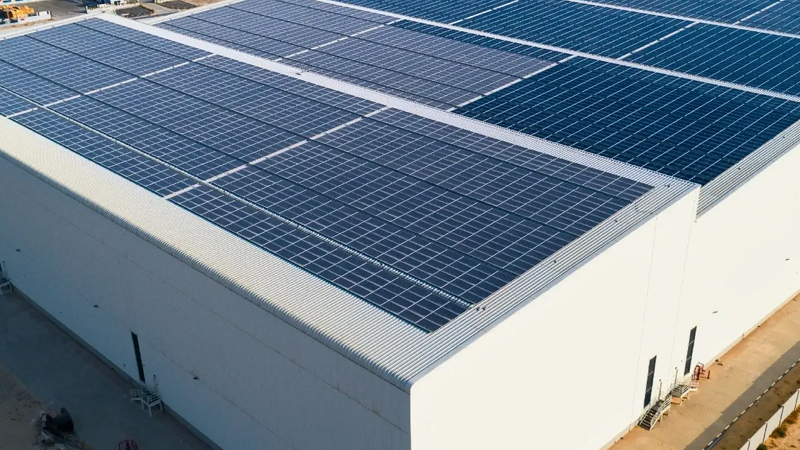
Industrial solar installations may be deployed on factory rooftops, warehouse structures, industrial campuses, open land, or captive solar facilities depending on project requirements.
The objective is simple: generate clean electricity while reducing long-term operating expenses.
Why Industrial Solar Projects Are Different from Commercial Solar
Industrial projects involve much greater complexity than standard commercial installations.
Factories often operate large electrical loads, multiple distribution systems, HT or LT infrastructure, process equipment, and critical production operations.
A solar project that is not properly engineered can affect performance, create compliance challenges, and reduce expected returns.
Successful industrial solar projects require detailed understanding of electrical infrastructure, power quality requirements, load profiles, tariff structures, safety standards, and future expansion plans.
This is why industries typically seek experienced solar engineering partners rather than general installation contractors.
Why Industries Need Specialized Solar Manufacturers
The long-term success of a solar project depends on much more than solar panels.
System design, inverter selection, structural engineering, cable routing, protection coordination, monitoring systems, and grid integration all influence overall performance.
A professionally engineered solar system can generate significantly higher lifetime returns compared to a project designed solely around installation cost.
Industries therefore benefit from working with specialized solar solution providers that understand manufacturing environments, industrial electrical systems, and long-term asset performance.
The right partner helps ensure the solar power plant becomes a reliable business asset rather than simply another infrastructure project.
Common Energy Challenges Faced by Manufacturing Facilities
Many manufacturing businesses face similar energy-related challenges.
Electricity bills continue increasing despite efforts to improve efficiency.
Production growth leads to higher power consumption.
Demand charges affect operating costs.
Energy budgeting becomes increasingly difficult.
Facilities remain dependent on utility tariff changes that are outside their control.
These challenges can affect long-term competitiveness, particularly in industries where energy costs represent a significant portion of production expenses.
Industrial solar addresses many of these concerns by creating a predictable and controllable energy source within the facility itself.
The Hidden Cost of Delaying Solar Adoption
Many businesses spend months or even years evaluating solar projects.
While careful planning is important, delaying implementation often carries its own financial consequences.
Every month a facility operates without solar represents electricity savings that can never be recovered.
Unlike machinery investments that may require years before producing measurable returns, solar begins generating value immediately after commissioning.
For facilities with substantial daytime power consumption, postponing solar adoption can result in significant lost savings over time.
The question is often not whether solar will generate returns.
The question is how much value is lost by waiting.
Types of Industrial Solar Power Systems
Industrial facilities have different operational requirements, which is why there is no single solar solution suitable for every application.
On-Grid Industrial Solar Power System
An on-grid solar system is connected directly to the utility network and is one of the most common solutions for factories and manufacturing units.
The electricity generated by the solar plant is consumed by the facility, reducing dependence on grid power during daylight hours. Any excess power may be exported based on local regulations and utility policies.
For businesses with significant daytime energy consumption, on-grid solar often provides the fastest return on investment.
Hybrid Solar Power System
A hybrid solar system combines solar generation with battery storage.
This configuration provides additional flexibility by storing excess solar energy for later use while also supporting backup power requirements.
Hybrid systems are often considered for facilities located in areas with unstable grid conditions or where uninterrupted operations are critical.
Captive and Open Access Solar Projects
Large industrial consumers may choose captive solar or open access solar projects when on-site installation space is limited.
These projects allow industries to generate solar power at a remote location and utilize the energy for their manufacturing operations through approved utility frameworks.
For high-consumption facilities, captive solar can provide significant long-term energy cost advantages.
How Industrial Solar Supports Long-Term Business Planning
Most businesses prepare long-term strategies for production, infrastructure, workforce development, and expansion.
Energy planning should receive the same level of attention.
Electricity costs can fluctuate significantly over the life of a manufacturing facility. Solar power helps businesses gain greater control over future energy expenses by reducing dependence on utility tariff increases.
A properly designed solar project can continue generating value for decades, making it one of the few investments that directly contributes to both cost reduction and operational stability.
Many organizations now view solar power as part of their long-term business resilience strategy rather than simply an energy project.
Industries That Benefit Most from Solar Power
Industrial solar solutions are suitable for a wide range of sectors.
Manufacturing facilities often use solar to reduce production costs and improve operational efficiency.
Textile mills benefit from solar because of their high daytime energy consumption.
Food processing units, cold storage facilities, engineering industries, pharmaceutical manufacturers, logistics centers, warehouses, automotive suppliers, commercial campuses, and industrial parks can all achieve substantial savings through solar power generation.
Any facility with significant electricity consumption and available installation space should evaluate the potential benefits of industrial solar.
Real Factory Example: Solar Savings Scenario
Consider a manufacturing facility with an average monthly electricity bill of ₹4 lakh.
After evaluating its consumption pattern, a solar system is designed to offset a significant portion of daytime energy demand.
The installed solar plant generates clean electricity throughout the year, reducing grid consumption and lowering monthly operating expenses.
Over time, the savings accumulate into a substantial financial benefit while providing protection against future electricity tariff increases.
Although actual results vary depending on consumption patterns, location, and project size, many industrial solar projects achieve payback within a few years while continuing to generate savings for decades.
How Vivatek Approaches Industrial Solar Projects
At Vivatek, we believe every industrial facility has unique energy requirements.
Our approach begins with understanding the customer’s electricity consumption, operational objectives, infrastructure conditions, and future expansion plans.
Rather than recommending standard system sizes, we focus on developing project-specific solutions designed around actual business requirements.
This engineering-first approach helps maximize system performance, improve return on investment, and support long-term reliability.
Our objective is not simply to install solar panels.
Our objective is to help industries create a dependable energy asset that continues delivering value throughout its operating life.
Industrial Solar Feasibility and ROI Assessment
Every successful solar project begins with a detailed feasibility study.
This process evaluates energy consumption patterns, tariff structures, available installation space, electrical infrastructure, and financial objectives.
The assessment helps determine the optimal system size, expected energy generation, projected savings, and estimated payback period.
By understanding the economic and technical aspects before implementation, businesses can make informed investment decisions with greater confidence.
Engineering and System Design Process
Engineering is one of the most important stages of any industrial solar project.
A properly engineered system takes into account electrical integration, structural requirements, environmental conditions, safety standards, and long-term performance objectives.
Attention to design quality helps maximize energy generation while reducing operational risk throughout the life of the system.
Well-engineered projects often outperform lower-cost installations by delivering greater reliability and improved lifetime returns.
Approval, Compliance and Grid Integration
Industrial solar projects must comply with utility regulations, electrical safety requirements, and applicable industry standards.
Approval processes often involve documentation, engineering reviews, utility coordination, and regulatory compliance activities.
Managing these requirements effectively helps avoid project delays and supports smooth system commissioning.
Professional project management ensures the installation progresses efficiently from design through final approval.
Installation, Testing and Commissioning
Successful implementation requires more than equipment delivery.
Installation activities include structural work, electrical integration, cable routing, inverter installation, protection system configuration, and final commissioning.
Once installation is complete, comprehensive testing is performed to verify system performance, safety compliance, and operational readiness.
Proper commissioning ensures the solar plant is prepared to deliver reliable long-term performance from the first day of operation.
Monitoring, Operation and Long-Term Performance
Installing a solar power system is only the beginning of the journey.
Long-term performance depends on continuous monitoring, preventive maintenance, and system optimization. Modern industrial solar systems include monitoring platforms that provide real-time visibility into energy generation, system performance, and operational status.
This allows facility managers to identify performance trends, monitor energy savings, and ensure the system continues operating at peak efficiency.
Routine inspections, module cleaning, inverter health checks, and preventive maintenance activities help maximize energy generation and protect the long-term value of the investment.
A properly maintained solar power plant can continue delivering reliable performance for more than two decades.
Questions Factory Owners Should Ask Before Investing
Before investing in solar power, every business should evaluate its requirements carefully.
How much electricity does the facility consume during daylight hours?
What are the current electricity costs and future projections?
Is the facility planning to expand production capacity?
How much roof or land area is available?
What level of return on investment is expected?
How will solar integrate with the existing electrical infrastructure?
Answering these questions helps ensure the project is aligned with both operational requirements and financial objectives.
The best solar system is not necessarily the largest one. It is the one designed specifically for the facility’s needs.
Why Engineering Matters More Than Panel Selection
Many businesses focus primarily on solar panels when evaluating proposals.
However, long-term performance depends far more on engineering quality than individual component specifications.
System design, inverter selection, cable sizing, structural integrity, protection systems, shading analysis, and electrical integration all influence project success.
Even high-quality solar panels can underperform when installed within a poorly designed system.
Engineering determines how effectively every component works together to deliver reliable performance over the life of the project.
For industrial applications, engineering quality is often the difference between an average solar plant and a high-performing energy asset.
Common Mistakes Businesses Make When Selecting a Solar Partner
One of the most common mistakes is selecting a project based solely on the lowest quotation.
While cost is important, long-term performance, engineering quality, installation standards, and after-sales support have a much greater impact on overall value.
Another common mistake is overlooking future expansion requirements. A system designed only for current demand may require costly modifications later.
Some businesses also underestimate the importance of monitoring, maintenance support, and technical expertise.
A successful solar project requires a partner capable of supporting the facility throughout the entire lifecycle of the installation.
How to Evaluate ROI Beyond Simple Payback
Many solar discussions focus only on payback period.
While payback is important, it represents only one aspect of project value.
Businesses should also evaluate lifetime electricity savings, protection against future tariff increases, operational stability, sustainability benefits, and overall return on investment.
A solar power system is not simply an expense reduction tool.
It is a long-term infrastructure asset capable of generating financial value year after year.
The most successful projects are evaluated based on lifetime business impact rather than short-term payback calculations alone.
Future-Proofing Industrial Energy Costs
Energy markets continue to evolve.
Electricity tariffs, demand charges, regulatory changes, and sustainability requirements are expected to influence industrial operating costs for years to come.
Solar power helps businesses prepare for this future by reducing exposure to rising energy costs and improving long-term predictability.
Organizations that invest in solar today are building a foundation for greater energy independence and operational resilience.
As manufacturing continues to become more competitive, controlling energy costs will remain an important advantage.
Why Industries Choose Vivatek
Industries choose Vivatek because we understand that every facility operates under unique conditions.
Our team focuses on developing practical, performance-driven solar solutions based on real operating requirements rather than generic system packages.
From feasibility assessment and engineering design to installation, commissioning, monitoring, and long-term support, we work closely with customers throughout the project lifecycle.
Our objective is to help businesses reduce energy costs, improve operational efficiency, and create reliable long-term energy assets.
Whether supporting manufacturing facilities, engineering industries, logistics centers, warehouses, food processing plants, textile mills, or commercial infrastructure, Vivatek remains committed to delivering dependable industrial solar solutions.
Frequently Asked Questions
How much can an industrial solar power system reduce electricity costs?
Savings depend on electricity consumption, system size, tariff structure, and operating profile. Many facilities achieve substantial reductions in grid electricity usage after installation.
What is the typical lifespan of an industrial solar power system?
A properly engineered and maintained solar power system can continue generating electricity for more than 25 years.
Is solar suitable for factories operating multiple shifts?
Yes. Solar can offset significant daytime energy consumption while supporting long-term cost reduction strategies.
How long does an industrial solar project take?
Project duration varies depending on system size, approvals, site conditions, and project complexity.
Can solar be installed without disrupting production?
In most cases, installations can be planned and executed with minimal impact on daily operations.
Conclusion
Industrial solar power is no longer simply an environmental initiative.
It has become a strategic business investment that helps organizations reduce operating costs, improve energy security, support sustainability goals, and strengthen long-term competitiveness.
As electricity costs continue to rise, businesses that adopt solar power today position themselves for greater operational stability and financial predictability in the future.
A properly engineered industrial solar power system can continue generating value for decades while transforming energy from an ongoing expense into a long-term business asset.
Free Industrial Solar Consultation
Planning a solar project for your factory, warehouse, industrial facility, or manufacturing unit?
Speak with the Vivatek team for expert guidance on system sizing, energy savings potential, project feasibility, and implementation planning.
Our specialists can help evaluate your facility and identify the most suitable solar solution for your operational requirements.
Free ROI Assessment
Send us your latest electricity bill and our team will provide a preliminary assessment including:
Recommended solar capacity
Estimated annual energy generation
Potential electricity cost savings
Expected payback period
Project implementation considerations
This assessment is designed to help businesses understand the financial potential of industrial solar before making an investment decision.
Download Brochure
Explore our industrial solar solutions, project capabilities, engineering approach, and application expertise by downloading the Vivatek Industrial Solar Solutions Brochure.
Contact Vivatek Today
Ready to reduce electricity costs and improve long-term energy efficiency?
Contact Vivatek today to discuss your industrial solar requirements and discover how a professionally engineered solar power system can support your business objectives for the next 25 years and beyond.
📞 Contact: +91 9566117188 / 9841698180
📧 Email: sales@anushri.info
🌐 Website: https://anushri.info/