
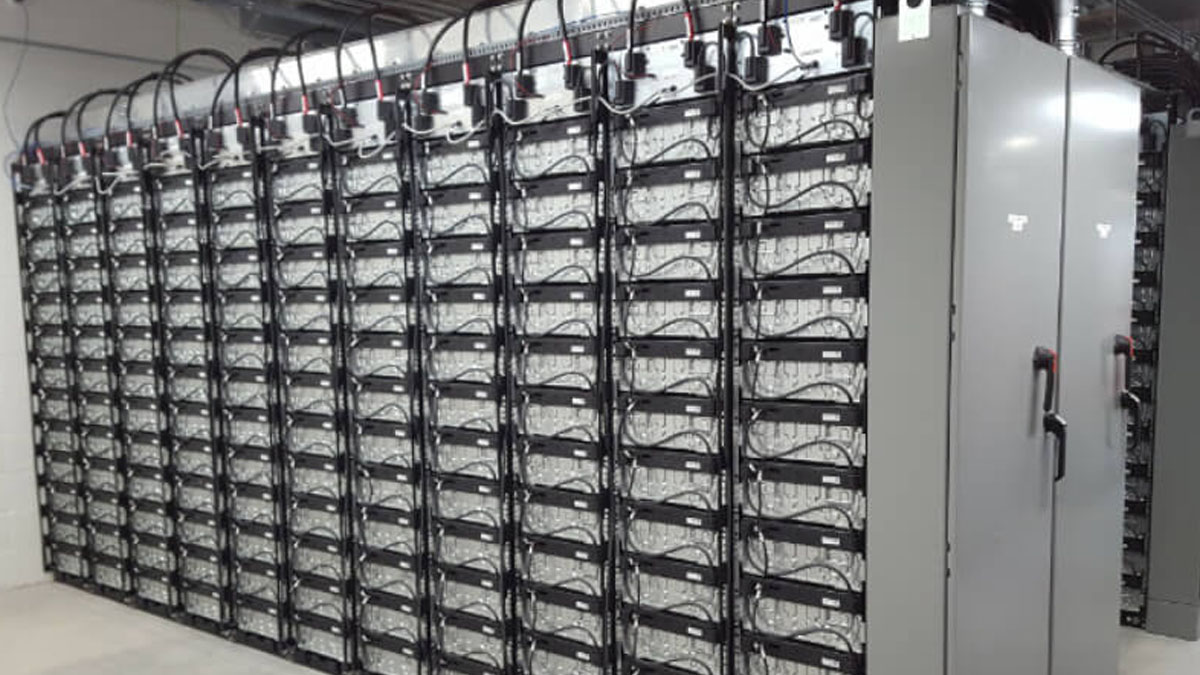
Reliable energy storage is an essential part of modern electrical infrastructure. When the utility supply fails, the battery system becomes the stored-energy source that keeps critical equipment operating until normal power is restored or another backup source becomes available.
Manufacturing facilities, data centers, telecom networks, substations, hospitals, railway infrastructure and renewable-energy projects all have different backup requirements. A battery that works well for one application may not be appropriate for another.
The right selection therefore depends on the actual load, required autonomy, discharge profile, operating environment, charging arrangement, available space and expected service life.
This guide explains the major industrial battery technologies, how engineers approach selection and sizing, what buyers should evaluate before procurement, and how proper maintenance and lifecycle planning can improve backup reliability.
What Is an Industrial Battery System?
An industrial battery system is an arrangement of cells, modules or batteries designed to store electrical energy and deliver it when required.
Depending on the application, it can be connected to:
- Online UPS systems
- Substation DC systems
- Telecom infrastructure
- Industrial control systems
- Solar installations
- Battery Energy Storage Systems
- Railway systems
- Emergency power systems
Unlike ordinary consumer batteries, industrial installations are designed around specific electrical and environmental requirements.
The battery is therefore only one part of the overall power system. Its performance depends on the UPS or charger, protection equipment, cabling, operating conditions and maintenance practices.
Why Industrial Battery Selection Matters
Selecting the wrong battery can create problems even when the nominal capacity appears sufficient.
Possible consequences include:
- Insufficient backup duration
- Reduced battery life
- Charging problems
- Excessive maintenance
- Unexpected shutdowns
- Higher replacement costs
- Poor compatibility with the existing UPS
A proper selection process starts with the application and works backward to the battery specification.
Major Industrial Battery Technologies
Different technologies offer different characteristics. There is no single battery chemistry that is best for every industrial application.
VRLA Batteries
Valve Regulated Lead Acid batteries are widely used for standby power applications.
They are commonly considered for:
- UPS systems
- Telecom equipment
- Security systems
- Control panels
- Commercial facilities
Their sealed construction and relatively low routine maintenance make them suitable for many indoor backup installations.
2V VRLA Battery Systems
Large UPS and critical-power installations may use individual 2V VRLA cells connected together to create the required battery-bank voltage.
These systems can be considered for:
- Large UPS installations
- Industrial facilities
- Substations
- Critical infrastructure
The number of cells depends on the required DC bus voltage.
Tubular Batteries
Tubular lead-acid batteries can be considered where longer-duration backup is required.
Typical applications include:
- Extended-backup systems
- Industrial facilities
- Solar installations
- Infrastructure projects
The charging system, ventilation and installation environment should be checked before selecting this technology.
Lithium-Ion Batteries
Lithium-ion technology is increasingly used in modern backup and energy-storage applications.
Potential advantages include:
- High energy density
- Compact footprint
- Faster charging
- Long cycle capability
- Reduced routine maintenance
Lithium systems require suitable battery-management and protection arrangements.
LiFePO4 Batteries
Lithium Iron Phosphate is a lithium chemistry commonly selected for applications requiring long cycle life and good thermal stability.
It may be considered for:
- Solar storage
- Telecom backup
- Industrial energy storage
- UPS applications
- Hybrid power systems
The complete battery-management architecture should be evaluated along with the cells.
Ni-Cd Batteries
Nickel-Cadmium batteries are used in applications where durability and dependable performance under demanding conditions are important.
They may be considered for:
- Electrical substations
- Power-generation facilities
- Railway infrastructure
- Industrial control systems
- Critical DC applications
The technology should be evaluated against the project’s environmental, performance and lifecycle requirements.
FIAMM Industrial Batteries
FIAMM battery products are used in various critical-power and backup applications.
When considering a specific FIAMM model, buyers should evaluate its:
- Capacity
- Discharge performance
- Service-life specification
- Operating temperature
- Charging requirements
- Physical dimensions
- System compatibility
The exact model specification should always be matched to the application.
Industrial Battery Technology Comparison
| Technology | Typical Strength | Common Applications |
|---|---|---|
| VRLA | Low routine maintenance | UPS, telecom |
| 2V VRLA | Large battery-bank configuration | UPS, substations |
| Tubular | Extended backup applications | Industrial, solar |
| Lithium-ion | High energy density | UPS, data centers |
| LiFePO4 | Long cycle capability | BESS, solar |
| Ni-Cd | Durable in demanding environments | Utilities, substations |
| FIAMM | Critical backup applications | UPS, telecom |
This table is only a starting point. Final selection should be based on actual project conditions.
Applications of Industrial Battery Systems
Manufacturing Plants
Batteries can support UPS systems protecting PLCs, automation equipment, control systems, CNC machinery and production infrastructure.
Data Centers
Battery banks support UPS systems protecting servers, storage, networking and other IT equipment.
Telecom
Battery backup helps maintain communication infrastructure when grid power is unavailable.
Electrical Substations
Battery systems provide DC power for protection, control, switching and communication equipment.
Healthcare
Critical electrical systems can use battery-backed UPS infrastructure for medical and support equipment.
Railways
Battery systems may support signaling, communication, control and other essential infrastructure.
Renewable Energy
Batteries can store energy from solar and other renewable sources for later use.
Industrial Control Systems
Critical monitoring, instrumentation and control systems may require dependable DC backup.
How to Select the Right Battery
Battery selection should be based on the complete application.
Step 1: Identify the Critical Load
Determine exactly which equipment needs backup.
Step 2: Establish Required Runtime
Define how long the equipment must continue operating.
Step 3: Confirm DC Voltage
The battery-bank voltage must match the UPS or DC system.
Step 4: Understand the Discharge Profile
Short, high-current discharge and long-duration discharge have different battery requirements.
Step 5: Check Environmental Conditions
Temperature, humidity, dust and ventilation can affect performance.
Step 6: Review Available Space
Consider battery dimensions, cabinets, racks, floor loading and maintenance access.
Step 7: Verify Charger Compatibility
The charging system must be suitable for the chosen battery technology.
Step 8: Consider Future Requirements
Expected load growth should be considered before finalizing the system.
Industrial Battery Sizing
Battery sizing is more complicated than selecting a particular Ah rating.
Engineers may consider:
Critical load + DC voltage + required autonomy + discharge rate + temperature + ageing factor + design margin
For UPS applications, additional factors can include:
- UPS efficiency
- Power factor
- End-of-discharge voltage
- Battery ageing
- Required reserve capacity
The manufacturer’s discharge curves should be reviewed when determining the appropriate configuration.
Why Ah Rating Alone Is Not Enough
Two batteries with the same nominal Ah capacity may perform differently under actual operating conditions.
Performance can depend on:
- Discharge rate
- Discharge duration
- Temperature
- Cut-off voltage
- Battery age
- Charging conditions
- Cycle frequency
For critical projects, buyers should compare actual discharge data rather than relying only on the number printed on the battery.
Battery Runtime and Autonomy
Battery autonomy is the period for which the battery can support the required load during a power interruption.
Different applications have different requirements.
UPS + Generator
The battery may only need to bridge the time required for the generator to start and stabilize.
Telecom
Longer autonomy may be required at sites where utility interruptions are frequent.
Solar + BESS
The battery may be required to store energy during generation periods and supply the load later.
The runtime requirement should therefore be established before battery capacity is finalized.
Standby vs Frequent-Cycling Applications
Not every battery operates in the same way.
Standby Operation
The battery remains charged most of the time and is discharged mainly during outages.
Frequent Cycling
The battery repeatedly charges and discharges as part of normal operation.
Energy Storage
The battery may be intentionally charged and discharged according to an energy-management strategy.
The selected technology should match the expected duty cycle.
Depth of Discharge
Depth of discharge describes how much of the stored energy is used during a discharge cycle.
Repeated deep discharge can influence battery life depending on the technology.
For system design, engineers may therefore consider:
- Usable energy
- Maximum discharge depth
- Cycle frequency
- Recharge time
- Expected service life
This is especially relevant to solar storage and BESS projects.
Charging and Recharge Time
Backup capability is only part of the design.
The system must also be capable of recharging the battery after an outage.
Recharge planning can depend on:
- Battery capacity
- Charger rating
- Depth of discharge
- Required recovery time
- Outage frequency
- Operating schedule
Facilities experiencing repeated interruptions should pay particular attention to recharge capability.
Battery Charger Compatibility
Battery and charger selection should be considered together.
The charging system needs to match:
- Battery chemistry
- Cell count
- Float voltage
- Charging current
- Boost-charge requirements
- Temperature compensation
- Battery-management requirements
This is especially important when upgrading an existing lead-acid system to lithium technology.
Battery Temperature and Indian Operating Conditions
Industrial installations in India can experience high ambient temperatures, humidity, dust and varying ventilation conditions.
Temperature can directly influence battery ageing and performance.
Before installation, the engineering team should evaluate:
- Ambient temperature
- Seasonal variation
- Indoor/outdoor location
- Ventilation
- Cooling
- Humidity
- Dust
- Battery enclosure
The selected battery should be suitable for the actual site environment.
Battery Installation
Correct installation is essential for dependable operation.
A site assessment should consider:
- Battery placement
- Ventilation
- Cable routing
- Floor loading
- Earthing
- Electrical isolation
- Maintenance access
- Temperature
- Protection equipment
Requirements vary according to battery technology and installation size.
Battery Cabinet vs Battery Rack
Battery systems can be installed using cabinets or open rack arrangements depending on the project.
Battery Cabinet
Provides an enclosed arrangement and can be useful where protected installation is preferred.
Battery Rack
Can provide convenient access for large cell-based systems and maintenance activities.
The choice depends on battery type, capacity, site layout, safety requirements and maintenance strategy.
Battery Cable and Connection Design
Large battery banks can carry significant DC current, making connection design important.
Engineers should evaluate:
- Cable size
- Cable length
- Voltage drop
- Current rating
- Terminal arrangement
- Polarity
- Protection
- Connection quality
Poor connections can cause heating and resistance even when the battery itself is correctly selected.
Battery Protection and Safety
An industrial battery installation should have appropriate electrical protection.
Depending on the system, this may include:
- DC isolators
- Fuses
- Circuit breakers
- Overcurrent protection
- Short-circuit protection
- Earthing
- Correct cable sizing
- Emergency isolation
Lithium-based systems also require suitable battery-management and thermal-protection arrangements.
Battery Monitoring
Battery monitoring provides maintenance teams with better visibility into system condition.
Depending on the technology, monitoring may include:
- Individual cell voltage
- Battery voltage
- Temperature
- State of charge
- State of health
- Internal resistance
- Charging status
- Alarm conditions
This information can help identify deterioration before it affects backup performance.
Battery Maintenance
Maintenance requirements depend on the battery technology.
Typical activities include:
- Visual inspection
- Terminal checks
- Voltage measurement
- Temperature monitoring
- Charger verification
- Battery health assessment
- Cleaning
- Connection checks
Maintenance records should be retained to identify changes over time.
Battery Testing
Battery testing can provide a clearer indication of actual condition than visual inspection alone.
Depending on the application, testing may include:
- Voltage testing
- Capacity testing
- Discharge testing
- Internal resistance measurement
- Temperature checks
- Charger verification
For critical installations, periodic testing can help identify weak cells before they affect system availability.
Battery Ageing and End-of-Life
Battery performance changes over time.
Factors that influence ageing include:
- Temperature
- Charging conditions
- Discharge depth
- Cycle frequency
- Maintenance
- Storage conditions
A battery may still show normal voltage while its usable capacity has declined.
For this reason, health testing should form part of the lifecycle plan.
When Should an Industrial Battery Be Replaced?
Replacement should be evaluated when:
- Backup duration has reduced
- Capacity testing indicates deterioration
- Battery alarms occur repeatedly
- Physical damage is present
- Internal resistance has increased
- The recommended service period has been reached
- The application’s power requirement has changed
Age can be an indicator, but actual battery condition should also be considered.
Battery Replacement:
When an existing system reaches the end of its service life, the customer may either retain the existing technology or consider an upgrade.
Like-for-Like Replacement
The same technology and configuration are retained.
This can simplify compatibility and commissioning.
Technology Upgrade
A lithium-based system may be considered where the project benefits from:
- Smaller footprint
- Higher energy density
- Faster charging
- Longer cycle capability
- Lower routine maintenance
Compatibility with the UPS, charger, BMS and protection system must be checked before making the change.
New Installation vs Replacement
The engineering approach is different for a new project and an existing installation.
New Installation
The battery, UPS, charger, protection and installation can be designed together.
Replacement Project
The existing system should first be evaluated for:
- DC voltage
- UPS compatibility
- Charger capability
- Battery-bank configuration
- Cable arrangement
- Cabinet/rack dimensions
- Existing protection
This assessment helps avoid compatibility problems during replacement.
Battery Failure Modes
Common battery problems can include:
- Capacity degradation
- Cell imbalance
- Increased internal resistance
- Terminal corrosion
- Overheating
- Charging problems
- Physical damage
- Leakage where applicable
Regular monitoring and testing can help detect developing problems.
What Happens During a Battery Failure?
A weak cell can affect the performance of an entire battery bank.
For critical installations, the response process should be clearly defined:
Alarm → Diagnosis → Isolation → Replacement → Testing → Restoration
Having a documented procedure can reduce the time required to restore backup capability.
Battery Redundancy
Critical facilities may require more than one layer of backup.
Depending on the design, redundancy can involve:
- Multiple UPS systems
- Separate battery strings
- Redundant chargers
- Independent power paths
- Parallel battery arrangements
The appropriate configuration depends on the required availability and project architecture.
Integration With UPS Systems
The battery should be evaluated together with the UPS.
Important compatibility checks include:
- DC voltage
- Battery capacity
- Charger output
- Maximum charging current
- End-of-discharge voltage
- Communication interface
- Protection
- Battery monitoring
This becomes particularly important during battery replacement or technology upgrades.
Integration With DG Sets
Many industrial facilities combine UPS systems with diesel generators.
A typical sequence is:
Grid failure → Battery supports critical load → DG starts → UPS accepts generator supply → Battery recharges
The exact sequence depends on the UPS, generator and electrical distribution design.
Integration With Solar and BESS
Modern facilities may combine:
Grid + Solar + Battery + UPS + DG
Such systems can provide greater flexibility for backup and energy management.
Engineering is required to determine:
- Charging source
- Power-source priority
- Battery operating window
- Backup requirement
- Energy-management strategy
- Protection coordination
Battery Testing Before Dispatch
For project-based installations, buyers can ask whether factory testing is performed before delivery.
Testing may include:
- Visual inspection
- Voltage verification
- Capacity checks
- Terminal inspection
- Internal resistance testing
- Factory acceptance testing where applicable
- Documentation review
Testing provides additional confidence before installation.
Battery Transportation and Storage
Battery performance can be affected even before installation if storage and transportation are poorly managed.
The supplier’s instructions should be followed for:
- Storage temperature
- State of charge
- Storage duration
- Packaging
- Terminal protection
- Handling
- Transportation
Long storage periods may require specific charging or maintenance procedures depending on the technology.
Industrial Battery Supplier vs Dealer vs Distributor
These terms can represent different roles.
A manufacturer produces the battery.
A distributor primarily handles product distribution.
A dealer or supplier may sell products directly to customers and may also provide technical or service support.
For critical projects, buyers should evaluate the supplier’s ability to support the complete lifecycle, not simply whether the product is available.
How to Evaluate an Industrial Battery Supplier
Consider:
Technical Expertise
Can the supplier explain the sizing and technology selection?
Product Range
Can the supplier support different applications?
Documentation
Are technical datasheets and test reports available?
Project Experience
Has the supplier handled UPS, telecom, substation or renewable-energy applications?
Installation Support
Can technical assistance be provided during commissioning?
Service
Is maintenance and troubleshooting support available?
Replacement
Can compatible replacement batteries be supplied later?
Industrial Battery Cost Factors
Pricing can be influenced by:
- Battery chemistry
- Capacity
- Number of cells
- Discharge rating
- Design life
- Monitoring requirements
- Cabinet/rack
- Installation
- Transportation
- Testing
- Warranty
- Service support
Comparing complete system cost provides a more realistic basis for procurement.
Battery Lifecycle Management
A complete lifecycle strategy follows:
Selection → Sizing → Procurement → Installation → Commissioning → Monitoring → Maintenance → Testing → Replacement → Recycling
This approach helps organizations plan expenditure and reduce the risk of unexpected backup-system failure.
Battery Recycling and End-of-Life Management
End-of-life batteries should be handled through appropriate collection, recycling or disposal channels.
Industrial customers should maintain records of replacement and ensure that used batteries are managed according to applicable environmental and waste-management requirements.
Industrial Battery Procurement Process
A structured procurement process can follow:
Requirement identification ➡ Load assessment ➡ Runtime calculation ➡ Technology selection ➡
Technical evaluation ➡ Supplier comparison ➡ Commercial evaluation ➡ Technical approval
Purchase ➡ Factory testing ➡ Delivery ➡ Installation➡ Commissioning ➡ Performance verification
➡ Lifecycle support
This process reduces the risk of choosing a product based only on price.
Common Buyer Mistakes
Buying Only on Price
A low purchase price does not necessarily mean low lifecycle cost.
Comparing Only Ah
Nominal capacity does not show the complete discharge performance.
Ignoring Temperature
Operating temperature can significantly influence service life.
Not Checking Charger Compatibility
The charger must be suitable for the battery technology.
Ignoring Future Expansion
Future load requirements should be considered during initial design.
Skipping Battery Testing
A battery can appear healthy while its usable capacity is declining.
No Replacement Strategy
Critical facilities should plan replacement before backup capability becomes unreliable.
Why Technical Consultation Matters
Industrial batteries are long-term infrastructure components.
A technical assessment can identify problems that may otherwise be missed, such as:
- Incorrect battery voltage
- Insufficient autonomy
- Wrong discharge assumptions
- Charger incompatibility
- Excessive temperature
- Inadequate installation space
- Insufficient protection
- Lack of future capacity
Resolving these issues before procurement can prevent expensive changes later.
Application-Based Battery Selection
| Requirement | Technologies That May Be Considered |
|---|---|
| Standard UPS backup | VRLA |
| Large UPS bank | 2V VRLA |
| Extended backup | Tubular / suitable lead-acid |
| Space-constrained installation | Lithium-ion |
| Frequent cycling | Suitable lithium technology |
| Demanding industrial environment | Ni-Cd where appropriate |
| Telecom backup | VRLA / lithium |
| Solar storage | LiFePO4 / suitable BESS technology |
| Critical infrastructure | Application-specific selection |
This is a preliminary guide, not a universal selection rule. Final selection should follow the actual site and system requirements.
Future of Industrial Battery Systems
Industrial energy storage is moving toward more intelligent and integrated systems.
Key developments include:
- Lithium-based energy storage
- Intelligent battery monitoring
- Remote condition monitoring
- Higher energy density
- Battery Energy Storage Systems
- Renewable-energy integration
- Predictive maintenance
- Improved energy management
The focus is gradually moving from simply providing backup power toward managing stored energy as part of the wider electrical infrastructure.
Frequently Asked Questions
What is an industrial battery?
An industrial battery is designed for applications such as UPS backup, telecom, substations, renewable energy and other critical-power systems.
Which battery is best for an industrial UPS?
There is no universal answer. VRLA, lithium-ion, tubular and Ni-Cd technologies may be appropriate depending on the application.
How is industrial battery capacity calculated?
Capacity is determined using load, DC voltage, autonomy, discharge characteristics, temperature and design margins.
Can lithium batteries be used with UPS systems?
Yes, when the UPS, charger, BMS and protection system are compatible.
What is LiFePO4?
LiFePO4 is a lithium chemistry known for long cycle capability and thermal stability.
Why are Ni-Cd batteries used in substations?
They can provide durable performance in demanding environments and temperature conditions.
What is a 2V VRLA battery?
It is a 2V lead-acid cell that can be connected with other cells to create a larger battery bank.
How long do industrial batteries last?
Service life varies according to technology, temperature, charging, cycling and maintenance.
Does temperature affect battery life?
Yes. Operating temperature can significantly influence battery performance and ageing.
How often should industrial batteries be tested?
Testing frequency should follow the battery manufacturer’s recommendations and the criticality of the application.
Can an existing UPS battery be replaced with lithium?
It may be possible, but compatibility with the UPS, charger, BMS and protection system must first be evaluated.
What information is required for battery sizing?
UPS capacity, critical load, required runtime, DC voltage and site conditions are useful starting points.
What is battery monitoring?
It provides information about parameters such as voltage, temperature and battery condition.
Are industrial batteries maintenance-free?
Some technologies have low routine-maintenance requirements, but inspection and health monitoring remain important.
Can industrial batteries be used with solar?
Yes. Suitable technologies can be integrated into solar and hybrid energy-storage systems.
What is the difference between backup and energy storage?
Backup primarily maintains power during interruptions, while energy storage can also be used for energy management and renewable-energy integration.
Why is supplier experience important?
Critical-power projects require more than product supply. Technical sizing, compatibility, installation, testing and lifecycle support are also important.
How should battery replacement be planned?
Replacement should consider battery health, age, service-life expectations, availability and compatibility.
Can a battery system be expanded later?
Expansion depends on the UPS/DC architecture, charger capacity, available space and original system design.
What affects battery performance?
Temperature, discharge rate, charging conditions, cycling, age and maintenance all influence performance.
Why Choose VIVATEK for Industrial Battery Solutions?
VIVATEK supports industrial customers with battery solutions for applications where dependable stored energy is required.
Depending on the project, available solutions may include:
- VRLA batteries
- 2V VRLA systems
- Tubular batteries
- Lithium-ion batteries
- LiFePO4 batteries
- Ni-Cd batteries
- FIAMM batteries
The appropriate technology should be determined according to the customer’s load, autonomy, operating environment, duty cycle and system compatibility.
VIVATEK can work with industrial customers, EPC contractors, consultants, electrical engineers and procurement teams during technical evaluation and solution planning.
Conclusion
Industrial battery selection is not simply about choosing a battery with a particular capacity.
A reliable system requires the complete application to be considered – from load and runtime to temperature, discharge profile, charging, protection, installation, monitoring, maintenance and eventual replacement.
The right technology can improve backup reliability and help organizations control lifecycle costs, while proper engineering ensures that the battery works effectively with the wider power system.
Whether the requirement is for an industrial UPS, telecom network, substation, renewable-energy installation or critical infrastructure project, the best starting point is a clear understanding of the actual operating requirement.
Need Help With an Industrial Battery Requirement?
Planning a new battery installation, replacing an existing battery bank or evaluating a different battery technology?
Share the following details with the technical team:
UPS rating + critical load + required backup time + battery voltage + application + site conditions
VIVATEK can then evaluate the requirement and discuss suitable battery options.
Technical Support
Email: sales@anushri.info
Phone: +91 9841698180
Address: No. 2/27, Luz Avenue 3rd Street, Mylapore, Chennai – 600004, Tamil Nadu, India