
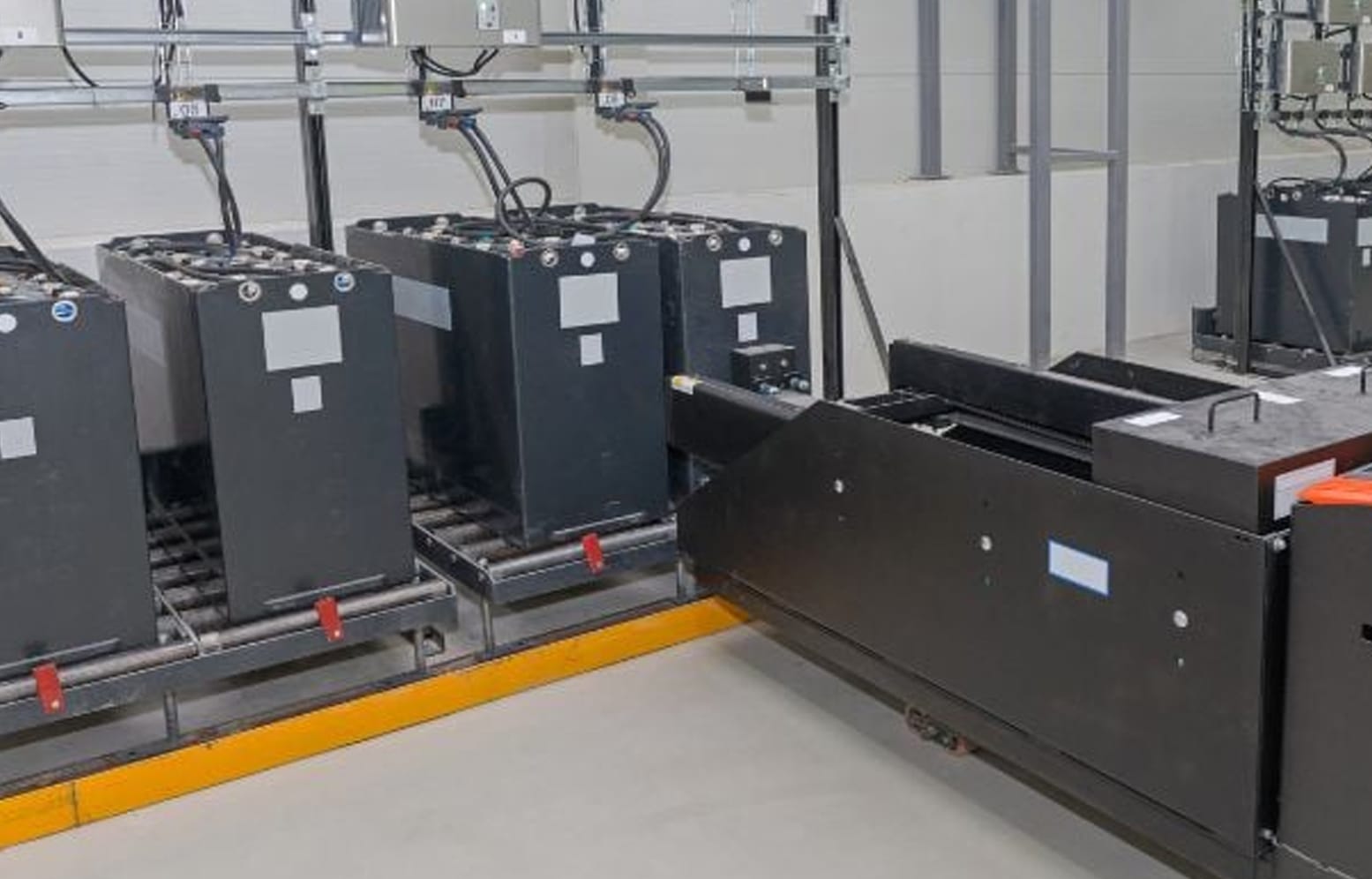
Selecting an industrial battery charger requires more than matching a voltage rating. The charger must work with the battery bank, support the required DC load where applicable, meet the specified charging time and suit the electrical and environmental conditions of the installation.
Manufacturing plants, electrical substations, telecom facilities, industrial UPS installations and infrastructure projects may all require battery charging systems. However, their operating requirements can differ significantly.
Choosing an unsuitable charger can lead to compatibility issues, longer battery recovery times, unnecessary equipment changes and additional maintenance work. Reviewing the technical requirements before purchasing helps engineering and procurement teams identify an appropriate solution.
In this guide, we explain how to select an industrial battery charger, which specifications to check, how application requirements affect charger sizing and what information to provide when requesting a quotation.
What Is an Industrial Battery Charger?
An industrial battery charger converts incoming electrical power into a controlled DC output suitable for charging a battery bank. Depending on the system design, it may also supply connected DC equipment while maintaining the battery’s charge.
Industrial charging systems are commonly used where batteries support standby power, control equipment, communication systems or other specified electrical loads.
Typical applications include:
- Electrical substations and switchgear control systems
- Manufacturing plants and industrial automation
- Telecom and communication infrastructure
- Industrial UPS installations
- Instrumentation and control panels
- Utility and infrastructure projects
- Commercial and industrial facilities with stationary battery banks
The correct configuration depends on the battery technology, electrical design, operating duty and project specifications.
Why Is Correct Industrial Battery Charger Selection Important?
An industrial battery charger must operate within the limits of the battery and the wider electrical system.
The wrong configuration may fail to provide the required charging performance or may be incompatible with the connected equipment. A charger that appears suitable based on nominal voltage alone may still have an unsuitable current rating, charging profile or monitoring interface.
Correct selection helps project teams:
- Match the charger to the battery manufacturer’s specifications
- Account for the connected DC load, where applicable
- Plan for the required battery recovery time
- Identify appropriate protective functions
- Confirm monitoring and alarm requirements
- Check compatibility with the installation environment
- Reduce avoidable specification changes during procurement
These checks are especially important for applications where the battery bank supports essential operations.
1. Identify the Application Before Selecting a Charger
Start by defining what the charging system must support.
A charger used in a substation may need to support specified control and protection loads. A telecom installation may have different DC supply and monitoring requirements. An industrial UPS has its own battery and charging design requirements.
Before comparing products, establish:
- The equipment supported by the battery bank
- Whether the charger must supply a continuous DC load
- The battery’s standby or cycling duty
- The required recovery time following discharge
- The expected operating conditions
- The monitoring and alarm functions required
- The applicable project specifications
This information gives the supplier a clearer basis for evaluating suitable equipment.
2. Match the Charger to the Battery Type
Battery chemistry is one of the most important factors in charger selection.
Industrial installations may use valve-regulated lead-acid (VRLA), flooded lead-acid, nickel-cadmium or lithium-based batteries. Each technology has specific charging requirements, and individual battery models may have different recommended settings.
Before selecting a charger, confirm:
- Battery chemistry and manufacturer
- Battery model, if available
- Battery bank’s nominal voltage
- Number and arrangement of cells or batteries
- Recommended charging voltage
- Permitted charging current
- Required float or other supported charging modes
- Temperature limits and compensation requirements
- Battery management system (BMS) requirements, where applicable
A charger should not be selected using nominal voltage alone. Its output range and charging profile must be compatible with the actual battery specifications.
3. Understand DC Output Voltage and Charging Current
Voltage and current perform different roles in the selection process.
DC output voltage must meet the requirements of the battery bank and any connected DC equipment.
Charging current affects the battery’s recovery time, within the limits specified by the battery manufacturer.
If the charger also supplies a continuous DC load, the design may need to account for both the load current and the battery charging current.
Before requesting a quotation, establish the following values wherever possible:
- Required DC output voltage
- Battery bank capacity in ampere-hours (Ah)
- Maximum permitted charging current
- Continuous DC load current
- Expected depth of battery discharge
- Required recharge time
- Any planned system expansion
The final rating should follow the electrical design and battery manufacturer’s recommendations. Selecting a charger with a larger current rating is not automatically the right solution.
4. How Is Industrial Battery Charger Capacity Estimated?
For an arrangement in which the charger must recharge a battery while supporting a continuous DC load, a simplified preliminary relationship is:
Required charger current ≈ DC load current + required battery charging current
The required battery charging current depends on the amount of capacity to be restored, the permitted charging rate, the charging characteristics and the required recovery period.
Illustrative charger sizing example
Consider a hypothetical installation with:
- Continuous DC load: 10 A
- Battery bank capacity: 200 Ah
- Assumed capacity to restore: 200 Ah
- Illustrative recharge period: 10 hours
A simple average calculation gives:
200 Ah ÷ 10 hours = 20 A average battery-recharge current.
Adding the assumed 10 A continuous load gives a preliminary value of 30 A.
This example is only a simplified illustration, not a final equipment specification. Actual charger sizing must account for charging efficiency, battery acceptance characteristics, the actual discharge, permitted charging current, system operating conditions and the project’s required design margins.
For critical applications such as substations, the final selection should be verified by a qualified engineer against the project specification and applicable standards.
5. When Should You Consider an SMPS Battery Charger?
A switch-mode power supply (SMPS) charger uses high-frequency switching technology to regulate its output.
SMPS-based industrial chargers may be considered where controlled DC output, equipment size and system integration are important. Actual performance and available functions depend on the specific model.
When evaluating an SMPS battery charger, review:
- AC input voltage and frequency
- Rated DC output voltage and current
- Output regulation and ripple specifications
- Current-limiting and protective functions
- Cooling and ventilation requirements
- Available alarms and indications
- Remote monitoring or communication interfaces
- Enclosure and environmental suitability
- Applicable project and compliance requirements
Ask for the manufacturer’s datasheet and check the parameters that matter to your application. The term “SMPS” alone does not establish suitability for a particular battery bank.
6. Float Charging and Boost Charging: What Is the Difference?
Float charging and boost charging serve different purposes. Their availability and operation depend on the battery type and charger design.
Float charging
Float charging is used to maintain a compatible battery at its specified standby charge level. The float voltage must follow the battery manufacturer’s recommendations and take account of any applicable temperature requirements.
Boost charging
Boost charging may be used in supported systems to restore battery capacity after discharge. The appropriate voltage, current and duration depend on the battery specification and charger configuration.
Not all battery technologies support the same charging modes. Incorrect settings may cause overcharging, undercharging or unnecessary battery stress.
Before configuring a charger, verify the recommended settings for the exact battery model. Never assume that a boost charging setting is suitable for every battery.
7. Important Protection, Alarm and Monitoring Features
A charger may require additional functions when it forms part of a critical power system.
Depending on the application and model, relevant features may include:
- Input and output fault protection
- Overvoltage and overcurrent protection
- Temperature-related protection
- DC output voltage and current metering
- Charger fault and battery-related indications
- Audible or remote alarms
- Remote monitoring and control interfaces
- Integration with site monitoring systems
These features are not necessarily included in every model. Confirm which functions are standard, which require additional equipment and which are required by the project specification.
For installations using central monitoring, establish the required communication interface or protocol before finalising the order.
8. Consider the Installation Environment
Electrical suitability is only one part of charger selection. The installation location must also meet the equipment manufacturer’s requirements.
Ambient temperature: Check the specified operating temperature range.
Ventilation: Allow for the required airflow and installation clearances.
Dust and humidity: Confirm that the equipment enclosure and mounting arrangement suit the environment.
Input power: Verify the available AC voltage, frequency and supply conditions.
Mounting and access: Ensure the equipment can be securely installed and accessed for maintenance.
Battery-room conditions: Consider battery technology, ventilation, applicable safety procedures and the requirements for the complete installation.
Reviewing these factors before ordering can help avoid installation difficulties later.
9. Industrial Battery Charger Requirements by Application
Different applications place different demands on a charging system. The exact design should follow the equipment requirements and the project’s electrical specifications.
Battery chargers for electrical substations
Substations may use stationary battery banks to support protection, control, switching and other specified DC loads.
Charger selection should consider the DC system voltage, battery capacity, continuous load, required backup duty, alarms and project-specific requirements.
Battery chargers for manufacturing industries
Manufacturing facilities may use battery systems for industrial controls, automation equipment and other essential applications.
The charging arrangement should be assessed against the connected equipment, expected battery duty, recovery requirements and environmental conditions.
Battery chargers for telecom infrastructure
Telecom applications may require a DC charging arrangement that supports communication equipment and its associated battery bank.
Important considerations include nominal DC voltage, battery capacity, charging current, continuous load, monitoring requirements and compatibility with the existing system.
Battery chargers for industrial UPS systems
Industrial UPS installations rely on batteries to provide backup power when the normal electrical supply is interrupted.
Charger selection depends on the UPS architecture, specified battery configuration, charging requirements and the manufacturer’s compatibility requirements. A separate charger should not be connected to a UPS battery system without confirming that the arrangement is approved for that system.
10. What Is the Difference Between an Industrial Charger and a General-Purpose Charger?
An industrial battery charger is selected for a defined electrical application, rather than simply for its ability to recharge a battery.
Industrial projects may require specific DC output ratings, controlled charging settings, continuous-duty capability, fault indications, monitoring interfaces or integration with existing equipment.
A general-purpose charger should not be assumed suitable for an industrial battery bank. Compare the proposed equipment’s ratings, charging profile, protective functions and intended operating conditions with the battery specifications and project requirements.
11. Common Mistakes to Avoid When Purchasing an Industrial Battery Charger
Choosing a charger by voltage alone
Matching nominal voltage does not guarantee compatibility. The battery type, charging voltage, current limits and connected load must also be checked.
Ignoring the continuous DC load
Where the charger must support a live DC load as well as charge the battery, both requirements need to be considered during sizing.
Using incorrect charging settings
Charging parameters must follow the battery manufacturer’s recommendations. Settings should not be copied from another battery system without verification.
Overlooking monitoring requirements
A project may require remote alarms, status contacts or communication interfaces that are not available in every charger configuration.
Ignoring site conditions
Temperature, ventilation, dust, mounting access and the available electrical supply all affect equipment suitability.
Requesting a quotation without technical details
Incomplete specifications can lead to unsuitable proposals or additional clarification during procurement. Providing the available battery and system information at the beginning makes technical evaluation more efficient.
12. What Should You Check Before Replacing an Existing Charger?
Replacing an industrial charger requires more than finding a unit with the same nominal voltage.
Before selecting a replacement, record:
- Existing charger’s make, model and nameplate ratings
- AC input voltage and frequency
- Rated DC output voltage and current
- Battery chemistry and bank capacity
- Existing charging settings, where available
- Continuous DC load and operating duty
- Alarm contacts and monitoring interfaces
- Physical dimensions and mounting arrangement
- Cable-entry and connection requirements
- Project-specific electrical and compliance requirements
Photographs of the charger’s nameplate, wiring diagram and installation arrangement can help identify the information needed for an initial assessment.
The replacement configuration should be checked against the actual system and battery requirements before installation.
13. What Information Is Needed for an Industrial Battery Charger Quotation?
If your facility needs a new charger, a replacement unit or a charging-system upgrade, prepare a short technical brief.
| Information | Details to provide |
|---|---|
| Application | Substation, telecom, UPS, industrial control or other use |
| Battery type | VRLA, flooded lead-acid, Ni-Cd, lithium-based or other |
| Battery manufacturer | Brand and model, if available |
| Battery bank | Nominal voltage and Ah capacity |
| Charger output | Required DC voltage and current, if known |
| Connected load | Continuous DC load and operating variations |
| Charging requirement | Recharge time and permitted charging profile |
| Input supply | Available AC voltage and frequency |
| Monitoring | Metering, alarms, remote contacts or communications |
| Site conditions | Installation location and environmental requirements |
| Project details | Quantity, delivery location and expected timeline |
If you do not know every parameter, share the available information, an existing charger nameplate or the project specification. The remaining requirements can then be identified during the technical review.
14. How to Evaluate an Industrial Battery Charger Supplier
Price is only one consideration when purchasing equipment for a critical power application. The proposed configuration should be evaluated against the project’s technical requirements.
Before approving a quotation, ask the supplier:
- Is the charger compatible with the specified battery type?
- How were the output voltage and current selected?
- Has the continuous DC load been considered, where applicable?
- Can the configuration meet the specified charging requirements?
- Which protection functions, alarms and monitoring interfaces are included?
- Is the equipment suitable for the proposed installation environment?
- Are datasheets and operating documentation available?
- What installation, commissioning and after-sales services are included?
- Does the quoted configuration meet the project’s stated requirements?
Comparing these points across quotations helps engineering and procurement teams make a more informed decision.
15. Industrial Battery Charging Solutions From Anushri Systech
Anushri Systech Private Limited supplies commercial and industrial power solutions, including products offered under its VIVATEK brand.
For projects involving industrial battery chargers, DC charging systems, UPS installations or battery-bank requirements, equipment should be selected according to the intended application and verified electrical specifications.
Whether you are planning a new installation, replacing an existing charger or preparing a requirement for an industrial project, sharing the technical details early can help establish the next steps.
Explore our Battery Energy Storage Systems page and Industrial & Commercial Online UPS solutions for related power infrastructure requirements.
Contact our team to discuss your industrial power requirements and confirm which equipment configurations are available for your application.
Request an Industrial Battery Charger Enquiry
Looking for an industrial battery charger for a factory, substation, telecom facility, UPS installation or industrial control application?
Contact Anushri Systech Private Limited with your battery-bank voltage, capacity, battery type, DC load requirement and application details.
Providing this information helps establish the technical requirements for an initial discussion.
Anushri Systech Private Limited
Chennai, Tamil Nadu, India
Phone: +91 98416 98180
Email: sales@anushri.info
Website: https://anushri.info/
For a more useful initial enquiry, include the existing charger’s nameplate or datasheet, battery-bank specifications, quantity required and project location.
Frequently Asked Questions
How do I choose an industrial battery charger?
Start with the battery chemistry, nominal voltage, specified charging voltage, battery capacity, permitted charging current and connected DC load. Then review the required recharge time, input supply, protection, monitoring and installation conditions.
What is an SMPS battery charger used for?
An SMPS battery charger uses switch-mode power conversion to provide a regulated charging output. Its suitability depends on the battery specifications, required output ratings, protective functions and intended application.
Can one charger be used for different battery types?
Only if the charger explicitly supports the relevant battery chemistries and their charging requirements. Voltage settings, charging profiles, current limits and any battery management system requirements must be verified before use.
How is an industrial battery charger’s current rating selected?
The rating depends on the current required to recharge the battery within the specified time and any continuous DC load the charger must supply. The final rating must also comply with the battery’s permitted charging current and the project’s design requirements.
What information is required for a battery charger quotation?
Provide the application, battery type, battery-bank voltage and capacity, required output, connected load, AC input, charging requirements, monitoring needs and installation conditions. An existing charger nameplate or technical datasheet is also useful.
What should I check when replacing an industrial battery charger?
Check the existing charger’s input and output ratings, battery chemistry, charging settings, continuous load, alarms, monitoring interfaces, physical installation requirements and the project’s specifications. Confirm compatibility before installing a replacement.
Do you supply industrial battery chargers in India?
Anushri Systech supplies commercial and industrial power solutions, including products offered under the VIVATEK brand. Contact the team with your technical requirements to confirm suitable configurations, availability and supply details.
How can I request an industrial battery charger quotation?
Contact Anushri Systech at sales@anushri.info or +91 98416 98180. Share your application, battery-bank specifications, required output ratings, quantity and project location so your requirements can be reviewed.
Planning an industrial battery charger project? Contact Anushri Systech to discuss your application and technical requirements.