
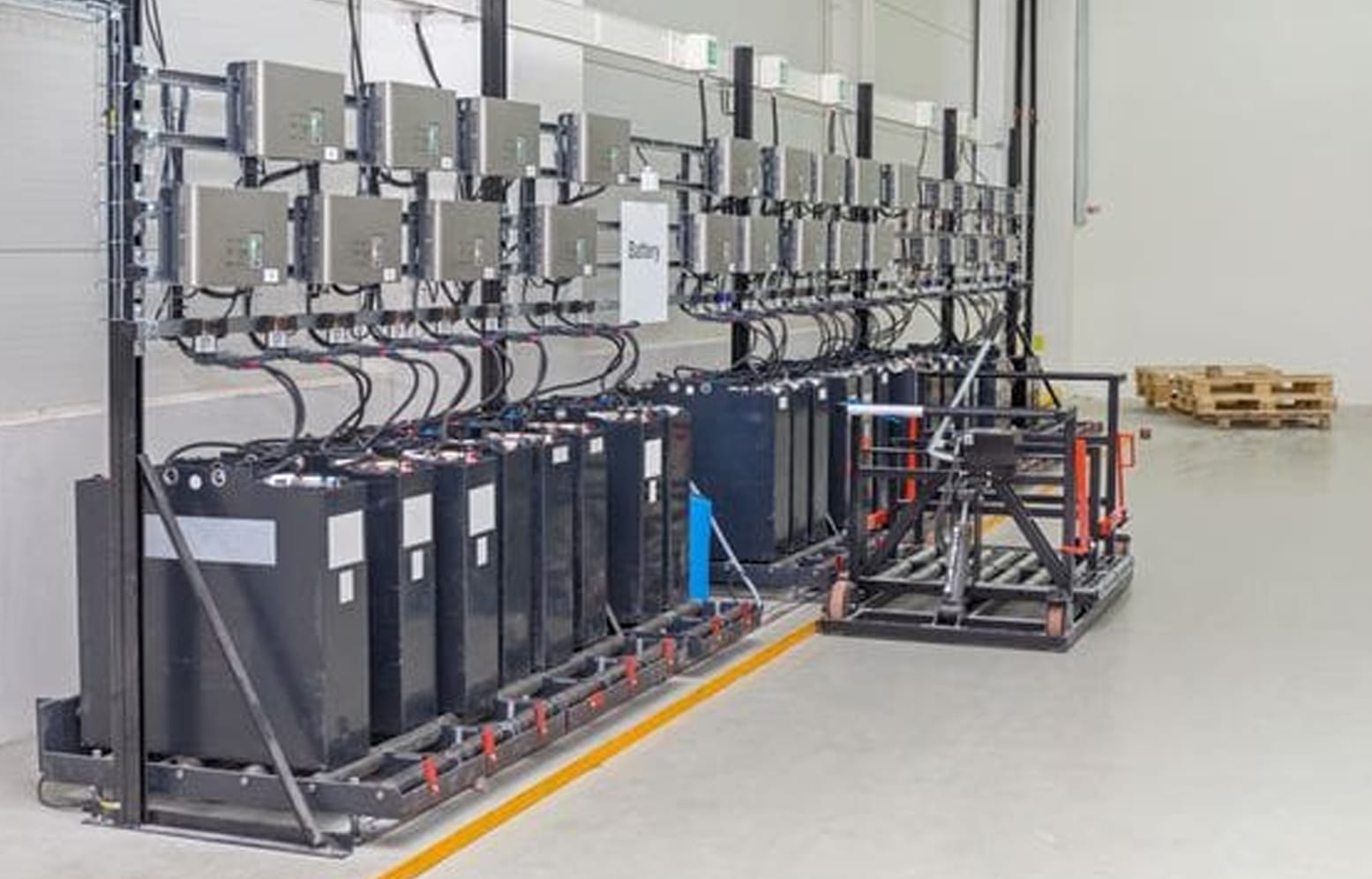
Why Is Battery Charger Capacity Selection Important?
Selecting the correct battery charger capacity is one of the most important factors in industrial backup systems. An undersized charger can cause slow charging, battery backup failure, overheating, and operational interruption. An oversized charger may reduce battery life and increase unnecessary power consumption.
Industries such as substations, telecom infrastructure, manufacturing facilities, process plants, automation systems, and data centers require properly sized battery chargers to maintain reliable DC backup power.
Industrial engineers and procurement teams often search for the right charger sizing method because incorrect charger selection can affect the performance of battery banks, UPS systems, relay panels, and critical backup infrastructure.
What Is Battery Charger Capacity?
Battery charger capacity refers to the amount of charging current a charger can deliver to charge batteries and support connected DC loads simultaneously.
It is usually measured in:
- Amps (A)
- DC Voltage (V)
Example:
- 24V 20A charger
- 48V 50A charger
- 110V 30A charger
- 220V 100A charger
Why Do Industries Need Proper Battery Charger Sizing?
Industrial backup systems operate continuously and often support critical infrastructure.
Improper charger sizing can lead to:
- Incomplete battery charging
- Reduced battery life
- DC voltage instability
- Battery overheating
- Backup failure during outages
- High ripple current
- Frequent battery replacement
- System downtime
Correct charger capacity helps maintain stable battery charging and uninterrupted industrial operations.
What Factors Affect Battery Charger Capacity Selection?
1. Battery Bank Capacity
The total Ah (Ampere-hour) rating of the battery bank directly affects charger sizing.
Example:
- 100Ah battery bank
- 200Ah battery bank
- 500Ah battery bank
Larger battery banks require higher charging current.
2. DC Load Requirement
Industrial charger systems often support connected DC loads while simultaneously charging batteries.
Common DC loads include:
- Protection relays
- PLC systems
- Communication systems
- Control panels
- Telecom equipment
- Emergency lighting
The charger must handle both charging current and connected load current.
3. Battery Charging Time
Fast charging requirements increase charger capacity requirements.
Industries with frequent power outages may require faster battery recovery time.
4. Battery Type
Different battery technologies require different charging characteristics.
| Battery Type | Charging Requirement |
|---|---|
| Lead Acid Battery | Standard charging |
| SMF Battery | Controlled charging |
| Tubular Battery | Moderate charging |
| Lithium Battery | Intelligent charging |
| Nickel Cadmium Battery | Specialized charging |
Battery chemistry affects charger selection.
5. Industrial Application
Different industries have different backup requirements.
| Industry | Charger Application |
|---|---|
| Substations | Relay & breaker backup |
| Telecom | Network backup systems |
| Manufacturing | PLC & automation backup |
| Data Centers | Control infrastructure |
| Solar Plants | Energy storage charging |
| Railways | Signaling backup systems |
How to Calculate Battery Charger Capacity?
Basic Formula
Charger Capacity = Battery Charging Current + DC Load Current
Example Calculation
Battery Bank:
- 220V DC
- 200Ah battery bank
Recommended Charging Current:
Typically 10% to 15% of battery Ah capacity.
Example:
200Ah × 10% = 20A
Connected DC Load:
15A
Total Charger Capacity:
20A + 15A = 35A
Recommended charger:
220V DC 40A charger
Why Is Charger Margin Important?
Industrial systems often add extra charger capacity margin for:
- Future load expansion
- Battery aging compensation
- Emergency charging
- Peak operational demand
- Backup reliability
Engineering practice usually includes 20–25% spare capacity.
What Happens If Battery Charger Capacity Is Too Small?
An undersized charger may cause:
- Slow battery charging
- Incomplete charging
- Reduced backup time
- Battery sulphation
- DC voltage drop
- Operational instability
- Premature battery failure
This is common in industries with improper load calculation.
What Happens If Battery Charger Capacity Is Too Large?
Oversized chargers may cause:
- Excessive charging current
- Battery overheating
- Reduced battery lifespan
- Higher ripple current
- Increased energy consumption
- Unnecessary infrastructure cost
Proper charger selection helps maintain battery health.
Why Do Telecom Systems Require Accurate Charger Sizing?
Telecom infrastructure depends on continuous DC power.
Incorrect charger sizing may lead to:
- Tower backup failure
- Network interruption
- Battery bank instability
- Communication downtime
Telecom applications often require redundant charger systems for operational reliability.
Why Do Substations Need Proper Battery Charger Capacity?
Substations require stable DC backup for:
- Protection relays
- Trip circuits
- Breaker operation
- Emergency control systems
Improper charger sizing can affect protection reliability during electrical faults.
SMPS Battery Chargers vs Conventional Chargers
| Feature | SMPS Charger | Conventional Charger |
|---|---|---|
| Efficiency | High | Moderate |
| Charging Stability | Better | Standard |
| Ripple Content | Low | Higher |
| Battery Protection | Improved | Basic |
| Energy Consumption | Lower | Higher |
| Compact Design | Yes | No |
Many industries now prefer SMPS chargers for improved battery charging performance.
Common Mistakes During Battery Charger Selection
Ignoring Connected Load
Many systems only calculate battery charging current and ignore DC load demand.
Incorrect Battery Ah Calculation
Wrong battery sizing leads to incorrect charger capacity selection.
No Future Expansion Margin
Industrial systems often expand over time.
Future load consideration is important.
Ignoring Environmental Conditions
High ambient temperatures affect charger and battery performance.
Industrial Use Case
Many industrial facilities across India experience unreliable backup performance because of improperly sized battery chargers. In substations, telecom infrastructure, and manufacturing plants, undersized chargers often fail to recharge batteries during short operational cycles, leading to backup instability and equipment interruption.
Proper charger sizing helps maintain reliable battery charging, improve backup performance, reduce battery failure, and support uninterrupted industrial operations.
How to Choose the Right Battery Charger Supplier?
Before selecting a charger supplier, industries should evaluate:
- Technical support capability
- Charger efficiency
- Battery compatibility
- Monitoring features
- Industrial application experience
- After-sales support
- Safety protection systems
- Scalability options
Reliable engineering support improves long-term operational performance.
Frequently Asked Questions
What is the ideal battery charger capacity?
The ideal charger capacity depends on battery Ah rating, connected DC load, charging time requirement, and industrial application.
How do you calculate battery charger current?
Battery charger current is usually calculated as 10–15% of total battery bank Ah capacity plus connected load current.
Why is charger sizing important in industries?
Proper charger sizing improves battery life, backup reliability, charging performance, and operational continuity.
What happens if a charger is undersized?
Undersized chargers may cause slow charging, low backup time, battery sulphation, and operational instability.
Why are SMPS battery chargers preferred?
SMPS chargers offer higher efficiency, lower ripple current, compact design, and better charging control.
Which industries use industrial battery chargers?
Industrial battery chargers are widely used in substations, telecom infrastructure, automation systems, manufacturing industries, railways, and power plants.
Conclusion
Selecting the correct battery charger capacity is essential for maintaining stable battery charging, uninterrupted DC backup, and long-term industrial reliability.
Proper charger sizing helps industries improve operational continuity, reduce downtime risks, protect battery banks, and maintain critical infrastructure performance during power disturbances.
Vivatek provides industrial battery charger solutions for substations, telecom systems, manufacturing industries, automation infrastructure, and industrial battery backup applications across India.
Talk to Our Technical Team
Need help selecting the right battery charger capacity for your industrial application?
📞 Contact: +91 9566117188 / 9841698180
📧 Email: sales@anushri.info
🌐 Website: https://anushri.info/
Our technical team can assist with:
- Battery charger sizing
- DC load calculation
- Battery bank integration
- Telecom charger systems
- Substation charger applications
- SMPS charger selection
- Industrial backup system planning