
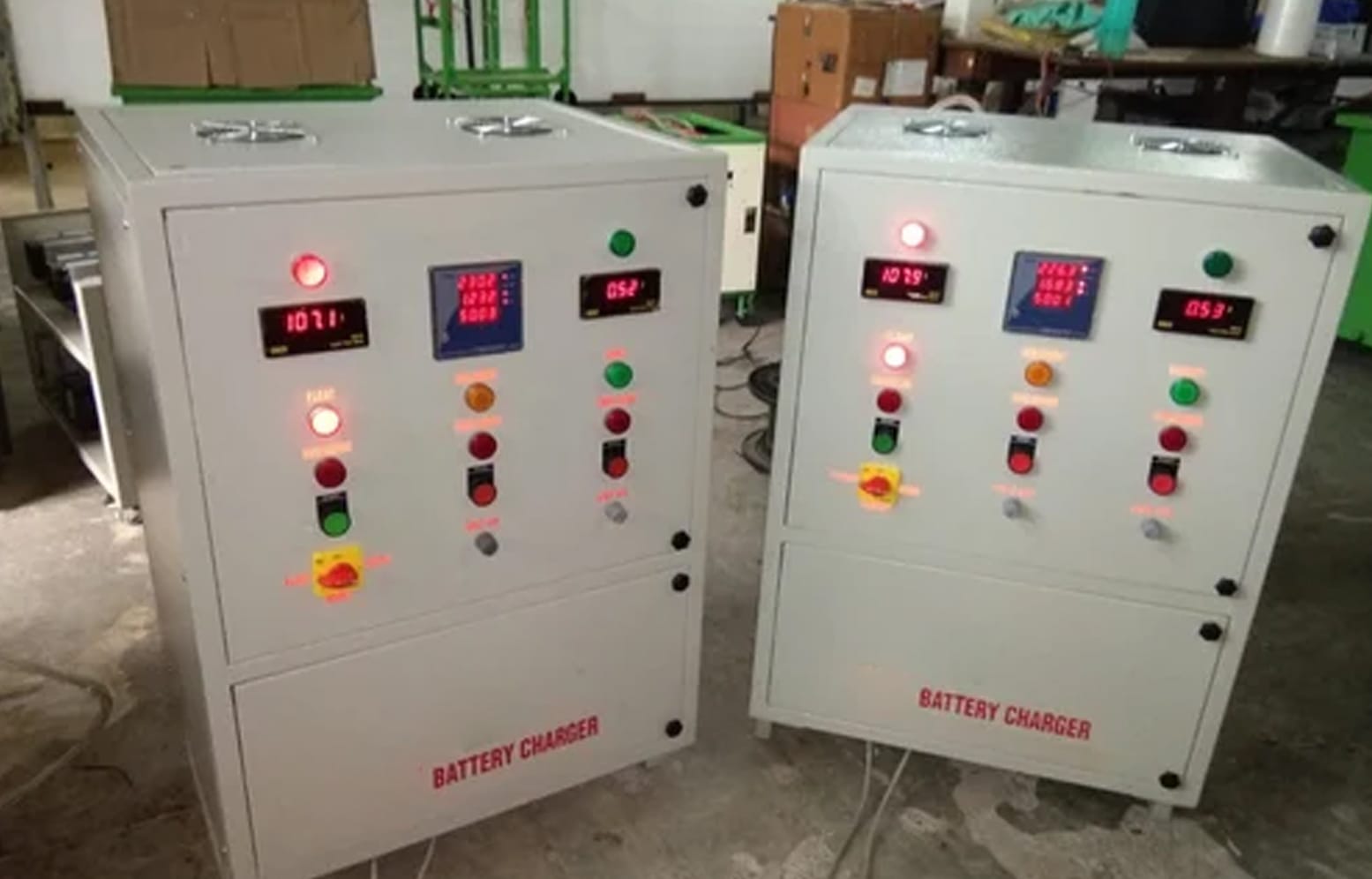
Industrial battery charging systems are essential for maintaining uninterrupted dc power continuity across substations, telecom infrastructure, online ups systems, battery banks, industrial automation systems, power plants, emergency backup systems, and critical industrial operations.
Modern industrial environments depend heavily on stable battery charging because improper charging infrastructure may affect:
- Battery operational life
- Backup continuity
- Dc system reliability
- Emergency power infrastructure
- Industrial communication systems
- Automation continuity
- Power plant operation
One of the most common technical questions asked by engineers and industrial buyers is:
“What is the difference between a float charger and a boost charger?”
Both charging methods are critical in industrial battery systems, but they serve different operational purposes. Understanding their role helps industries improve battery performance, charging reliability, and long-term operational continuity.
Float charging and boost charging are commonly used in:
✔ Substations
✔ Telecom infrastructure
✔ Battery banks
✔ Online ups systems
✔ Industrial dc systems
✔ Power plants
✔ Emergency lighting systems
✔ Process industries
Choosing the correct charging mode is important for battery protection and infrastructure reliability.
Float Charger vs Boost Charger
A float charger maintains batteries at full charge during normal operation using controlled low-voltage charging.
A boost charger provides higher charging current and voltage to recharge batteries quickly after discharge conditions.
Both charging modes are essential for maintaining reliable industrial battery infrastructure.
What Is a Float Charger?
A float charger continuously maintains battery charge at a safe voltage level after the battery reaches full charge.
Float charging helps batteries remain ready for backup operation without overcharging.
Float charging is commonly used in:
- Substation dc systems
- Telecom battery banks
- Online ups systems
- Emergency backup infrastructure
Float chargers help maintain long-term battery readiness and operational continuity.
What Is a Boost Charger?
A boost charger provides higher charging voltage and current to recharge batteries rapidly after discharge conditions.
Boost charging is commonly used after:
✔ Power failure
✔ Heavy battery discharge
✔ Emergency backup operation
Boost charging helps batteries recover quickly and restore backup readiness.
Why Do Industries Use Both Float and Boost Charging?
Industrial battery systems require both charging methods because batteries operate under different conditions.
Float charging supports:
✔ Continuous maintenance charging
✔ Battery readiness
✔ Stable dc operation
Boost charging supports:
✔ Fast battery recovery
✔ Deep discharge recovery
✔ Emergency charging operation
Modern industrial chargers commonly include both charging modes for reliable battery management.
Why Is Float Charging Important?
Float charging helps maintain batteries at full operational readiness continuously.
Improper float charging may create:
- Battery undercharging
- Reduced runtime
- Operational instability
Proper float charging improves battery operational life significantly.
Why Is Boost Charging Important?
After backup operation, batteries may become partially or deeply discharged.
Boost charging helps:
✔ Recharge batteries quickly
✔ Restore backup continuity
✔ Improve operational readiness
Industrial environments require reliable recovery charging after discharge events.
What Happens If Float Charging Is Too High?
Excessive float voltage may lead to:
- Battery overheating
- Electrolyte loss
- Reduced battery operational life
Controlled float charging is important for battery protection.
What Happens If Boost Charging Is Improper?
Improper boost charging may create:
✔ Excessive battery heating
✔ Battery stress
✔ Charging instability
✔ Reduced operational life
Boost charging should always operate within recommended battery limits.
Why Is Battery Voltage Important in Charging Systems?
Battery charging voltage directly affects:
- Charging efficiency
- Battery protection
- Runtime continuity
- Operational reliability
Industrial charging systems must maintain stable regulated voltage conditions.
Why Is Charging Current Important?
Charging current determines how quickly batteries recharge after discharge operation.
Excessive charging current may increase:
✔ Battery stress
✔ Thermal buildup
✔ Operational degradation
Proper current regulation improves long-term battery reliability significantly.
Why Do Telecom Systems Use Float Charging?
Telecom infrastructure requires continuous battery readiness for communication continuity.
Float charging helps telecom systems maintain:
✔ Continuous backup readiness
✔ Stable dc infrastructure
✔ Long-term battery reliability
Telecom battery systems commonly remain under float charging during normal operation.
Why Do Substations Use Boost Charging?
Substation dc systems require fast battery recovery after emergency discharge conditions.
Boost charging helps substations restore:
✔ Dc backup continuity
✔ Protection system readiness
✔ Emergency operational reliability
Reliable charging infrastructure is critical for utility operation.
Why Is Battery Temperature Important During Charging?
Battery temperature affects charging performance significantly.
High temperature during charging may increase:
✔ Battery degradation
✔ Charging instability
✔ Electrolyte evaporation
Industrial battery systems require proper thermal management during charging operation.
Why Is Charging Automation Important?
Modern industrial charging systems increasingly use automatic charging control for:
- Float charging management
- Boost charging transition
- Battery protection
- Charging optimization
Automation improves charging reliability and operational efficiency significantly.
Why Is Battery Monitoring Important During Charging?
Modern charging systems commonly include monitoring features for:
✔ Voltage analysis
✔ Charging current monitoring
✔ Temperature diagnostics
✔ Alarm systems
✔ Battery health evaluation
Smart monitoring improves preventive maintenance and operational reliability.
Why Are Modern Industries Moving Toward Intelligent Charging Systems?
Modern industries increasingly use intelligent battery chargers because they provide:
✔ Automatic charging control
✔ Smart diagnostics
✔ Reduced maintenance
✔ Better battery protection
✔ Improved charging efficiency
Intelligent charging systems improve long-term infrastructure reliability significantly.
Why Is Charging Efficiency Important?
Charging efficiency affects:
- Energy consumption
- Heat generation
- Battery operational life
- Infrastructure performance
Efficient charging systems improve industrial energy optimization significantly.
Why Is Ripple Voltage Important in Battery Charging?
Ripple voltage refers to unwanted ac fluctuation in dc charging output.
High ripple voltage may affect:
✔ Battery operational life
✔ Sensitive dc equipment
✔ Communication infrastructure
Modern industrial charging systems maintain low ripple output for stable operation.
Why Is Battery Backup Continuity Important?
Battery charging infrastructure directly supports:
- Emergency systems
- Telecom continuity
- Automation systems
- Industrial process continuity
- Utility protection systems
Reliable charging systems help industries maintain uninterrupted dc infrastructure operation.
Why Do Industrial Chargers Use Automatic Float-to-Boost Transition?
Modern industrial chargers automatically switch between float and boost modes depending on battery condition.
Automatic transition helps improve:
✔ Battery protection
✔ Charging optimization
✔ Operational reliability
This reduces manual intervention and improves system stability significantly.
Float Charger vs Boost Charger Comparison Table
| Feature | Float Charger | Boost Charger |
|---|---|---|
| Charging Purpose | Maintain full charge | Fast battery recovery |
| Voltage Level | Lower | Higher |
| Charging Speed | Slow continuous charging | Fast charging |
| Battery Stress | Low | Moderate |
| Operational Use | Normal standby operation | Post-discharge recovery |
| Infrastructure Role | Backup readiness | Rapid recharge support |
Common Battery Charging Problems vs Recommended Solution
| Charging Problem | Recommended Solution |
|---|---|
| Battery Overheating | Optimize charging voltage |
| Slow Charging | Review boost charger settings |
| Battery Undercharge | Check float charging level |
| High Ripple Voltage | Improve charger regulation |
| Frequent Battery Failure | Use intelligent charging systems |
| Charging Instability | Monitor battery temperature |
Which Industries Use Float and Boost Chargers?
Float and boost charging systems are commonly used in:
✔ Substations
✔ Telecom infrastructure
✔ Power plants
✔ Industrial battery banks
✔ Online ups systems
✔ Emergency backup systems
✔ Process industries
✔ Automation infrastructure
These industries require reliable battery continuity for uninterrupted operation.
Benefits of Float Charging
✔ Continuous battery readiness
✔ Improved battery operational life
✔ Stable dc infrastructure
✔ Reduced overcharging risk
Float charging helps maintain reliable standby battery operation.
Benefits of Boost Charging
✔ Fast battery recovery
✔ Improved emergency readiness
✔ Rapid backup restoration
✔ Better operational continuity
Boost charging helps batteries recover quickly after discharge events.
Industrial Example
A telecom operator managing remote communication infrastructure experienced frequent battery backup instability because batteries were not recovering properly after repeated discharge conditions.
The telecom network later upgraded to intelligent charging systems with automatic float and boost charging functionality integrated with smart monitoring infrastructure.
This significantly improved:
✔ Battery recovery speed
✔ Backup continuity
✔ Charging stability
✔ Battery operational life
✔ Communication reliability
Meanwhile, a substation environment operating utility protection systems used boost charging extensively after emergency dc system discharge events to restore battery readiness rapidly.
Both charging modes played critical roles in maintaining operational continuity.
Why Is Charger Selection Important for Long-Term Battery Performance?
Charging infrastructure directly affects:
- Battery operational life
- Backup reliability
- Charging efficiency
- Maintenance planning
- Infrastructure continuity
Proper charger selection helps industries improve long-term battery performance significantly.
Industrial Battery Charging Expertise
Industrial charging infrastructure planning requires understanding of:
- Dc systems
- Battery charging technology
- Float charging
- Boost charging
- Thermal management
- Battery protection
- Backup continuity planning
Substations, telecom systems, online ups environments, industrial automation systems, battery banks, power plants, and emergency backup infrastructure commonly require reliable battery charging systems for uninterrupted operational continuity.
Vivatek provides industrial battery chargers, float chargers, boost chargers, telecom charging systems, substation battery infrastructure, online ups charging systems, and industrial backup continuity solutions for industrial and commercial applications across India.
Frequently Asked Questions
What is a float charger?
A float charger maintains batteries at full charge using controlled low-voltage charging during standby operation.
What is a boost charger?
A boost charger provides higher charging voltage and current for rapid battery recovery after discharge conditions.
Why do industries use both float and boost charging?
Industries use float charging for continuous maintenance and boost charging for fast battery recovery.
Why is float charging important?
Float charging helps maintain battery readiness and improves long-term operational life.
Why is boost charging important?
Boost charging helps batteries recover quickly after backup operation or discharge events.
Why is charging automation important?
Automatic charging control improves battery protection, charging efficiency, and operational reliability.
Talk to Our Technical Team
Substations, telecom systems, industrial automation environments, online ups infrastructure, power plants, battery banks, and emergency backup systems often require reliable battery charging infrastructure for uninterrupted operational continuity.
Vivatek provides float chargers, boost chargers, industrial battery chargers, telecom charging infrastructure, online ups charging systems, substation battery charging solutions, and dc power continuity systems for industrial and commercial applications across India.
📞 Contact: +91 9566117188 / 9841698180
📧 Email: sales@anushri.info
🌐 Website: https://anushri.info/