
Introduction
In today’s industrial environment, uninterrupted power is no longer a convenience—it is a business necessity.
Factories, manufacturing facilities, data centers, hospitals, infrastructure projects, utilities, and commercial operations depend on stable electrical power to maintain productivity, protect equipment, and ensure operational continuity.
Even a brief power interruption can result in production delays, process disruptions, equipment shutdowns, data loss, product rejection, and significant financial consequences.
As industrial automation, digitalization, and process control systems become increasingly important, organizations require power protection solutions capable of supporting critical operations under demanding conditions.
This is where 3 Phase Industrial UPS Systems play a vital role.
A properly engineered three-phase UPS solution helps maintain continuous power availability, improve power quality, protect critical equipment, and reduce operational risk.
For organizations seeking long-term reliability, a 3 Phase Industrial UPS is not simply backup equipment. It is an essential component of modern business continuity planning.
Why Power Reliability Has Become a Business-Critical Requirement
Industrial operations today are more dependent on electricity than ever before.
Production lines, PLC systems, CNC machines, robotics, process controls, instrumentation equipment, communication systems, servers, and monitoring platforms all require stable power to function correctly.
As facilities become more automated, the impact of power disturbances becomes increasingly severe.
A voltage fluctuation that may have been insignificant years ago can now disrupt an entire production process.
Reliable power helps organizations:
• Maintain production schedules
• Protect sensitive equipment
• Improve operational efficiency
• Reduce downtime risk
• Protect product quality
• Support workplace safety
For many industries, power reliability directly influences profitability and customer satisfaction.
The Growing Cost of Industrial Downtime
The true cost of downtime is often underestimated.
When power interruptions occur, the consequences extend beyond the immediate loss of electricity.
Organizations may experience:
• Production losses
• Equipment restart delays
• Material wastage
• Quality control issues
• Missed delivery commitments
• Labor inefficiencies
• Customer dissatisfaction
For continuous-process industries, even a few minutes of downtime can create significant operational and financial impact.
As production demands increase and delivery schedules become more demanding, preventing downtime becomes a strategic priority.
A properly designed UPS system helps reduce this risk by ensuring continuous power to critical equipment.
Understanding Power Quality Challenges in Industrial Facilities
Power interruptions are not the only threat to industrial operations.
Many facilities regularly experience power quality issues that can affect equipment performance and reliability.
Common challenges include:
• Voltage fluctuations
• Power surges
• Harmonic distortion
• Frequency instability
• Voltage sags
• Voltage swells
• Short-duration interruptions
These conditions can damage sensitive electronics, reduce equipment lifespan, create nuisance shutdowns, and affect production stability.
A 3 Phase Industrial UPS helps isolate critical loads from these disturbances while providing clean and stable output power.
What Is a 3 Phase Industrial UPS System?
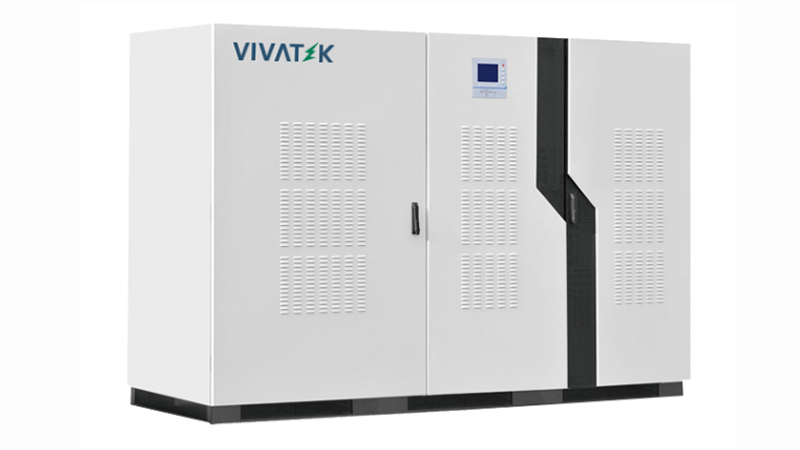
A 3 Phase Industrial UPS (Uninterruptible Power Supply) is an advanced power protection system designed to provide continuous, regulated power to industrial and mission-critical loads.
Unlike standard commercial UPS systems, industrial UPS units are engineered to support:
• Heavy-duty operating environments
• Continuous industrial loads
• Automation systems
• Critical infrastructure applications
• Large electrical capacities
• Integration with generators and renewable energy systems
The UPS acts as a protective barrier between incoming utility power and critical equipment.
When power disturbances occur, the UPS automatically maintains stable output without interrupting connected operations.
This helps ensure continuity, equipment protection, and operational reliability.
How a 3 Phase Industrial UPS Works
A 3 Phase Industrial UPS continuously conditions incoming power while maintaining battery-backed protection for connected loads.
The system operates through several key components working together.
Rectifier
The rectifier converts incoming AC power into DC power.
This DC power is used to support the inverter while simultaneously charging the battery system.
The rectifier also helps stabilize incoming utility power before it reaches critical equipment.
Battery System
The battery system serves as the energy reserve for the UPS.
When utility power becomes unavailable or unstable, the battery immediately supplies stored energy to maintain uninterrupted operation.
Battery technology is selected according to application requirements, backup duration objectives, environmental conditions, and lifecycle expectations.
Inverter
The inverter converts DC power back into clean, regulated AC power.
This is the component responsible for delivering stable electrical output to connected equipment.
The inverter helps eliminate many common power quality problems while maintaining consistent performance.
Static Bypass
The static bypass provides an alternative power path when required.
During maintenance activities or abnormal operating conditions, the bypass allows critical loads to remain powered without interruption.
This helps improve system availability and operational flexibility.
Monitoring & Controls
Modern UPS systems include intelligent monitoring platforms that provide real-time visibility into system performance.
These systems continuously monitor:
• Input power quality
• Output performance
• Battery condition
• Load levels
• System alarms
• Operating status
Real-time monitoring improves reliability while supporting preventive maintenance and long-term operational planning.
Why Industries Need 3 Phase UPS Protection
Industrial operations depend on consistent power availability.
Even short-duration disturbances can affect production, automation systems, process controls, safety infrastructure, and critical business operations.
A properly designed 3 Phase UPS helps:
• Protect critical equipment
• Maintain operational continuity
• Improve power quality
• Reduce downtime risk
• Support business continuity planning
• Improve overall infrastructure reliability
For many organizations, UPS protection has become an essential part of operational risk management.
Common Causes of Industrial Power Disturbances
Power disturbances can originate from both external utility conditions and internal facility operations.
Understanding these risks helps organizations select the appropriate power protection strategy.
Power Outages
Utility failures, grid disturbances, weather conditions, infrastructure faults, and external events can all cause complete power loss.
Without UPS protection, critical operations may shut down immediately.
Voltage Fluctuations
Industrial facilities frequently experience voltage variations caused by utility conditions, heavy equipment startup, load switching, and grid instability.
These fluctuations can affect automation systems, instrumentation equipment, PLCs, CNC machinery, servers, and other sensitive electrical infrastructure.
A 3 Phase Industrial UPS helps maintain stable voltage output regardless of incoming power conditions, protecting critical operations from unnecessary interruptions.
Harmonics & Power Quality Issues
Modern industrial facilities rely heavily on automation systems, variable frequency drives (VFDs), PLCs, robotics, CNC machines, process controls, and sensitive electronic equipment.
While these technologies improve productivity, they can also introduce harmonics and power quality challenges into the electrical system.
Common power quality problems include:
• Harmonic distortion
• Voltage imbalance
• Electrical noise
• Frequency variations
• Voltage sags and swells
• Transient disturbances
These issues can reduce equipment life, affect process stability, increase maintenance requirements, and contribute to unexpected downtime.
A properly engineered 3 Phase Industrial UPS helps provide clean and stable power while protecting critical equipment from disturbances that could affect operations.
Types of 3 Phase UPS Systems
Industrial applications require different UPS architectures depending on operational requirements, criticality, and future expansion plans.
Online Double Conversion UPS
Online UPS systems provide the highest level of power protection.
Incoming power is continuously processed through the rectifier and inverter, ensuring connected equipment always receives clean and regulated output power.
These systems are widely used in factories, hospitals, data centers, utility infrastructure, and mission-critical applications.
Modular 3 Phase UPS Systems
Modular UPS systems allow capacity to be increased as load requirements grow.
This approach provides flexibility while reducing the need for complete system replacement during expansion.
Modular architecture is particularly attractive for facilities planning future growth.
Industrial Customized UPS Systems
Some applications require custom UPS solutions designed around specific operating conditions, environmental requirements, and backup objectives.
These systems are commonly used in utilities, oil and gas facilities, process industries, transportation infrastructure, and specialized industrial projects.
Industry Applications
Three-phase UPS systems are used across a wide range of industrial and infrastructure environments.
Manufacturing Plants
Production lines, CNC machinery, robotics, automation systems, and process equipment require reliable power to maintain productivity.
Pharmaceutical Manufacturing
Pharmaceutical facilities depend on stable power for production, laboratory operations, environmental controls, and quality assurance systems.
Food Processing Industries
Reliable power supports refrigeration systems, process equipment, packaging lines, and food safety requirements.
Hospitals & Healthcare Facilities
Medical equipment, diagnostic systems, operating theaters, and critical care infrastructure require uninterrupted power availability.
Data Centers & IT Infrastructure
Servers, storage systems, communication equipment, and networking infrastructure require continuous protection from power disturbances.
Utilities & Infrastructure Projects
Substations, SCADA systems, control rooms, telecom facilities, and infrastructure projects depend on reliable UPS protection.
UPS Sizing & Load Assessment
One of the most important stages of any UPS project is determining the correct system capacity.
A UPS that is too small may fail to support critical loads during an outage.
A UPS that is significantly oversized can increase project costs unnecessarily.
Proper sizing requires evaluation of:
• Connected load requirements
• Critical equipment identification
• Starting currents
• Load growth projections
• Redundancy objectives
• Operational priorities
A detailed load assessment ensures that the UPS is aligned with actual operating requirements.
Battery Runtime Planning
Battery runtime determines how long critical loads remain operational during a power interruption.
Different facilities have different backup requirements.
Some applications require only a few minutes of backup to support generator startup.
Others require extended runtime to maintain operations for longer periods.
Runtime planning should consider:
• Outage history
• Critical process requirements
• Generator availability
• Production priorities
• Business continuity objectives
Battery selection should be based on operational requirements rather than simply maximizing runtime.
Generator Compatibility
Many industrial facilities use UPS systems alongside standby generators.
For this reason, generator compatibility is an important design consideration.
A properly integrated UPS helps:
• Support seamless transition between power sources
• Reduce generator loading issues
• Improve operational stability
• Maintain power quality during transfer events
• Enhance overall backup power reliability
Engineering evaluation helps ensure that the UPS and generator operate together effectively under all conditions.
Future Expansion Planning
Industrial facilities continuously evolve.
New production lines, automation upgrades, facility expansions, and increased capacity requirements often drive higher power demand.
Selecting a UPS without considering future growth can create limitations later.
Future-ready UPS design may include:
• Additional capacity provisions
• Modular scalability
• Expansion-friendly architecture
• Battery upgrade capability
Planning for growth during the initial design stage often reduces long-term costs while improving investment value.
Real Industrial Example
A manufacturing facility operating automated production equipment experienced frequent voltage fluctuations and occasional utility interruptions.
These disturbances were causing production delays, equipment alarms, and operational inefficiencies.
Following a detailed power quality assessment, a 3 Phase Industrial UPS system was implemented to support critical loads and improve power stability.
The solution was engineered around the facility’s operating profile, backup requirements, and future expansion plans.
The result included:
• Improved production continuity
• Reduced downtime risk
• Enhanced equipment protection
• Greater operational confidence
• Improved long-term reliability
While every facility is different, this example highlights the value of engineering-led UPS implementation.
Why Businesses Choose Vivatek
Vivatek focuses on industrial power protection solutions designed for real operating environments.
We work closely with factory owners, plant managers, consultants, EPC contractors, utilities, healthcare facilities, infrastructure operators, and industrial organizations to understand operational requirements before recommending a solution.
Our support includes:
• Load analysis and assessment
• UPS sizing recommendations
• Battery runtime planning
• Generator integration support
• Engineering consultation
• Installation and commissioning
• AMC and lifecycle support
• Future expansion planning
Our objective is simple: help organizations build reliable power infrastructure that supports long-term operational success.
Frequently Asked Questions
What is a 3 Phase Industrial UPS?
A 3 Phase Industrial UPS is a power protection system that provides uninterrupted and regulated power to critical industrial loads during outages and power disturbances.
How do I determine the correct UPS capacity?
UPS capacity should be based on detailed load analysis, operational requirements, growth projections, and redundancy objectives.
Can a UPS work with a generator?
Yes. Industrial UPS systems are commonly integrated with standby generators to provide seamless backup power protection.
What battery technologies can be used?
Industrial UPS systems can support VRLA, tubular, lithium-ion, and other battery technologies depending on project requirements.
How long can a UPS provide backup?
Backup duration varies according to battery capacity and load requirements. Systems can be designed for short-duration or extended runtime applications.
Can the UPS be expanded later?
Many modern UPS solutions support future expansion through modular architecture and scalable design.
Request a Free UPS Assessment
Understanding your power protection requirements is the first step toward improving reliability.
Our technical team can evaluate:
✔ Critical loads
✔ Existing power quality issues
✔ Backup requirements
✔ Expansion plans
✔ UPS sizing opportunities
Request Battery Runtime Planning
Receive guidance on:
• Battery sizing
• Runtime calculations
• Technology selection
• Generator integration
• Business continuity planning
Download Industrial UPS Brochure
Request a Project-Based Quotation
Every facility has unique power protection requirements.
Contact our team for a customized technical and commercial proposal designed around your operational objectives.
Contact Vivatek Today
Whether you are planning a new industrial facility, upgrading existing power infrastructure, improving reliability, or supporting future expansion, Vivatek can help.
Speak with our experts today to discuss a 3 Phase Industrial UPS solution tailored to your business needs.
📞 Contact: +91 9566117188 / 9841698180
📧 Email: sales@anushri.info
🌐 Website: https://anushri.info/