
Introduction
For modern factories, electricity is more than a utility expense. It is a critical resource that directly affects production, profitability, equipment performance, and business growth.
As electricity tariffs continue to rise and manufacturing becomes increasingly dependent on automation, many industrial businesses are investing in solar power to improve energy efficiency and reduce long-term operating costs.
However, the success of a factory solar project depends on more than solar panels alone.
The solar inverter is the heart of the entire system. It controls how solar energy is converted, managed, monitored, and delivered to the factory’s electrical infrastructure.
A properly selected industrial solar inverter helps maximize energy generation, improve operational reliability, support grid compliance, and protect long-term return on investment.
For factory owners and industrial decision-makers, choosing the right inverter is one of the most important decisions in the entire solar project.
Why Electricity Costs Are Becoming a Strategic Business Issue
Manufacturing businesses operate in an increasingly competitive environment where every operating cost influences profitability.
Electricity often represents one of the largest recurring expenses for factories, particularly in industries such as engineering, textiles, food processing, automotive components, packaging, chemicals, steel fabrication, and industrial manufacturing.
As energy costs continue increasing, many businesses are looking beyond short-term savings and developing long-term energy strategies.
Solar power provides an opportunity to reduce dependence on grid electricity while improving cost predictability.
A properly engineered solar inverter helps ensure that generated solar energy is utilized efficiently, allowing businesses to maximize the financial benefits of their investment.
Why Production Reliability Matters as Much as Energy Savings
Reducing electricity costs is important, but energy savings alone should not drive solar project decisions.
Factories depend on stable power for production lines, automation systems, CNC machinery, industrial controls, compressors, HVAC systems, process equipment, and manufacturing infrastructure.
A poorly designed solar system can create operational challenges that affect productivity and equipment performance.
Industrial solar projects should therefore focus on both energy savings and operational reliability.
A properly engineered inverter solution helps ensure that solar generation supports manufacturing operations without introducing unnecessary risk.
What Is a Solar Inverter for Factories?
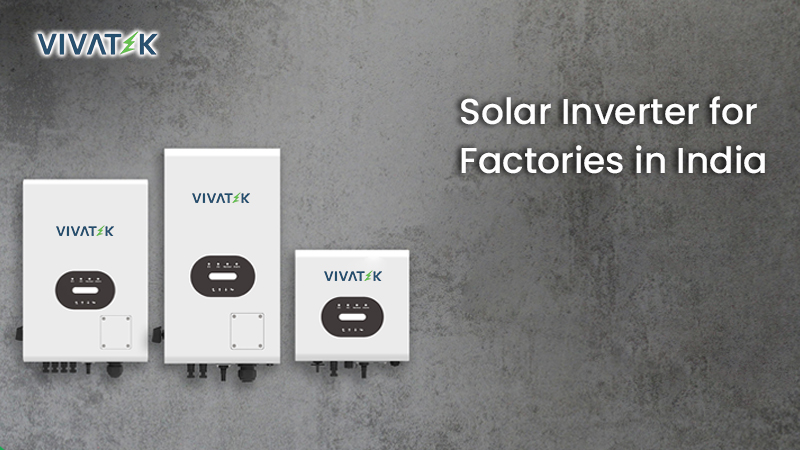
A solar inverter converts direct current (DC) electricity generated by solar panels into alternating current (AC) electricity that can be used by factory equipment and synchronized with the utility grid.
In industrial applications, the inverter performs far more than simple power conversion.
It manages energy flow, monitors system performance, maintains grid synchronization, supports electrical protection functions, and helps optimize overall solar plant efficiency.
Because the inverter directly influences energy generation and operational stability, it plays a central role in long-term project success.
Why Choosing the Right Solar Inverter Is Critical
The inverter is often responsible for determining how efficiently a solar plant performs throughout its operating life.
An incorrectly selected inverter can result in reduced energy generation, unnecessary shutdowns, poor system utilization, operational challenges, and lower financial returns.
Industrial facilities often operate under demanding electrical conditions involving large motors, variable loads, automation systems, transformers, and continuous production processes.
A factory-grade inverter must be capable of supporting these operating conditions while maintaining stable and reliable performance.
Choosing the correct inverter technology helps improve generation efficiency, operational reliability, and project economics.
Types of Industrial Solar Inverters
Industrial solar projects typically utilize different inverter technologies depending on project size, electrical infrastructure, operational requirements, and future expansion plans.
Industrial String Inverters
String inverters are commonly used for medium-sized industrial rooftop installations.
They provide flexibility, simplified maintenance, and modular scalability, making them suitable for many factory environments.
Central Inverters
Central inverters are often used for larger industrial solar plants.
They offer centralized control and are typically selected for projects where large-scale energy generation is required.
Hybrid Inverters
Hybrid inverter solutions combine solar generation with battery storage.
These systems help improve energy management, support peak demand control, and provide additional flexibility for facilities seeking greater energy independence.
LT vs HT Solar Inverter Requirements
Industrial solar systems must be designed according to the facility’s electrical infrastructure.
LT Factories
Low-tension facilities generally focus on voltage stability, safe grid synchronization, and optimized solar utilization.
Inverter selection is often based on load profile, energy consumption patterns, and future growth expectations.
HT Factories
High-tension facilities require additional engineering considerations.
Transformer integration, protection coordination, grid compliance, synchronization requirements, and utility approvals all influence inverter selection.
Because HT projects often involve larger capacities, engineering quality becomes especially important for long-term reliability and financial performance.
Factory Applications
Industrial solar inverter systems are used across a wide range of manufacturing sectors where energy consumption represents a significant operational expense.
Common applications include:
• Engineering and fabrication units
• Textile mills and spinning factories
• Food processing facilities
• Pharmaceutical manufacturing plants
• Automotive component manufacturers
• Chemical processing industries
• Warehousing and logistics centers
• Packaging and printing industries
• Industrial parks and SEZ facilities
Each application has unique load characteristics and operational requirements. This is why inverter selection should be based on actual factory conditions rather than generic product specifications.
Engineering vs Product Selection
One of the most common mistakes in industrial solar projects is focusing exclusively on product brands.
Many buyers compare inverter manufacturers but overlook the engineering decisions that determine overall project performance.
A successful solar installation depends on:
• Proper load assessment
• Accurate inverter sizing
• Transformer compatibility
• Protection coordination
• Cable design
• Grid synchronization
• Future expansion planning
• Monitoring architecture
Even the best inverter cannot compensate for poor system design.
For industrial facilities, engineering quality often has a greater impact on project success than equipment branding alone.
Common Factory Solar Mistakes
Many factories invest in solar power expecting immediate savings but fail to achieve expected results because of avoidable planning mistakes.
Common issues include:
Choosing Based on Price Alone
Selecting the lowest-cost proposal often results in compromises that affect long-term performance and reliability.
Ignoring Future Expansion
Factories frequently expand production capacity. Designing a solar system only for current requirements can create limitations later.
Incorrect Inverter Sizing
An improperly sized inverter can reduce generation efficiency and affect financial returns.
No Performance Monitoring Strategy
Without monitoring, performance losses can remain unnoticed for extended periods.
Lack of Engineering Review
Projects that skip detailed technical evaluation often experience avoidable operational issues.
Successful solar projects are built around engineering, not pricing.
Power Quality & Manufacturing Reliability
Manufacturing facilities depend on stable electrical power.
Voltage fluctuations, harmonics, frequency variations, and electrical disturbances can affect automation systems, CNC machinery, PLC controls, industrial electronics, and production processes.
While the primary purpose of a solar inverter is energy conversion, a properly engineered system also contributes to stable operation through effective grid synchronization and electrical integration.
For factories operating sensitive equipment, power quality should be considered as part of the overall solar design strategy.
Future Expansion Planning
Industrial facilities rarely remain static.
Production capacity grows, additional machinery is installed, new production lines are introduced, and energy requirements increase over time.
A solar system designed without considering future expansion may require significant modification later.
Scalable inverter architecture allows organizations to increase solar capacity as operational requirements evolve.
Planning for future growth protects the value of the original investment while supporting long-term business objectives.
Financial Impact & ROI
The financial performance of a solar project depends on far more than system size.
Generation efficiency, inverter performance, load utilization, tariff structure, operating hours, maintenance strategy, and engineering quality all influence project returns.
Even small differences in efficiency can create significant financial differences over the operating life of the system.
For this reason, industrial solar investments should be evaluated based on lifecycle performance rather than installation cost alone.
Organizations that focus on long-term value often achieve stronger financial outcomes.
Why Engineering Review Matters
Every factory has a unique energy profile.
Operating hours, production schedules, seasonal demand variations, transformer configuration, electrical infrastructure, and future expansion plans all influence solar system design.
A detailed engineering review helps identify these factors before implementation begins.
This process ensures that inverter selection, system configuration, and project execution align with actual business requirements.
The result is a solar solution designed around operational performance, reliability, and long-term return on investment rather than generic assumptions.
Supporting Energy Independence
Many manufacturers are seeking greater control over their energy future.
Dependence on utility power exposes businesses to tariff increases, supply uncertainty, and long-term operating cost fluctuations.
Industrial solar systems help create a more predictable energy strategy by generating electricity directly at the point of consumption.
Combined with proper inverter selection and system engineering, solar power helps improve energy resilience while supporting long-term cost control objectives.
Real Factory Example
A mid-sized manufacturing facility with significant daytime energy consumption was facing rising electricity costs and increasing pressure to improve operational efficiency.
Following a detailed energy assessment, an industrial solar system was designed around the facility’s load profile and future growth plans.
The inverter solution was selected to maximize daytime solar utilization while ensuring seamless integration with the factory’s existing electrical infrastructure.
The result was a substantial reduction in grid electricity consumption, improved energy cost predictability, and stronger long-term return on investment.
While every facility is different, this example demonstrates the importance of engineering-led project planning rather than equipment-driven decision-making.
What Successful Factory Solar Projects Have in Common
Successful industrial solar projects typically share several characteristics.
They begin with a detailed understanding of energy consumption.
They prioritize engineering quality over lowest-cost procurement.
They consider future expansion requirements.
They focus on operational reliability as well as energy savings.
They include monitoring, maintenance planning, and long-term performance management.
Most importantly, they are designed around business objectives rather than equipment specifications.
These factors consistently contribute to stronger financial and operational outcomes.
Why Businesses Choose Vivatek
Industrial solar projects require more than equipment supply.
They require proper planning, engineering expertise, electrical integration, compliance support, and long-term performance management.
At Vivatek, we work closely with factory owners, plant managers, consultants, EPC contractors, and industrial decision-makers to develop solar solutions aligned with operational and financial objectives.
Our approach begins with understanding how the facility consumes energy, how production operates, and what long-term goals the business aims to achieve.
We support customers through:
• Energy consumption analysis
• Solar feasibility studies
• Inverter selection and optimization
• LT and HT integration planning
• Engineering and compliance support
• Installation and commissioning assistance
• Monitoring and long-term service support
Our objective is not simply to install solar equipment.
Our objective is to help businesses reduce electricity costs, improve operational efficiency, and build a sustainable long-term energy strategy.
Frequently Asked Questions
What size solar inverter does my factory need?
The correct inverter size depends on your electricity consumption, connected load, operating hours, available installation area, and future expansion plans. A detailed technical assessment is required to determine the most suitable solution.
Can solar power operate with industrial machinery?
Yes. Industrial solar systems are designed to work alongside existing factory infrastructure and can support a wide range of manufacturing equipment when properly engineered.
Is solar suitable for HT factories?
Absolutely. Many large industrial facilities operate on HT connections and successfully implement large-scale solar installations designed specifically for their electrical infrastructure.
How long does an industrial solar inverter last?
The operating life depends on installation quality, operating conditions, maintenance practices, and product selection. Industrial-grade inverters are designed for long-term operation in demanding environments.
Can the solar system be expanded later?
Yes. A properly engineered solar project can be designed with future expansion in mind, allowing additional capacity to be added as energy requirements grow.
What affects solar project ROI?
Several factors influence ROI including:
• Electricity tariff structure
• Energy consumption patterns
• Solar generation performance
• Inverter efficiency
• Engineering quality
• Maintenance strategy
• Future energy cost trends
Why should I consult Vivatek before investing?
Every factory has unique requirements.
A technical consultation helps identify the most suitable solar strategy while reducing project risk and improving long-term returns.
Conclusion
Industrial solar power is no longer simply an energy-saving initiative.
It has become an important business strategy for organizations seeking to improve cost control, strengthen operational resilience, and reduce long-term dependence on rising electricity tariffs.
The success of a solar project depends on more than solar panels alone.
The inverter plays a central role in system performance, operational reliability, energy generation, and long-term return on investment.
Choosing the right solar inverter for factories requires a combination of engineering expertise, technical planning, and a clear understanding of operational requirements.
By taking an engineering-first approach, businesses can maximize solar performance while supporting future growth and long-term profitability.
Free Solar Consultation
Planning an industrial solar project?
Our technical team can help evaluate your energy consumption profile, electrical infrastructure, production requirements, and business objectives.
Receive expert guidance before making investment decisions.
✔ Factory Energy Assessment
✔ Inverter Selection Guidance
✔ LT & HT Evaluation
✔ Expansion Planning Support
✔ Project Feasibility Review
Free ROI Assessment
Understanding project returns is one of the most important parts of the decision-making process.
Share your latest electricity bill and our team will provide:
• Estimated solar generation potential
• Recommended inverter configuration
• Projected electricity savings
• ROI and payback analysis
• Capacity recommendations
This assessment helps businesses evaluate opportunities before committing to a project.
Download Brochure
Explore Vivatek’s industrial solar solutions, inverter technologies, engineering capabilities, project approach, and support services.
The brochure provides valuable information for factory owners, consultants, project managers, and procurement teams evaluating industrial solar investments.
Contact Vivatek Today
Whether you are planning a new solar installation, expanding an existing system, upgrading inverter infrastructure, or evaluating long-term energy strategies, Vivatek can help.
Our team supports factories, manufacturing facilities, warehouses, industrial parks, logistics centers, and processing plants with engineering-focused solar solutions designed for real industrial environments.
Contact Vivatek today to discuss your project requirements and discover how the right solar inverter solution can help reduce energy costs, improve reliability, and support long-term business growth.
📞 Contact: +91 9566117188 / 9841698180
📧 Email: sales@anushri.info
🌐 Website: https://anushri.info/