
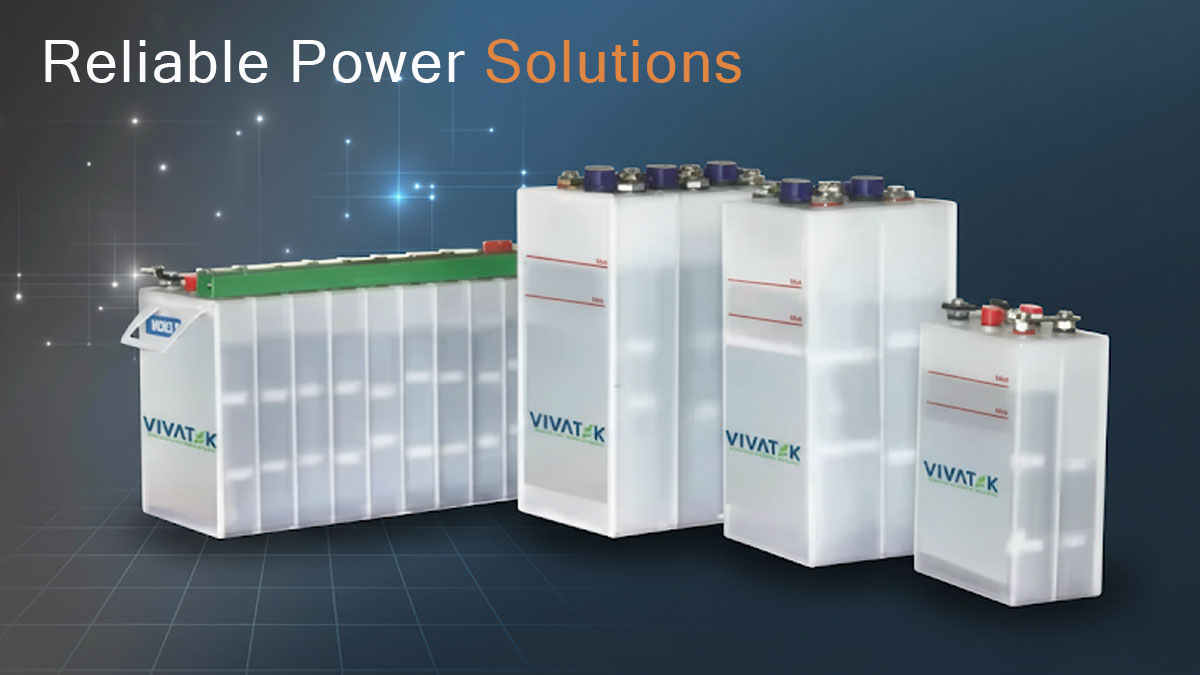
Introduction
Across the Middle East and Africa, infrastructure projects operate under some of the world’s most demanding conditions. High ambient temperatures, remote operating environments, unstable utility networks, mining operations, desert installations, renewable energy projects, and critical utility infrastructure all require dependable backup power systems.
In these environments, battery reliability is not simply a technical consideration. It directly influences operational continuity, equipment protection, safety, and long-term infrastructure performance.
For this reason, Nickel Cadmium (NiCad) batteries continue to be widely specified for utility substations, telecom networks, industrial facilities, renewable energy projects, transportation systems, mining operations, and critical infrastructure applications throughout the region.
Organizations searching for NiCad battery manufacturers in the Middle East and Africa are often looking for more than a battery supplier. They require a technical partner capable of supporting project planning, battery sizing, engineering requirements, documentation, compliance, and long-term operational reliability.
At Vivatek, we support industrial battery projects with application-focused engineering, technical consultation, and project-specific battery solutions designed for demanding operating environments.
Why Reliable Battery Systems Matter in Critical Infrastructure
Critical infrastructure depends on reliable DC power systems.
Telecom operators rely on battery systems to maintain communication services during utility interruptions. Utility substations depend on batteries to support protection relays, circuit breaker operation, SCADA systems, and control equipment. Mining facilities require dependable backup power for monitoring systems, safety equipment, and operational continuity.
In each of these applications, battery performance becomes critical during abnormal operating conditions. When grid power is unavailable, the battery system becomes the primary source of power for essential equipment.
This is why battery selection is often viewed as a long-term reliability decision rather than a procurement exercise.
Understanding Power Reliability Challenges in Middle East & Africa
Infrastructure operators across the Middle East and Africa face unique operating challenges.
Many installations operate in regions where temperatures regularly exceed 45°C. Remote project locations may have limited maintenance access. Utility power quality can vary significantly depending on the region, while industrial sites often experience demanding operating conditions including dust, vibration, humidity, and continuous-duty operation.
These environmental and operational challenges place additional stress on electrical systems and increase the importance of selecting battery technologies designed for long-term reliability.
For mission-critical infrastructure, dependable battery performance helps reduce operational risk and improve business continuity.
Why NiCad Batteries Continue to Be Trusted Across Industries
NiCad battery technology has been used for decades in critical industrial applications around the world.
One of the reasons for its continued popularity is its ability to perform reliably under conditions that may challenge other battery technologies.
NiCad batteries are widely recognized for their tolerance to temperature variation, resistance to deep discharge, long service life, and suitability for demanding industrial applications.
These characteristics make them particularly suitable for utility, telecom, mining, transportation, renewable energy, and infrastructure projects where reliability is the highest priority.
Key Advantages of Industrial NiCad Batteries
Industrial NiCad batteries provide several advantages for mission-critical applications.
They are capable of operating across a wide temperature range, can tolerate deep discharge conditions, offer long operational life, and require relatively low maintenance compared to many alternative technologies.
Their robust construction and predictable performance help make them a preferred choice for projects where operational continuity is essential.
For organizations responsible for critical infrastructure, these advantages contribute directly to long-term reliability and lifecycle value.
Why Reliability Matters More Than Battery Price
The initial cost of a battery system represents only one part of the overall investment.
For infrastructure operators, the greater concern is often the cost of failure.
Unexpected downtime can affect communication networks, utility operations, industrial production, transportation systems, and safety infrastructure. The resulting operational impact may significantly exceed the original cost of the battery system itself.
As a result, many organizations evaluate battery technologies based on reliability, lifecycle performance, service life, maintenance requirements, and total cost of ownership rather than purchase price alone.
Industrial Applications of NiCad Batteries
Industrial battery systems are used in applications where reliability, durability, and long-term performance are essential.
Across the Middle East and Africa, NiCad batteries support a broad range of industries including telecommunications, power utilities, mining, oil and gas, transportation, renewable energy, and industrial manufacturing.
These applications often operate in challenging environments where battery performance directly affects operational continuity and infrastructure reliability.
Telecom Networks & Communication Infrastructure
Telecommunication networks depend on continuous power availability.
Mobile towers, switching stations, transmission networks, and communication hubs require dependable backup power to maintain network uptime during utility interruptions.
In many regions, telecom infrastructure operates in remote locations where environmental conditions can be demanding and maintenance access may be limited.
NiCad batteries help support reliable communication services by providing dependable backup power even under challenging operating conditions.
Utility & Substation DC Systems
Utility substations rely on battery systems to support critical DC loads.
Protection relays, circuit breakers, control panels, SCADA systems, and monitoring equipment all depend on reliable battery-backed DC power.
A failure within the battery system can affect grid protection, operational safety, and system reliability.
This is one reason why NiCad batteries continue to be specified for utility applications throughout the Middle East and Africa.
Mining & Heavy Industrial Operations
Mining facilities often operate in harsh environments where equipment reliability is essential.
Battery systems support monitoring equipment, emergency backup systems, process control infrastructure, communication networks, and operational safety applications.
The ability of NiCad batteries to tolerate temperature variation, vibration, and demanding environmental conditions makes them suitable for mining operations where operational continuity is critical.
Oil & Gas Facilities
Oil and gas installations depend on reliable power systems to support critical operations.
Battery-backed DC systems are commonly used for emergency shutdown systems, safety equipment, communication networks, control systems, and monitoring infrastructure.
These applications require dependable performance because interruptions can affect
These systems often operate continuously, making battery reliability a critical factor in maintaining safe and uninterrupted operations.
For operators within the oil and gas sector, dependable backup power contributes directly to risk reduction and operational confidence.
Renewable Energy & Solar Hybrid Projects
Renewable energy projects continue expanding across the Middle East and Africa as organizations invest in sustainable power generation.
Solar farms, hybrid energy systems, remote microgrids, and off-grid installations often require reliable battery infrastructure to support monitoring systems, control equipment, communication networks, and backup power applications.
NiCad batteries are frequently selected for renewable energy projects because of their durability, temperature tolerance, and ability to perform consistently in demanding environments.
Transportation & Infrastructure Applications
Modern transportation infrastructure depends on reliable electrical systems.
Railway networks, airports, ports, metro systems, signaling infrastructure, and transportation control systems require dependable battery-backed power to support safe and efficient operation.
Battery reliability is particularly important in transportation applications because operational interruptions can affect both safety and service continuity.
NiCad batteries continue to support transportation projects throughout the region because of their proven performance and long-term reliability.
Why Industries Choose NiCad Batteries Over Other Technologies
Industrial battery selection is rarely based on a single specification.
Organizations evaluate battery technologies according to operational requirements, environmental conditions, maintenance expectations, service life objectives, and long-term reliability.
NiCad batteries remain a preferred technology because they offer dependable performance under conditions where many other battery technologies may experience limitations.
For mission-critical applications, reliability and predictability often outweigh short-term procurement considerations.
High Temperature Performance in Harsh Environments
One of the most significant challenges across the Middle East and Africa is temperature.
Many infrastructure projects operate in regions where elevated ambient temperatures are common throughout the year.
High temperatures can affect battery performance, accelerate aging, and increase maintenance requirements.
NiCad batteries are widely recognized for their ability to perform reliably in demanding temperature conditions, making them particularly suitable for installations located in deserts, industrial zones, remote infrastructure sites, and renewable energy facilities.
This capability helps support long-term operational reliability while reducing infrastructure risk.
Supporting Remote & Unmanned Installations
Many modern infrastructure projects operate in locations where regular maintenance access may be limited.
Remote telecom towers, renewable energy installations, substations, pumping stations, mining sites, and industrial monitoring facilities often require battery systems capable of operating with minimal intervention.
In these applications, reliability becomes especially important because unexpected maintenance visits can increase operational costs and create logistical challenges.
NiCad batteries are frequently selected for remote infrastructure because of their durability, proven reliability, and ability to support long service life.
Understanding the Challenges of MEA Operating Conditions
Operating conditions throughout the Middle East and Africa vary significantly from one region to another.
Projects may experience extreme temperatures, dust exposure, humidity, vibration, remote operating conditions, inconsistent utility power quality, and demanding industrial environments.
These factors influence battery selection and highlight the importance of choosing technologies designed specifically for critical infrastructure applications.
Successful battery projects begin with understanding these operating conditions and selecting solutions capable of supporting long-term performance under real-world circumstances.
Regional Demand Across Middle East & Africa
Infrastructure development continues to drive demand for industrial battery systems across the region.
UAE
The United Arab Emirates continues investing in utility infrastructure, transportation systems, renewable energy projects, industrial development, and smart city initiatives. Reliable battery systems remain an important component of these projects.
Saudi Arabia
Large-scale infrastructure investment, renewable energy expansion, industrial development, and utility modernization continue driving demand for dependable backup power solutions throughout Saudi Arabia.
Qatar
Qatar’s ongoing investment in utilities, industrial facilities, transportation infrastructure, and energy projects creates sustained demand for reliable industrial battery technologies.
Oman
Industrial expansion, utility projects, oil and gas infrastructure, and renewable energy developments continue supporting the need for dependable battery-backed systems.
Kuwait
Kuwait’s power infrastructure, industrial facilities, and energy sector projects require battery solutions capable of supporting mission-critical operations.
South Africa
Mining, utilities, industrial manufacturing, telecommunications, and transportation sectors continue driving demand for industrial battery systems across South Africa.
Nigeria
Telecom network expansion, utility infrastructure development, industrial growth, and renewable energy projects contribute to increasing battery requirements throughout Nigeria.
Kenya
Kenya continues investing in renewable energy, telecom infrastructure, transportation projects, and industrial development, creating growing demand for reliable battery technologies.
Egypt
Large infrastructure investments, utility modernization, industrial projects, and transportation development continue supporting demand for industrial backup power systems.
Ghana
Telecommunications, mining, utility infrastructure, and industrial expansion projects continue increasing demand for dependable battery solutions.
Tanzania
Infrastructure development, renewable energy growth, telecom expansion, and industrial projects contribute to growing battery requirements throughout Tanzania.
Morocco
Morocco’s renewable energy leadership, transportation investments, utility projects, and industrial development continue creating opportunities for advanced battery infrastructure solutions.
How to Select the Right Industrial Battery Solution
Selecting an industrial battery system requires more than choosing a voltage and capacity rating.
The battery must be matched to the specific application, operating environment, backup duration requirements, maintenance expectations, and long-term operational objectives.
A telecom tower operating in a remote desert location may have different requirements compared to a utility substation, mining facility, renewable energy installation, or industrial manufacturing plant.
Successful battery selection begins with understanding how the battery will be used, the environmental conditions it will operate in, and the level of reliability required by the application.
A properly selected battery system helps improve operational continuity while reducing long-term ownership costs.
Information Required for Accurate Battery Selection
To recommend the most suitable NiCad battery solution, several project details should be evaluated during the planning stage.
These typically include:
• Application type
• System voltage requirements
• Required backup duration
• Connected load details
• Operating temperature conditions
• Indoor or outdoor installation environment
• Existing charger specifications
• Future expansion requirements
• Site location
Providing accurate project information helps ensure the battery solution is engineered according to actual operational needs rather than assumptions.
Battery Sizing Considerations for Industrial Projects
Battery sizing is one of the most important aspects of system reliability.
An undersized battery may fail to support critical loads during extended outages, while an oversized system can increase project costs unnecessarily.
Proper battery sizing considers:
• Required autonomy time
• Load profile characteristics
• DC voltage requirements
• Operating temperature
• Future load growth
• System redundancy requirements
A professionally engineered battery sizing calculation helps ensure dependable performance throughout the project lifecycle.
For critical infrastructure applications, battery sizing should always be performed using application-specific operating conditions.
Why Early Battery Selection Reduces Project Risk
Many projects evaluate battery systems only during the procurement stage.
However, experienced EPC contractors, consultants, and infrastructure owners understand that battery planning should begin much earlier.
Battery technology influences charger design, panel sizing, cable selection, installation space requirements, ventilation considerations, and long-term maintenance planning.
By evaluating battery requirements during the engineering phase, organizations can reduce project delays, avoid redesign costs, improve procurement efficiency, and simplify commissioning activities.
Early planning often results in smoother project execution and improved long-term reliability.
Battery Replacement & Retrofit Projects
Many facilities throughout the Middle East and Africa operate aging battery systems that require modernization.
Replacing an existing battery bank is often more complex than simply installing new batteries.
Factors such as charger compatibility, DC system configuration, available installation space, load growth, and infrastructure condition must all be evaluated.
A properly planned retrofit project allows organizations to upgrade battery infrastructure while minimizing operational disruption.
This approach helps extend asset life while improving overall system reliability.
Charger Compatibility & Existing Infrastructure Integration
Battery performance is influenced not only by the battery itself but also by the charger and associated DC infrastructure.
When replacing or upgrading battery systems, compatibility between batteries, chargers, protection devices, monitoring systems, and control equipment must be carefully reviewed.
Proper integration helps ensure:
• Stable charging performance
• Improved battery life
• Reliable system operation
• Reduced maintenance concerns
• Compliance with project requirements
Evaluating charger compatibility during the planning stage helps prevent unexpected issues during installation and commissioning.
EPC, Tender & Project Support
Large industrial and infrastructure projects often involve multiple stakeholders including consultants, EPC contractors, utilities, government agencies, telecom operators, and project owners.
Battery systems supplied for these projects must meet both technical and documentation requirements.
Vivatek supports project-driven requirements through:
• Technical consultation
• Battery sizing assistance
• Compliance documentation
• Technical datasheets
• Project submittals
• Tender support
• Engineering coordination
• Application evaluation
Our objective is to help project teams implement reliable battery solutions that support long-term infrastructure performance while meeting project schedules and technical expectations.
For EPC contractors and infrastructure developers, access to technical expertise during planning and execution can significantly improve project outcomes.
Compliance, Documentation & Technical Support
Industrial battery projects require more than equipment supply.
Utilities, telecom operators, EPC contractors, consultants, and infrastructure developers often require comprehensive technical documentation to support project approval, engineering review, procurement processes, and commissioning activities.
Typical documentation requirements may include:
• Technical datasheets
• Battery sizing calculations
• Compliance documentation
• Installation guidelines
• Operation and maintenance manuals
• Battery layout drawings
• Project submittals
• Quality documentation
Providing accurate technical documentation helps simplify project execution while supporting engineering confidence throughout the project lifecycle.
Why Infrastructure Owners Focus on Reliability First
Infrastructure owners are responsible for maintaining assets that often operate continuously for decades.
Their primary concern is not simply battery capacity or procurement cost. Their focus is operational reliability.
A battery system that performs consistently during critical events can help protect infrastructure, support operational continuity, and reduce business risk.
This is why reliability remains one of the most important factors in industrial battery selection.
For mission-critical applications, dependable performance often outweighs short-term purchasing considerations.
Why Long-Term Reliability Matters More Than Specifications
Technical specifications provide useful information, but long-term field performance is often a better indicator of value.
Industrial organizations evaluate battery technologies based on:
• Proven operating history
• Environmental durability
• Service life expectations
• Maintenance requirements
• Operational predictability
• Infrastructure compatibility
A battery may perform well on paper, but real-world operating conditions often determine long-term success.
This is why many infrastructure owners prioritize technologies that have demonstrated reliable performance across demanding industrial applications.
Reliability for Mission-Critical Infrastructure
Mission-critical infrastructure depends on dependable backup power.
Utility substations rely on battery-supported protection systems.
Telecom operators depend on batteries to maintain communication services.
Mining facilities require reliable support for monitoring and safety equipment.
Oil and gas operators depend on battery-backed emergency systems.
Transportation networks require dependable power for signaling and operational control.
In these applications, battery performance directly influences safety, continuity, and operational resilience.
The ability to provide dependable DC power during abnormal conditions is one of the reasons NiCad batteries continue to be trusted across critical infrastructure sectors.
Supporting Renewable Energy Growth Across the Region
Renewable energy investment continues expanding throughout the Middle East and Africa.
Large-scale solar installations, hybrid power systems, microgrids, and remote energy projects increasingly require reliable battery infrastructure.
As renewable energy systems become more important to national energy strategies, dependable backup power becomes essential for maintaining operational stability.
NiCad batteries continue supporting renewable energy projects because of their durability, temperature tolerance, and suitability for challenging environmental conditions.
Their ability to operate reliably over long service periods makes them a valuable component of modern energy infrastructure.
Total Cost of Ownership (TCO) Advantage
Evaluating batteries solely on initial purchase cost can create a misleading picture of long-term value.
Industrial organizations increasingly focus on total cost of ownership when selecting critical infrastructure equipment.
Factors influencing total ownership cost include:
• Expected service life
• Maintenance requirements
• Replacement frequency
• Downtime risk
• Reliability performance
• Operational support requirements
A battery solution that delivers dependable performance over many years often provides greater value than a lower-cost alternative requiring more frequent intervention or replacement.
Lifecycle Value Beyond Initial Cost
The true value of a battery system is measured throughout its operating life.
Industrial projects are expected to deliver reliable performance year after year under changing operating conditions.
Lifecycle value includes:
• Operational reliability
• Reduced maintenance burden
• Predictable performance
• Long-term infrastructure support
• Lower operational risk
Organizations increasingly evaluate battery investments based on lifecycle contribution rather than procurement price alone.
This approach helps align battery selection with broader business and infrastructure objectives.
Why Long Service Life Matters
Infrastructure projects are built for long-term operation.
Frequent battery replacement can increase maintenance costs, create operational disruption, and introduce additional project complexity.
Long-life battery technologies help reduce replacement frequency while improving infrastructure stability.
This is particularly important for:
• Remote telecom sites
• Utility substations
• Renewable energy facilities
• Mining operations
• Transportation infrastructure
• Industrial process facilities
A longer service life contributes directly to operational efficiency, lifecycle value, and long-term reliability.
For organizations managing critical infrastructure, reducing replacement cycles can significantly improve overall asset performance.
What Happens After Battery Delivery?
A successful battery project does not end when the equipment arrives on site.
Industrial battery systems are expected to support critical operations for many years, which is why installation quality, commissioning procedures, charging system integration, maintenance planning, and operational monitoring remain important after delivery.
Organizations often require technical guidance during installation, assistance with battery commissioning, charger verification, capacity validation, and long-term maintenance planning.
A structured approach after delivery helps ensure that the battery system performs as intended throughout its operational life.
Building Long-Term Infrastructure Reliability
Reliable infrastructure is built through a combination of quality equipment, sound engineering practices, proper installation, and ongoing support.
Battery systems play a critical role within this strategy because they provide the DC power required to support protection systems, communication networks, safety infrastructure, monitoring systems, and operational controls.
By selecting proven battery technologies and implementing them correctly, organizations can strengthen operational resilience while reducing long-term infrastructure risk.
Why Utilities Continue Choosing NiCad Batteries
Utility operators require battery systems that can support critical DC loads under demanding conditions.
Protection relays, circuit breakers, SCADA systems, control panels, and communication infrastructure depend on reliable battery-backed power.
Utilities continue selecting NiCad batteries because of their long operating life, dependable performance, tolerance to temperature variation, and suitability for mission-critical applications.
These characteristics help utilities maintain reliable operation while supporting long-term asset management objectives.
Why EPC Contractors Prioritize Proven Technologies
EPC contractors are responsible for delivering projects that meet performance expectations, technical specifications, and operational requirements.
Selecting proven technologies helps reduce project risk and improve confidence during execution.
NiCad batteries have been successfully deployed across utility, telecom, transportation, renewable energy, mining, and industrial projects worldwide.
This long history of field performance provides EPC contractors with confidence when supporting critical infrastructure developments.
Why Consultation Before Procurement Saves Time and Cost
Many project challenges can be avoided through early technical consultation.
Evaluating application requirements, backup duration, battery sizing, charger compatibility, environmental conditions, installation constraints, and future expansion plans before procurement often improves project outcomes.
Early planning helps reduce engineering modifications, avoid procurement errors, simplify commissioning, and improve long-term operational performance.
For large infrastructure projects, consultation is often one of the most valuable stages of the project lifecycle.
Supporting Infrastructure Throughout Its Lifecycle
Battery systems support infrastructure for many years after installation.
As operating conditions change, organizations may require battery health assessments, replacement planning, capacity reviews, charger upgrades, expansion support, and lifecycle evaluations.
Working with a technical partner capable of supporting infrastructure throughout its lifecycle helps improve long-term reliability while reducing operational uncertainty.
This approach helps ensure that battery systems continue supporting critical infrastructure as requirements evolve over time.
Future of Industrial Backup Power in Middle East & Africa
Infrastructure investment across the Middle East and Africa continues to accelerate.
Utility modernization programs, renewable energy expansion, telecom network growth, transportation developments, industrial projects, and mining investments are increasing demand for dependable backup power systems.
As infrastructure becomes more automated and digitally connected, battery reliability will continue to play a critical role in operational continuity.
Organizations increasingly seek solutions that provide predictable performance, long service life, reduced maintenance requirements, and strong lifecycle value.
NiCad battery technology remains well positioned to support these evolving infrastructure requirements.
Example Industrial Battery Deployment Scenario
A utility operator planning a substation modernization project required a battery solution capable of supporting protection relays, control systems, communication infrastructure, and emergency DC loads.
The project environment included elevated ambient temperatures and long operational life requirements.
Following a technical review of load requirements, backup duration objectives, environmental conditions, and future expansion plans, an appropriately sized NiCad battery system was selected.
The result was a battery infrastructure solution designed to support long-term reliability while aligning with the utility’s operational objectives and maintenance strategy.
Why Organizations Partner with Vivatek
Organizations choose Vivatek because we focus on industrial battery solutions designed around real operating requirements.
Our team works closely with utilities, telecom operators, EPC contractors, consultants, renewable energy developers, mining companies, transportation authorities, and industrial organizations to understand project needs before recommending a solution.
Our support includes:
• Technical consultation
• Battery sizing assistance
• Application evaluation
• Documentation support
• EPC and tender assistance
• Replacement and retrofit planning
• Long-term project support
Our objective is to help customers implement reliable battery systems that support operational continuity, infrastructure performance, and long-term business objectives.
Frequently Asked Questions
What is a NiCad battery?
A NiCad battery is a rechargeable battery that uses nickel oxide hydroxide and cadmium as active materials. It is widely used in industrial applications because of its reliability, durability, and long service life.
Why are NiCad batteries used in substations?
NiCad batteries provide dependable DC power for protection relays, control systems, SCADA infrastructure, and circuit breaker operations within substations.
Are NiCad batteries suitable for telecom towers?
Yes. NiCad batteries are commonly used within telecom infrastructure because they provide reliable backup power and perform well in challenging environmental conditions.
Can NiCad batteries operate in high temperatures?
Yes. One of the key advantages of NiCad technology is its ability to operate reliably in elevated temperature environments often encountered across the Middle East and Africa.
What is the expected service life of industrial NiCad batteries?
Service life varies according to application and operating conditions, but industrial NiCad batteries are widely recognized for providing long operational life when properly maintained.
Can NiCad batteries replace existing battery banks?
Yes. Many facilities implement battery replacement and retrofit projects using NiCad technology while retaining existing infrastructure where appropriate.
Does Vivatek support EPC and utility projects?
Yes. Vivatek supports utilities, telecom operators, EPC contractors, consultants, renewable energy developers, mining organizations, and industrial customers across a wide range of infrastructure projects.
Conclusion
Industrial infrastructure depends on reliable backup power.
Across the Middle East and Africa, utilities, telecom operators, mining companies, renewable energy developers, transportation authorities, and industrial organizations continue selecting NiCad batteries because of their proven reliability, long service life, and suitability for demanding operating environments.
Successful battery projects require more than product supply. They require technical understanding, application-focused engineering, proper sizing, lifecycle planning, and long-term support.
By combining proven NiCad battery technology with technical expertise and project-focused support, Vivatek helps organizations implement battery solutions designed for long-term infrastructure reliability.
Request a Technical Consultation
Planning a utility, telecom, mining, transportation, renewable energy, or industrial project?
Speak with our technical team to discuss your application requirements and identify a suitable battery solution.
Request Battery Sizing Assistance
Provide your system voltage, backup duration requirements, application details, and project location to receive battery sizing guidance tailored to your operational needs.
Request a Project-Based Quotation
Every project has unique requirements.
Contact our team with your project specifications to receive a customized recommendation and quotation based on your application.
Download NiCad Battery Datasheet
Access technical specifications, product information, and application guidance to support your engineering and procurement process.
Contact Vivatek Today
Contact our team today to discuss your project requirements and discover how our industrial NiCad battery solutions can support reliable operations across the Middle East and Africa.
📞 Contact: +91 9566117188 / 9841698180
📧 Email: sales@anushri.info
🌐 Website: https://anushri.info/