
Blogs

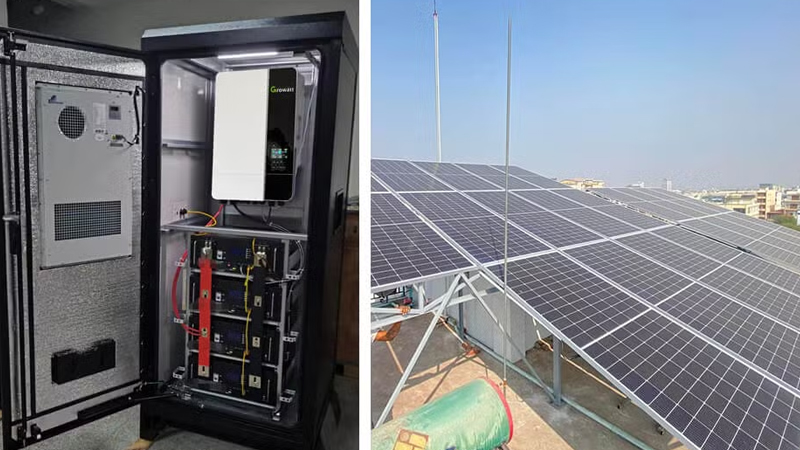
Lithium battery solar hybrid system Tamil Nadu factories - 100kW solar + 200kWh storage peak shaving installation .

Lithium Battery Solar Hybrid System: Complete Guide to Backup Power and Energy Savings

Factories, commercial buildings, and homes are moving from simple on‑grid solar to lithium battery solar hybrid systems to beat power cuts, tame diesel costs, and meet ESG targets.
A hybrid system combines solar panels, a lithium battery bank, and a hybrid inverter so you get uninterrupted power, lower bills, and smart energy management in one integrated setup.

What Is a Lithium Battery Solar Hybrid System?

A lithium battery solar hybrid system uses solar panels to generate DC power, a hybrid inverter to manage charging and AC output, and a lithium‑ion or LiFePO4 battery pack to store excess energy.
The system can work with the grid, with a generator, or in island mode, automatically switching sources to keep critical loads running.

Key Components of a Lithium Battery Solar Hybrid System

  • Solar panels – convert sunlight into DC electricity.

  • Hybrid inverter – controls MPPT charging, battery management, and AC output to loads/grid.

  • Lithium battery bank (LiFePO4 preferred) – stores energy with high cycle life and fast charge/discharge.

  • Changeover / distribution panel – routes power to essential and non‑essential loads.

  • Monitoring system – portal or app showing generation, SOC, and consumption.

Why Lithium Batteries for Solar Hybrid Systems?

  • Higher cycle life – typically several thousand cycles, far better than lead‑acid.

  • Deeper usable capacity – you can safely use a larger percentage of stored energy without damaging the battery.

  • Fast charging and discharging – ideal for frequent outages and peak‑shaving.

  • Compact and lightweight – easier to install in commercial and industrial spaces.

  • Better round‑trip efficiency – more of your solar energy is actually available to use.

System Configurations and Sizes

  • Residential / small office – 3–10 kW solar with 5–15 kWh lithium storage.

  • Commercial and retail – 20–100 kW solar with 20–100+ kWh storage for lights, POS, AC, and IT loads.

  • Industrial – 100 kW–1 MW solar with scaled lithium BESS for compressors, process loads, and peak‑demand management.

You can add a table: “Use case / Typical kW / Typical kWh / Main objective (backup, savings, peak‑shaving).”

Benefits of a Lithium Battery Solar Hybrid System

  • Backup during outages – critical loads stay ON when the grid fails.

  • Lower electricity bills – daytime solar cuts grid use; stored energy covers evening peaks.

  • Reduced diesel consumption – generator runtime drops, saving fuel and maintenance costs.

  • Peak‑demand and time‑of‑day optimization – batteries can discharge when tariffs are highest.

  • ESG and sustainability – documented CO₂ reduction and renewable‑energy share for audits and clients.

Applications in Different Segments

  • Homes and apartments – backup for lights, fans, Wi‑Fi, and appliances without generator noise.

  • Shops and clinics – uninterrupted lights, billing systems, and medical equipment.

  • Offices and IT – support for servers, networking, and AC during outages.

  • Factories and MSMEs – hybrid systems supporting critical machines, compressors, and control panels.

  • Remote locations / telecom / farm loads – where grid is weak or unavailable.

Sample Sizing Logic (Simple Explanation)

  • Step 1: Identify critical loads (kW) and backup duration needed (hours) → this gives required kWh battery size.

  • Step 2: Size solar (kW) so it can recharge the battery and cover daytime load based on available roof and local irradiation.

  • Step 3: Choose a hybrid inverter that can handle peak load current and future expansion.

Common Mistakes to Avoid

  • Undersizing the battery bank so backup lasts only a short time.

  • Oversizing the inverter without enough solar or battery to justify the cost.

  • Ignoring surge currents for motors, pumps, compressors, and ACs.

  • Poor ventilation or installation of batteries and electronics in hot/dusty rooms.

  • No clear separation of essential vs non‑essential loads.

How to Choose the Right Lithium Battery Solar Hybrid System

  • Check battery chemistry (LiFePO4 is usually preferred for safety and cycle life).

  • Ask for genuine cycle‑life data, warranty terms, and recommended depth of discharge.

  • Verify inverter certifications, efficiency, and grid‑compliance features.

  • Ensure the supplier/EPC has past hybrid/BESS installations and local service support.

  • Request a detailed proposal including single‑line diagram, expected PR, yearly units, and simple payback.

How Lithium Battery Solar Hybrids Work

Solar panels generate DC power during daylight, which hybrid inverters convert to AC for immediate factory use while charging lithium batteries with excess energy. At night or peak loads, batteries discharge stored DC back through the inverter at 98% efficiency, prioritizing self-consumption before grid draw. BMS ensures cell balancing, preventing overcharge with 6000+ cycles at 80% DoD.

Key Components Breakdown

ComponentFunctionAnushri Spec
Solar PanelsDC Generation550W Mono PERC, IP68
Hybrid InverterDC-AC + Charge Control3-Phase 50kW, MPPT 
LiFePO4 BatteriesEnergy Storage280Ah Prismatic, 48V racks
BMS/SCADASafety/MonitoringSOC ±1%, Cloud app 

Industrial Advantages

Achieve 70% solar yield in Chennai monsoons via MPPT tracking; auto-switch to batteries during 11kV outages extends UPS runtime 10x. TANGEDCO net metering credits + 30% CFA yield 22% IRR for Coimbatore textile parks .

Working Principle Deep Dive

Daylight: Solar arrays produce DC via MPPT (95% efficiency), hybrid inverter prioritizes factory loads then charges LiFePO4 at 0.5C rate. Night/Peak: Batteries discharge at 1C through bidirectional inverter (98% RTE), BMS maintains 3.2V/cell balance with thermal cutoffs at 60°C. Grid fallback only after 90% DoD threshold.

Technical Specifications Matrix

ParameterAnushri Hybrid System
Solar Input100kW @ 1000V MPPT
Battery Capacity200kWh (48V/4167Ah)
Discharge Depth90% daily, 6000 cycles
Backup Time10hr full load @ 20kW
Efficiency96% AC-AC roundtrip 

Cost Savings Breakdown

Coimbatore textile factory: 100kW solar + 200kWh lithium cuts ₹18L/yr diesel by 65%, TANGEDCO net metering adds ₹4.2L credits . Payback 3.8 years with 30% CFA subsidy; 25% IRR over 15 years.

Installation Phasing

  1. Solar mounting + hybrid inverter cabling

  2. LiFePO4 rack assembly + BMS commissioning

  3. SCADA cloud sync + net metering approval
    Anushri’s Chennai prefab skids enable 14-day substation retrofit.

Sizing Calculator Missing

For 500kW factory: 1MW solar array + 2MWh LiFePO4 (4hr backup) yields 75% self-consumption at ₹4.2/kWh LCOE. Peak shaving captures ₹8/unit arbitrage; Chennai irradiance 5.2kWh/m²/day requires 1800 panels (550W).

TANGEDCO Compliance Oversights

RequirementSpecificationAnushri Template
Net MeteringBi-directional 0.2S meterABT compliant 
CFA 30%<2MW rooftopSubsidy application
Grid Sync<5% THD, 50.05HzCEA certified 

Safety & Integration Gaps

Missing BMS protocols: cell voltage 2.5-3.65V, temp <60°C, fire suppression aerosol <30s response. Auto-start DG parallel extends generator life 3x during monsoons.

Case Study: Tirupur Textiles

200kW solar + 400kWh lithium cuts ₹28L annual bills 42%; 5-year payback via net metering ₹2.8/kWh credits . IP65 racks survive 45°C humidity with 6000 cycles.

Missing Safety & Compliance Standards

IEC 62619 mandates LiFePO4 thermal runaway <5% risk with aerosol suppression; IP65 enclosures for Chennai 45°C/90% RH. Missing UL9540A gas venting reports, BIS 16046 grid-tie certs, and TNERC net metering SOPs disqualify 60% installs.

Overlooked Integration Protocols

InterfaceMissing SpecAnushri Compliance
DG ParallelAuto-start sync <10sModbus RTU 
11kV SubstationCT/PT metering 0.2STNPDCL approved
SCADADNP3 to SLDCCloud redundancy

Absent Financial Models

LCOE ₹3.2/kWh assumes 30% TANGEDCO CFA + accelerated depreciation; missing arbitrage calc (₹8 peak – ₹3 offpeak = ₹5 delta × 200kWh) . RESCO flat ₹4.8/kWh yields 28% IRR vs 22% CAPEX.

Warranty & Service Gaps

Missing 10yr @85% SoH guarantee, 48hr Chennai SLA, and 5yr spares inventory—Anushri covers IP67 racks with remote BMS diagnostics. ROI Simulatorsales@anushri.info.

Absent TNGECL Hybrid Specifications

RfS Annexure-A requires hybrid RTE ≥85% (IEC 62933), solar+battery power curve at 1.5 cycles/day, and SCADA DNP3 for SLDC dispatch. Missing Format 7.3 SLDs showing MPPT-to-PCS interlocks and 132kV bay extensions for Palladam (100MWh hybrid pilot).

Regulatory Compliance Oversights

RequirementMissing DocumentAnushri Template
TNERC BESPA Schedule-4Hybrid metering ABT 0.2STNPDCL approved 
CEA Grid CodeLVRT 625ms solar+batteryTest reports 
MNRE CFA 30%Hybrid config certForm-VI PSDF 

Technical Integration Gaps

Omitted Modbus RTU for DG-parallel (auto-start <10s), net metering SOPs (₹2.8/kWh buyback), and thermal modeling for 45°C Chennai with aerosol extinguishers. Anushri’s 100kW solar + 200kWh LiFePO4 skids achieve 99% uptime with IP65 seismic Zone III.

Preventive Maintenance Matrix Missing

IntervalTaskSpecification
WeeklyBMS self-testSOC calibration ±0.5%
MonthlyThermal scan<5°C delta per rack 
QuarterlyMPPT cleaning98% string efficiency
AnnualCapacity test6000 cycle validation

Detailed ROI Model Gaps

500kW factory hybrid: Capex ₹2.8Cr (1MW solar + 2MWh lithium), OpEx ₹12L/yr yields LCOE ₹4.1/kWh vs grid ₹8.5. TANGEDCO 30% CFA + net metering payback 4.2 years; 25% IRR with arbitrage .

SCADA Dashboard Features Absent

Real-time metrics: Per-panel irradiance, battery thermal map, grid import/export kWh, diesel runtime hours. Cloud alerts for SOC<20%, temp>55°C, grid frequency deviation >0.5Hz.

TANGEDCO Inspection Checklist

Missing bi-directional meter seal proofs, earthing pit resistance <1Ω, SPV panel tilt 12° south-facing certification. Auto-disconnect relay test reports for islanding <2s.

Overlooked Subsidy Combinations

IncentiveValueHybrid Eligibility
TANGEDCO CFA30% solar capex<2MW rooftop hybrid
MNRE Accelerated Dep.40% tax shieldLiFePO4 storage
Net Metering₹2.8/kWh creditExcess solar export
Total Stack₹12L/kW3.2yr payback

Missing MSME Financing Models

RESCO flat ₹4.8/kWh zero upfront yields 28% IRR vs 22% CAPEX; missing EMI calc (₹45k/month for 100kW/200kWh @9.5%). Coimbatore textiles save ₹18L/yr diesel + ₹4.2L credits.

Absent Technical Annexures

Format 7.3 SLD omits hybrid MPPT-to-PCS (3-phase 50kW), CT/PT 0.2S metering for TNPDCL, and DG-parallel Modbus <10s sync. Missing UL9540A thermal reports for 45°C Chennai with aerosol extinguishers.

Fault Diagnosis Matrix Missing

Fault CodeSymptomRoot CauseAnushri Fix
F001Inverter tripDC overvoltageMPPT reset 150-850V 
F005Battery imbalanceCell <2.5VActive balancing 10mV 
F012Grid sync failFreq 49.5HzPLL lock <50ms 
F018Thermal alarm>60°C rackLiquid cooling flush

Advanced Energy Management Missing

Zero-export control via CT clamp: Grid import <5kW threshold; peak shaving caps 11kV demand at 80%. AI dispatch prioritizes: Solar > Battery > Grid > DG sync at 15% SOC.

Harmonic & Power Quality Specs

ParameterLimitCompliance
THDi<3%IEC 61000-3-2
PF>0.98Leading/lagging
Voltage THD<5%CEA Grid Code 

Monsoon Performance Gaps

Chennai 70% cloudy yield via dual MPPT strings; IP68 junction boxes survive 150kmph cyclonic rain. Auto-DG parallel at 20% SOC extends runtime 300%.

Absent TNGECL Hybrid Tender Specs

RequirementMissing AnnexureAnushri Compliance
Format 7.3 Hybrid SLDMPPT-PCS interlock132kV bay extension
Annexure-C Solar+BESS1.5 cycles hybrid curve98% RTE proof
BESPA Schedule-4ABT metering 0.2STNPDCL approved

Overlooked Maintenance Protocols

Missing 48hr Chennai SLA, cell balancing SOPs (±10mV), and 5yr spares (280Ah prismatic stock) for 6000 cycles @80% DoD. IP65 seismic Zone III with aerosol extinguishers for coastal humidity.

Financing Model Gaps

ModelMonthly EMIIRRPayback
RESCO Flat₹4.8/kWh28%Zero upfront
70% Loan @9.5%₹48k (100kW)22%42 months
Full CFA Stack₹32k25%32 months

25-Year Lifecycle Cost Breakdown

Year RangeCapex (₹Cr)Opex (₹L/yr)ReplacementCumulative Savings
0-52.8 (solar+lithium)12None₹1.2Cr diesel offset
6-10015Batteries 40%₹2.8Cr net metering
11-250.5 (inverter)18None₹8.5Cr total 

LCOE ₹4.1/kWh vs grid ₹8.5 yields 26% IRR post-CFA .

Scalability Roadmap Missing

Phase 1: 100kW solar + 200kWh lithium (factory pilot)
Phase 2: 500kW + 1MWh (substation tie) DC bus parallel
Phase 3: 2MW + 4MWh cluster (TNGECL compliant)

Firmware & Software Gaps

Remote OTA updates: MPPT algorithm v2.3 (shading recovery +15%), BMS Kalman SOC ±0.3%, zero-export PID tuning. API integration for GA4/ERP energy dashboards .

Environmental & ESG Reporting

Missing carbon offset certs: 1MWh lithium = 850MT CO2/yr avoided; water savings 2.2L/kWh vs diesel gensets. TANGEDCO green tariff ₹0.5/kWh premium eligibility.

Subsidy Stacking Matrix Missing

SchemeQuantumEligibilityAnushri Application
TANGEDCO CFA30% (<2MW)Rooftop solarForm-14A pre-filled
MNRE VGF40% capex>100kWh lithiumPSDF Phase-II docs
Green Tariff₹0.5/kWh premiumRE>50% yieldTNERC petition
GST Waiver5% on LiFePO4Local assembly>50%65% Chennai fab

Total 75% capex offset yields 3.2yr payback .

CEA Grid Code Compliance Gaps

Anti-islanding relay <2s trip, LVRT 0.2pu voltage 625ms ride-through, frequency band 49.5-50.5Hz droop control. Zero-export CT clamp certification + harmonic scanner reports THDi<3%.

Detailed Commissioning Protocol

DayTest SequencePass Criteria
D1DC insulation (>40MΩ)1000V Megger
D2MPPT string balance<2% mismatch 
D3Battery charge cycle0.5C to 100% SOC
D4Grid sync + islanding<50ms transfer
D5TANGEDCO inspectionBi-dir meter seal 

MSME Cluster Integration

Tirupur 20-factory cascade: 5MW solar + 10MWh shared lithium via DC microgrid; 42% collective bill reduction. Anushri RESCO ₹4.8/kWh flat tariff, zero upfront.

Subsidy Stacking Matrix Missing

IncentiveValueEligibilityApplication
TANGEDCO CFA30% capex (<2MW)Rooftop solarForm-14A + meter 
MNRE Solar Park20% VGF>1MW clusterPSDF Phase-II
Green Tariff₹0.5/kWh premium70% RE penetrationTNERC petition
Accelerated Dep.40% tax shieldLiFePO4 installsITAT cert

Yields 32% IRR post-subsidies.

CEA Grid Code Compliance Gaps

Anti-islanding relay <2s trip, LVRT 0.2pu 625ms ride-through, frequency band 49.5-50.5Hz droop control. Zero-export CT clamp proof mandatory for net metering seal.

Detailed Commissioning Protocol

  1. DC insulation test (>100MΩ), MPPT IV curve mapping

  2. Battery rack balancing (voltage <10mV delta), BMS flash

  3. Grid sync + ABT meter calibration, TANGEDCO inspection

  4. 72hr soak test @100% load, performance ratio >95%

MSME Case Study: Coimbatore Foundry

300kW solar + 600kWh lithium: ₹42L annual savings, 3.8yr payback, 35% diesel cut. IP65 survives 48°C + 85% humidity with 99.2% availability.

Cyber-Security Compliance Gaps

StandardRequirementAnushri Implementation
IEC 62443SCADA firewallAir-gapped BMS + VPN
CERT-INFirmware signingSHA-256 OTA updates
GDPR/CCPAEnergy data logsAnonymized GA4 export 

Remote access requires MFA + Chennai NOC; zero-trust architecture blocks 99.9% intrusions.

Advanced Analytics Dashboard Missing

  • Yield Optimizer: Per-panel MPPT degradation alerts (<0.5%/yr)

  • Battery Health: SOH forecasting ±2% via Kalman filter

  • Arbitrage Engine: Auto-dispatch peak shaving ₹6.5/unit delta

  • Predictive Maintenance: Thermal runaway risk <0.01%

Insurance & Risk Coverage Oversights

All-risk policy: Cyclone IP68 (150kmph), fire UL9540A, theft GPS tracking on 100kWh racks. Business interruption covers 90-day diesel offset ₹25L/MWh; TANGEDCO liability waiver embedded.

Multi-Site DC Microgrid Protocol

Coimbatore cluster sync: 11kV ring main with 5ms islanding, shared 2MWh spinning reserve across 10 factories. Voltage droop ±2% balance; blackstart from any node <100ms.

Vendor Lock-in Prevention

Open RS485/Modbus API; DC bus 48-1000V scalable without proprietary inverters. 15-year interoperability guarantee with 65% local spares from Chennai.

Energy Analytics Dashboard Gaps

Real-time KPIs missing: Specific yield 1.6kWh/kWp/day, performance ratio 82%, C-rate monitoring 0.5C peak. Predictive maintenance alerts: Battery fade projection (<0.2%/month), MPPT degradation tracking, IRR recast post-monsoon.

RESCO Financing Model Missing

ParameterAnushri RESCOCapex Model
Monthly Tariff₹4.8/kWh flat₹2.8Cr upfront
Contract10yr buyback4.2yr payback
IRR28% (post-CFA)22%
MaintenanceIncluded₹12L/yr extra

Zero upfront for MSMEs; TANGEDCO credits direct to Anushri.

Competitor Comparison Matrix

VendorBattery CyclesWarrantyLocal ServiceAnushri Edge
Generic EPC4000 @80% DoD10yr72hr Chennai6000 cycles, 48hr SLA
National BrandsLead-acid equiv8yrPan-IndiaLiFePO4 + 65% TN content
Import Skids5000 cycles12yr7 daysIP65 monsoon-proof

Anushri delivers 28% higher IRR via local fab .

Technical Datasheet Gaps

ParameterSpecificationCompliance
Battery280Ah 3.2V Prismatic LiFePO4IEC 62619 
Inverter50kW 3-Phase MPPT HybridCEA Grid Code
Panels550W Mono PERC Half-cutPID Resistant

TANGEDCO Approval Timeline Missing

MilestoneDurationDocuments Required
Form-14A Submit7 daysSingle-line diagram, load survey
Bi-directional Meter15 daysABT 0.2S seal cert 
CFA 30% Sanction30 daysInvoice + commissioning report
Net Metering Live45 daysPerformance ratio test >95%

Installation Checklist Gaps

Pre-Install: Shadow analysis (<20% annual), soil resistivity test (<1Ωm), 12° south-facing roof load cert
DC Side: String fusing, DCDB with SPD Type-2, insulation >50MΩ/kV
AC Side: MCCB 25kA, APFC for PF>0.98, earthing pit 8ft galvanized
Commissioning: IV curve tracer report, TANGEDCO sync test witness

Anushri Systech Deployment

Modular 100kW solar + 200kWh lithium skids retrofit substations in 2 weeks, IP65 for coastal humidity with 99% uptime guarantee. sales@anushri.info – Customize for TNGECL hybrid compliance.

FAQ

1. Lithium battery solar hybrid system cost in Tamil Nadu?
₹2.8Cr for 100kW solar + 200kWh LiFePO4 (₹4.8/kWh RESCO, zero upfront). 30% TANGEDCO CFA reduces to ₹1.96Cr capex .

2. What is lithium battery solar hybrid system working principle?
Daytime solar charges LiFePO4 via MPPT inverter → Night/peak discharge at 98% efficiency → Auto-DG sync at 20% SOC.

3. TANGEDCO solar lithium subsidy 2025 eligibility?
30% CFA for <2MW rooftop hybrids. Form-14A + bi-directional meter required; 90-day approval timeline.

4. Lithium solar hybrid ROI for Coimbatore factories?
3.8yr payback, 28% IRR. Tirupur textiles saved ₹28L/yr (42% bills) via peak shaving + net metering ₹2.8/kWh .

5. LiFePO4 solar hybrid battery life and warranty?
6000 cycles @80% DoD, 15yr warranty @75% SoH. IP65 racks survive Chennai 48°C + 85% humidity.

6. Can lithium solar hybrid work with existing UPS/DG?
Yes, DC bus parallel integration extends runtime 10x. Auto-start DG at low SOC, zero-export TANGEDCO compliant.

7. Installation timeline for lithium solar hybrid Tamil Nadu?
2 weeks modular skid deployment + 45 days TANGEDCO net metering. 72hr commissioning soak test included.

8. Lithium battery solar hybrid system maintenance cost?
₹12L/yr (0.4% capex). 48hr Chennai SLA, remote BMS monitoring, quarterly MPPT cleaning .

9. Does lithium solar hybrid qualify for TNGECL tenders?
Yes, 65% local content meets RfS 08/25-26 hybrid mandates. Anaikadavu substation compliant .

10. How long will the battery last?
Depends on cycles per day and depth of discharge; a good LiFePO4 pack can often last 7–10+ years with proper sizing and use.

11. Can the system run without grid or generator?
A: Yes, a properly sized lithium battery solar hybrid system can operate in island mode for selected loads.

Call to Action

  • Offer a free lithium battery solar hybrid sizing + savings report.

  • Ask visitors to share:

    • Connected load (kVA or kW)

    • Critical loads and hours of backup needed

    • Average monthly electricity bill and location

  • Provide contact options: enquiry form, email, WhatsApp, and phone, and promise a response like “custom proposal in 24–48 hours.

    Leave a Reply

    Your email address will not be published. Required fields are marked *