
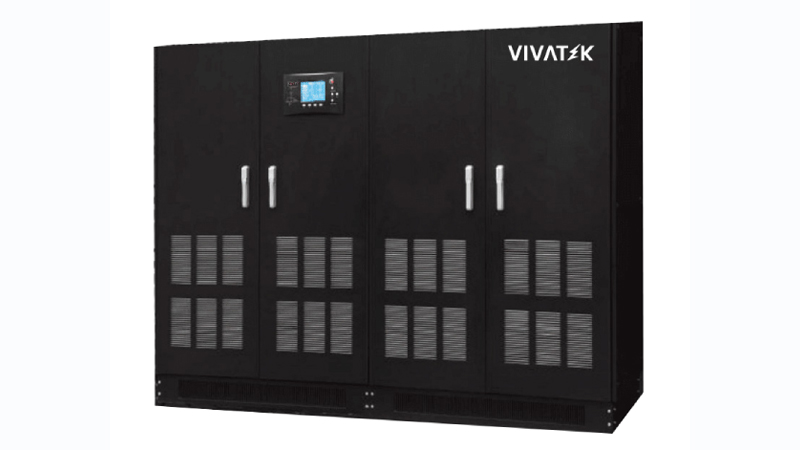
Factories today operate in an environment where power stability is directly linked to productivity, safety, and product quality. Even a brief power interruption can halt production lines, damage sensitive equipment, disrupt automation systems, and result in material wastage. An industrial UPS for factories is therefore a critical part of modern industrial infrastructure—not just a backup solution, but a reliability system.
At VIVATEK, industrial UPS systems are engineered specifically for factory environments, where electrical conditions are demanding and uninterrupted operation is essential for business continuity.
Why Industrial UPS Systems Are Essential for Factories
Unlike commercial buildings, factories face unique power challenges:
High starting currents and fluctuating loads
Continuous and process-driven operations
Automation systems that cannot tolerate sudden shutdowns
An industrial UPS helps factories by:
Delivering uninterrupted power during outages
Protecting machines from voltage fluctuations, surges, and sags
Ensuring stable voltage and frequency for automation equipment
Allowing safe shutdown or continued operation during power failures
This reduces unplanned downtime, equipment stress, and production losses.
Typical Factory Applications of Industrial UPS
Industrial UPS systems support a wide range of factory operations, including:
CNC machines and machining centers
PLC panels and SCADA-based automation
Robotics and motion control systems
Testing, inspection, and quality control equipment
Industrial IT, servers, and edge computing infrastructure
Each application has different criticality levels, which determine UPS capacity, configuration, and battery backup duration.
3-Phase Industrial UPS for Manufacturing Facilities
Most factories operate on three-phase electrical systems. A 3-phase industrial UPS is designed to:
Handle high-capacity and unbalanced loads
Maintain phase stability across machinery
Support heavy-duty industrial equipment
Three-phase UPS systems are commonly used in medium and large factories where reliability, scalability, and long-term performance are key requirements.
Battery Backup Planning for Factory Operations
Battery backup defines how long factory operations can continue during a power failure. Common strategies include:
Short backup for safe shutdown of machines
Medium backup to bridge generator startup
Extended backup for continuous production processes
Battery planning depends on:
Load type and total connected power
Frequency and duration of power outages
Integration with generators or alternate power sources
Well-planned battery backup ensures operational continuity without unnecessary oversizing.
Factory Risk & Downtime Mitigation
In manufacturing environments, even brief power disturbances can lead to:
Batch rejection and raw material wastage
Tool recalibration delays
Missed delivery schedules
An industrial UPS minimizes these risks by maintaining power quality and ensuring controlled operation during electrical disturbances—protecting both production timelines and product quality.
Industrial Design & Reliability Considerations
UPS systems used in factories are built to withstand:
Dust, vibration, and temperature variations
Continuous operation under load
Electrical noise and harmonics generated by machinery
Industrial-grade construction, proper thermal management, and robust power electronics contribute to long service life and dependable performance.
Planning for Future Factory Expansion
Factories often expand capacity, add machines, or upgrade automation systems. Industrial UPS systems can be planned to:
Accommodate future load growth
Support additional production lines
Avoid major redesign during expansion
This forward-looking approach allows factories to scale efficiently while maintaining power reliability.
Installation, Commissioning & Preventive Maintenance
A reliable industrial UPS deployment includes:
Site assessment and load analysis
Proper cable sizing and protection coordination
Functional testing and commissioning
Periodic inspection and preventive maintenance
These steps help maintain battery health, system reliability, and operational safety throughout the UPS lifecycle.
How Factory Buyers Evaluate an Industrial UPS
Factory owners, consultants, and procurement teams typically evaluate:
Current and future load requirements
Required battery backup duration
Compatibility with generators and automation systems
Environmental and space constraints
Long-term maintenance and lifecycle expectations
A structured evaluation ensures the UPS system aligns with both production objectives and business continuity plans.
Designed for B2B & Project-Based Factory Deployments
Industrial UPS systems for factories are commonly implemented through:
New factory installations
Production line expansions
Automation and digitalization upgrades
EPC and turnkey industrial projects
This makes them suitable for organizations that require engineering-driven, project-ready power solutions rather than off-the-shelf products.
📞 Start with a Technical Discussion
Selecting the right industrial UPS for factories begins with understanding load behavior, process criticality, and future expansion plans.
VIVATEK supports factory teams by:
Assessing power and backup requirements
Recommending suitable UPS architecture
Planning battery backup and scalability
Supporting installation, commissioning, and lifecycle service
Early technical discussions help avoid costly changes later and ensure long-term operational reliability.
Final Perspective
An industrial UPS for factories is an investment in uptime, safety, and productivity. With proper system design, battery planning, and future readiness, factories can protect critical operations and maintain stable production even under challenging power conditions.