
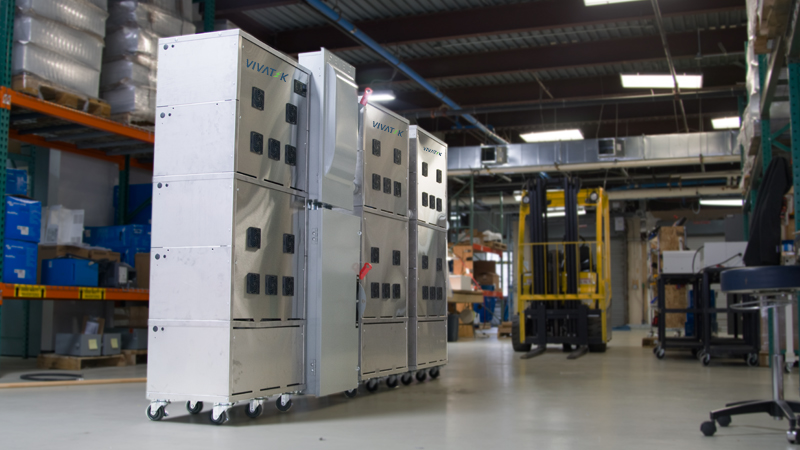
In today’s industrial and infrastructure-driven economy, power continuity is not a convenience it is a core operational requirement. Manufacturing plants, EPC projects, and data centers depend on stable, clean, and uninterrupted power to protect production, automation, safety systems, and IT infrastructure.
Power disturbances, voltage fluctuations, or brief outages can result in production downtime, equipment damage, data loss, and financial penalties. This is why organizations increasingly invest in industrial online UPS manufacturing solutions designed for mission-critical applications.
This blog explains how online UPS systems support factories, EPC projects, and data centers, what decision-makers should evaluate before purchase, and how a complete UPS solution enables reliable, downtime-free operations.
The True Cost of Power Downtime in Industrial and Infrastructure Operations
Even a short power interruption can have serious consequences:
Manufacturing stoppages and restart delays
CNC machines, PLC panels, and automation system faults
Batch rejection in process industries like pharma, food, and chemicals
Data corruption and IT system failures
EPC project delays and contractual non-compliance
Increased maintenance and replacement costs
For industries operating 24/7 or under strict delivery schedules, power instability directly impacts revenue, safety, and reputation.
An online UPS is not just backup equipment—it is operational insurance.
What Is an Industrial Online UPS?
An online UPS uses double-conversion technology, continuously converting incoming AC power to DC and back to AC. This ensures:
Zero transfer time during power failures
Stable voltage and frequency at all times
Complete isolation from grid disturbances
Clean power for sensitive and mission-critical loads
Unlike offline or line-interactive systems, industrial online UPS units deliver regulated power continuously, making them ideal for factories, EPC installations, and data centers.
Applications of Online UPS Systems Across Industries
Manufacturing Plants and Factories
Industrial online UPS systems protect:
CNC machines and robotic automation
PLC panels and control systems
Process instrumentation and drives
Factory IT and monitoring systems
Stable power prevents machine trips, production loss, and equipment damage.
EPC Projects and Infrastructure Facilities
For EPC contractors, online UPS systems support:
Control rooms and electrical panels
Commissioning and testing activities
Utilities, substations, and infrastructure assets
Compliance with project and tender specifications
Reliable UPS systems reduce execution risk and ensure smooth project handover.
Data Centers and IT Facilities
In data centers, online UPS systems ensure:
Zero downtime during grid or generator transitions
Protection for servers, storage, and networking equipment
Stable power quality for high-density IT loads
Online UPS systems form the backbone of data center power architecture.
Who This Online UPS Solution Is Designed For
This solution is ideal for organizations that:
Operate mission-critical equipment
Run multi-shift or continuous operations
Depend on automation, CNC, PLC, or IT systems
Execute EPC or infrastructure projects
Manage data centers or control rooms
Require zero downtime and predictable uptime
UPS buying decisions are typically group decisions involving plant heads, engineers, facility managers, procurement teams, and project consultants—and the solution must satisfy all stakeholders.
Why Correct UPS Design and Manufacturing Matter
Many UPS failures occur not because of poor hardware—but due to incorrect system design.
A properly engineered online UPS solution considers:
Accurate load sizing (kW vs kVA)
Load behavior and starting currents
Required backup duration
Battery selection and lifecycle planning
Ambient temperature and site conditions
Integration with diesel generators or solar systems
Future load expansion
Quality manufacturing, thermal design, and component selection directly affect reliability and lifespan.
Professional Installation and Commissioning
Industrial online UPS systems require expert installation and commissioning, including:
Correct input/output cabling and earthing
Battery bank layout with ventilation planning
Integration with DG sets and power distribution panels
Load testing and functional verification
Safety and compliance checks
Proper commissioning ensures the UPS performs as designed under real operating conditions.
AMC and Preventive Maintenance: Protecting Long-Term Uptime
An Annual Maintenance Contract (AMC) is critical for industrial UPS systems. Preventive AMC typically includes:
Scheduled maintenance visits
Battery health and impedance testing
Parameter calibration and firmware checks
Priority breakdown response
Maintenance reports and lifecycle recommendations
Preventive AMC vs Reactive Repairs
| Preventive AMC | Reactive Repair |
|---|---|
| Planned service visits | Emergency response only |
| Early fault detection | Sudden failures |
| Predictable uptime | High downtime risk |
| Lower lifecycle cost | Higher repair expense |
Preventive maintenance significantly reduces unplanned failures.
Battery Management: The Core of UPS Reliability
Batteries determine backup time and system stability. Professional UPS support ensures:
Optimized charging and equalization
Temperature and ventilation monitoring
Capacity and impedance testing
Planned replacement before failure
Effective battery management prevents unexpected shutdowns during power events.
Designed for Indian Industrial Power Conditions
Industrial facilities in India face challenges such as:
Voltage fluctuations
Grid instability
High ambient temperatures
Frequent generator operation
Online UPS systems designed for Indian conditions deliver stable performance, longer battery life, and predictable backup, especially in manufacturing and infrastructure environments.
Common Mistakes Buyers Should Avoid
Many UPS problems arise due to avoidable decisions:
Incorrect UPS sizing
Poor battery ventilation
No preventive AMC
Delayed battery replacement
Choosing price over lifecycle reliability
A complete online UPS solution eliminates these risks.
Online UPS vs Other Power Backup Options
| Power Solution | Limitation |
|---|---|
| Offline / Line-Interactive UPS | Transfer delay, limited protection |
| Inverters | Not suitable for critical industrial loads |
| Diesel Generators | Startup delay, fuel dependency |
| Online UPS | Continuous, clean, zero-transfer power |
For factories, EPC projects, and data centers, online UPS systems offer the highest level of protection.
Scalability and Future Expansion
Industrial operations grow. Power infrastructure must scale accordingly.
A well-designed online UPS supports:
Load expansion without replacement
Battery bank scalability
Parallel or redundant configurations
Future integration with renewable energy or storage
This protects long-term capital investment.
Industrial Online UPS Buyer’s Checklist
Before finalizing an online UPS, ensure clarity on:
Connected load and growth plans
Backup duration requirements
Installation environment
Generator or solar integration
AMC and service response expectations
Early planning avoids costly redesigns later.
Why Choose Vivatek
Vivatek delivers online UPS manufacturing solutions for factories, EPC projects, and data centers, backed by:
Application-specific engineering
Professional installation and commissioning support
Preventive AMC and service coverage
Long-term lifecycle reliability
The focus is not just supplying UPS equipment—but ensuring operational continuity and confidence.
Power Continuity Is a Strategic Business Decision
An online UPS is not a plug-and-play product—it is a critical power infrastructure system. Its real value is realized only through:
Correct design and manufacturing
Expert installation and commissioning
Preventive maintenance and responsive service
Organizations that invest in complete online UPS solutions gain predictable uptime, lower lifecycle costs, and long-term operational stability.
📌 Planning a New UPS Installation, Expansion, or Replacement?
A technical discussion can help confirm the right capacity, configuration, and support model—before power issues disrupt operations.
Reliable power starts with informed planning.