
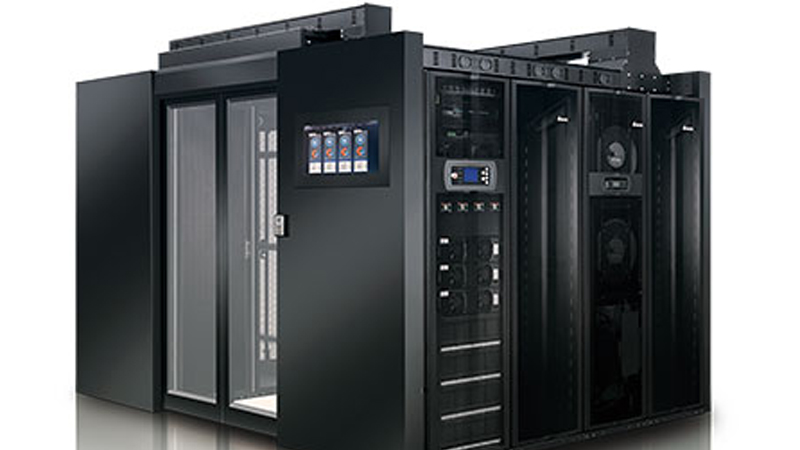
Compare Modular vs Transformer-Based Online UPS for data centers and industrial loads. Learn which 3 phase industrial UPS is best for your factory, IT infrastructure, or heavy machinery. Get expert consultation and quotation today.
In today’s power-sensitive environment, choosing the right UPS architecture is not just a technical decision — it directly impacts uptime, operational continuity, and long-term ROI. When comparing Modular vs Transformer-Based Online UPS, data center managers, plant heads, and procurement teams must evaluate scalability, load behavior, redundancy, harmonics, and lifecycle cost.
If you are planning a new data center, expanding a manufacturing unit, or upgrading an aging power backup system, this guide will help you make a confident, technically sound decision.
Understanding Online UPS Architecture
An online UPS (double conversion UPS) continuously converts AC to DC and back to AC, ensuring zero transfer time and complete isolation from grid disturbances. This makes it ideal for critical loads such as:
Data centers
Hospitals
Telecom networks
CNC machines
Automation lines
Pharmaceutical plants
The two major architectures used in industrial applications are:
Modular Online UPS
Transformer-Based Online UPS
Let’s examine both in detail.
What is a Modular Online UPS?
A modular UPS is built using multiple independent power modules installed inside a single cabinet. Each module shares the load, and additional modules can be added as power demand grows.
Key Advantages of Modular UPS
1️⃣ Scalability
You can start with lower capacity and expand without replacing the entire system.
2️⃣ N+1 Redundancy
If one module fails, the remaining modules continue powering the load. This ensures higher uptime for data centers and IT environments.
3️⃣ Reduced Downtime
Modules are hot-swappable. Maintenance can be performed without shutting down operations.
4️⃣ Higher Efficiency
Modular UPS systems typically operate at high efficiency, especially at partial loads.
5️⃣ Space Optimization
Compact footprint makes them suitable for modern data centers where space is premium.
Ideal Applications
Data centers
IT parks
Edge computing facilities
Telecom hubs
BFSI infrastructure
What is a Transformer-Based Online UPS?
A transformer-based UPS includes an isolation transformer in the design, providing galvanic isolation between input and output. This makes it extremely robust in harsh electrical environments.
Key Advantages of Transformer-Based UPS
1️⃣ Strong Electrical Isolation
Protects sensitive equipment from voltage spikes and grid disturbances.
2️⃣ Handles Heavy Industrial Loads
Suitable for high inrush currents, motors, compressors, and nonlinear loads.
3️⃣ High Short-Circuit Strength
Better fault tolerance in manufacturing environments.
4️⃣ Rugged Construction
Designed for dust, vibration, and high ambient temperatures.
5️⃣ Proven Reliability
Long history of performance in heavy industries.
Ideal Applications
Textile mills
Steel plants
Cement factories
Pharmaceutical manufacturing
Printing presses
CNC and automation lines
Modular vs Transformer-Based Online UPS: Technical Comparison
| Parameter | Modular Online UPS | Transformer-Based Online UPS |
|---|---|---|
| Scalability | Excellent | Limited |
| Redundancy | N+1 / N+X | External redundancy needed |
| Efficiency | Higher at partial loads | Slightly lower due to transformer |
| Maintenance | Hot-swappable modules | Scheduled shutdown required |
| Footprint | Compact | Larger |
| Industrial Ruggedness | Moderate | High |
| Best For | Data centers | Heavy industrial loads |
Which UPS Should You Choose?
Choose Modular Online UPS If:
You operate a data center
You expect load expansion in the future
You need N+1 redundancy
Space is limited
Fast serviceability is critical
Choose Transformer-Based Online UPS If:
You run heavy machinery
Grid power is unstable
Harmonics and inrush currents are high
Isolation is mandatory
Environment is dusty or industrial
Total Cost of Ownership (TCO) Consideration
While modular UPS may have higher upfront cost per kVA, it often reduces long-term operational expenses through:
Better energy efficiency
Reduced downtime
Flexible expansion
Lower MTTR
Transformer-based UPS may cost more in space and energy but can reduce equipment damage risk in harsh industrial environments.
A professional power audit is recommended before making a final investment decision.
Why Businesses Choose Vivatek for Industrial Online UPS
When selecting a UPS partner, engineering expertise matters as much as the product.
Vivatek delivers:
✔ Modular and Transformer-Based Online UPS solutions
✔ 3 Phase Industrial UPS systems
✔ Customized load analysis
✔ Factory-level commissioning
✔ AMC and lifecycle support
✔ Technical documentation for tenders
✔ Scalable architecture for future growth
From data centers to heavy manufacturing plants, Vivatek systems are engineered for uptime, efficiency, and durability.
Frequently Asked Questions (FAQ)
What is the difference between Modular and Transformer-Based Online UPS?
Modular UPS uses independent power modules for scalability and redundancy, while transformer-based UPS includes an isolation transformer for higher fault tolerance and heavy industrial load performance.
Which UPS is better for data centers?
Modular online UPS is typically better due to scalability, compact design, and N+1 redundancy.
Which UPS is suitable for heavy industrial loads?
Transformer-based online UPS is more suitable because it handles inrush currents, harmonics, and voltage instability effectively.
What is N+1 redundancy?
It means adding one extra module beyond required capacity so that failure of one module does not interrupt power supply.
How long does an industrial UPS last?
With proper maintenance, industrial online UPS systems can last 10–15 years.
Planning a UPS Upgrade or New Installation?
Selecting between Modular vs Transformer-Based Online UPS requires technical evaluation of:
Load profile
Expansion plans
Power quality
Budget
Redundancy requirements
📞 Speak with our engineering team for a technical consultation.
📧 Request a detailed quotation and system recommendation.
📊 Get a professional load study and ROI analysis.
Secure your operations with the right UPS architecture — designed for performance, built for reliability.