
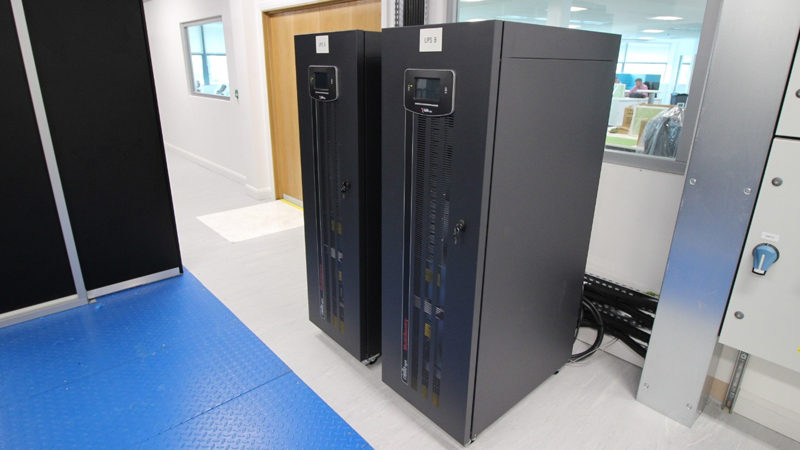
In today’s power-dependent business environment, selecting the right backup solution is not just about avoiding outages — it is about protecting equipment, ensuring productivity, and securing long-term operational stability. Many businesses mistakenly assume that commercial UPS systems and industrial online UPS systems are interchangeable.
They are not.
Understanding the key differences between commercial UPS and industrial online UPS systems is essential for factory owners, procurement heads, EPC contractors, IT park operators, and facility managers who cannot afford downtime.
This guide explains the technical, operational, and financial differences to help you make a smarter investment.
What Is a Commercial UPS System?
A commercial UPS system is typically designed for light to moderate applications such as:
Corporate offices
Retail stores
Banks
Educational institutions
Small server rooms
Clinics and commercial buildings
These systems generally operate in:
1kVA to 20kVA range
Single-phase configurations
Controlled indoor environments
Commercial UPS units are suitable for:
Desktop computers
Networking equipment
CCTV systems
Small IT loads
Billing and POS systems
They are compact, cost-effective, and designed for predictable power requirements.
What Is an Industrial Online UPS System?
An industrial online UPS system is engineered for heavy-duty, mission-critical operations such as:
Manufacturing plants
Textile mills
CNC machines
Pharmaceutical facilities
Steel and cement plants
Data centers and IT parks
Automation and robotics systems
Oil & gas operations
These systems typically operate in:
10kVA to 800kVA and above
3 phase industrial UPS configurations
Double conversion technology
Harsh industrial environments
Industrial online UPS systems are built for:
Continuous 24/7 operation
High inrush currents
Voltage fluctuations
Generator synchronization
Scalability and redundancy
Core Technical Differences Between Commercial UPS and Industrial Online UPS Systems
Capacity and Load Handling
Commercial UPS
Limited capacity
Suitable for small IT loads
Not ideal for motor loads or heavy machinery
Industrial Online UPS
High capacity (30kVA, 50kVA, 100kVA, 200kVA+)
Designed for industrial motors and automation
Handles high inrush current
Supports load growth planning
Industrial environments demand robust power systems that can handle unpredictable load variations.
Technology and Power Quality
Commercial UPS
May use line-interactive or basic online technology
Moderate voltage correction
Limited harmonic control
Industrial Online UPS
True double conversion UPS
Input power factor up to 0.99
THDi < 3% models available
Advanced harmonic mitigation
Superior voltage regulation
Industrial equipment requires clean, stable power to prevent failures and downtime.
Phase Configuration
Commercial UPS
Mostly single-phase
Limited three-phase availability
Industrial Online UPS
3 phase industrial UPS standard
Suitable for heavy machinery
Balanced load distribution
Most factories operate on three-phase supply, making industrial UPS mandatory.
Scalability and Redundancy
Commercial UPS
Fixed capacity
Limited expansion options
Single unit dependency
Industrial Online UPS
Modular UPS architecture available
Parallel UPS configuration supported
N+1 redundancy options
Hot-swappable modules
Low MTTR (Mean Time to Repair)
For data centers and manufacturing plants, redundancy prevents production losses.
Environmental Durability
Commercial UPS
Designed for office environments
Controlled temperature
Minimal dust exposure
Industrial Online UPS
Built for harsh conditions
Operates in high temperature environments
IP-rated enclosure options
Vibration-resistant design
Isolation transformer support
Industrial facilities require rugged, long-lasting power backup systems.
Battery Systems and Backup Time
Commercial UPS
Internal battery configuration
Short backup time (10–30 minutes typical)
Limited external battery scalability
Industrial Online UPS
External battery bank design
VRLA, SMF, tubular, or lithium battery options
Long backup configurations (1–4 hours or more)
Advanced battery management system
Equalization and boost charging
Industrial operations may require extended runtime to prevent production interruptions.
Generator Compatibility
Commercial UPS
Basic compatibility
May face synchronization challenges
Industrial Online UPS
Designed for generator synchronization
Handles frequency fluctuations
Supports automatic bypass systems
Factories frequently use diesel generators, requiring advanced synchronization capability.
Lifecycle and Total Cost of Ownership
Commercial UPS
Lower upfront cost
Shorter service life
Basic AMC coverage
Industrial Online UPS
Longer lifecycle (10–15 years)
Comprehensive AMC options
Load bank testing
Power audit services
Lower downtime cost
Although industrial systems require higher initial investment, they deliver better ROI in mission-critical environments.
Quick Comparison Table
| Feature | Commercial UPS | Industrial Online UPS |
|---|---|---|
| Capacity | 1–20kVA | 10–800kVA+ |
| Phase | Mostly 1PH | 3PH standard |
| Technology | Basic / Line Interactive | Double Conversion |
| Scalability | Limited | Modular & Parallel |
| Redundancy | No | N+1 / Parallel |
| Runtime | Short | Customizable Long Backup |
| Environment | Office | Harsh Industrial |
| Generator Sync | Limited | Advanced |
When Should You Choose an Industrial Online UPS?
You should select an industrial online UPS system if:
You operate heavy machinery
You require 3 phase power backup
Your plant experiences voltage fluctuations
Downtime causes financial losses
You plan capacity expansion
You need redundancy (N+1 or parallel)
You operate mission-critical infrastructure
Common Mistakes Businesses Make
Selecting UPS based only on price
Ignoring future load expansion
Overlooking harmonics and PF requirements
Not checking generator compatibility
Underestimating required backup time
Choosing the wrong system can lead to overheating, overload trips, battery failures, and costly downtime.
How to Select the Right UPS for Your Facility
Before making a purchase decision, gather:
Total kW load
Inrush current details
Required backup time
Ambient temperature
Available installation space
Generator capacity details
Future expansion plans
A proper industrial UPS sizing consultation ensures optimal system selection.
Final Thoughts
The key differences between commercial UPS and industrial online UPS systems go far beyond size and price. They differ in technology, scalability, durability, redundancy, and long-term reliability.
If your operations are mission-critical, investing in the right industrial online UPS is a strategic decision — not just an electrical purchase.
Need Expert Guidance?
If you are:
A factory owner
A procurement manager
An EPC contractor
A data center operator
An automation engineer
You can request:
Free load analysis
Industrial UPS sizing recommendation
N+1 redundancy consultation
Site survey
Customized quotation
Protect your operations with the right industrial power backup strategy.