
Introduction
Is Open Access Solar Cheaper Than Rooftop Solar for Industries?
This is one of the most common questions asked by factory owners, CFOs, and plant heads in Tamil Nadu.
With rising industrial electricity tariffs, increasing demand charges, and uncertainty in grid power costs, industries are actively comparing:
Open Access Solar in Tamil Nadu
Rooftop Solar for Manufacturing Units
Group Captive Solar Tamil Nadu
Traditional grid electricity
If your factory consumes more than 5–10 lakh units per year, choosing the right solar model can directly impact your profit margins.
This guide provides a complete cost comparison, ROI analysis, payback period breakdown, and decision framework.
Understanding Rooftop Solar for Manufacturing Units
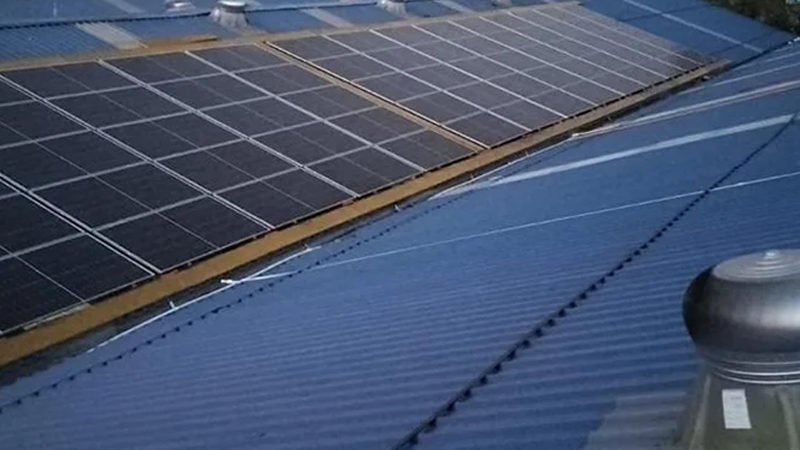
Rooftop Solar for Manufacturing Units involves installing a solar plant on the factory roof.
It operates under the Net Metering Policy in Tamil Nadu for Businesses.
Key Features:
✔ Installed on factory rooftop
✔ No open access charges
✔ Directly reduces daytime grid consumption
✔ Limited by available roof area
✔ Suitable for MSME and mid-size factories
Rooftop Solar primarily reduces energy charges and partially helps in demand charge reduction with solar.
Understanding Open Access Solar in Tamil Nadu
Open Access Solar in Tamil Nadu allows industries to purchase power from a large off-site solar plant.
Most commonly structured under:
Group Captive Solar Tamil Nadu
Third-party Open Access agreements
Key Features:
✔ Large-scale solar power plant
✔ Electricity transmitted via grid
✔ Open Access Charges in Tamil Nadu apply
✔ Suitable for high-consumption industries
✔ Long-term PPA structure
Open Access Solar is often chosen by factories consuming more than 10–15 lakh units annually.
Solar vs Grid Electricity Cost Comparison for Industries
Let’s compare typical cost structure.
Grid Electricity
₹8–₹10 per unit (varies by slab)
Annual tariff escalation
Cross-subsidy burden
Peak-hour penalties
High demand charges
Grid cost is unpredictable long-term.
Rooftop Solar
One-time capital investment
3–4 year Solar Payback Period for Industries
No open access charges
Low Solar Maintenance Cost for Industrial Plants
Strong Industrial Solar ROI Tamil Nadu
Best for factories with sufficient rooftop space.
Open Access Solar
Equity investment (Group Captive)
Open Access Charges in Tamil Nadu apply
3–5 year Solar Payback Period for Industries
Suitable for very high consumption units
Strong long-term electricity cost stability
Best for large industries.
Cost Comparison Example – Tamil Nadu Manufacturing Unit
Factory consumption: 20 lakh units per year
Grid tariff: ₹9 per unit
Annual EB bill: ₹1.8 Crores
Scenario 1 – Rooftop Solar
Limited by rooftop space (say 500 kW capacity).
Partial reduction in grid dependency.
Savings proportional to installed capacity.
Payback period: 3–4 years
Industrial Solar ROI Tamil Nadu: Strong
Scenario 2 – Open Access Solar in Tamil Nadu
Large solar allocation (e.g., 2 MW share).
Major portion of consumption offset.
After accounting for Open Access Charges in Tamil Nadu, effective per-unit cost may still be lower than grid tariff.
Payback period: 3–5 years
Long-term 20-year savings: Significant
Which Is Cheaper – Open Access or Rooftop Solar?
The answer depends on:
✔ Annual electricity consumption
✔ Rooftop availability
✔ Capital investment capability
✔ Risk appetite
✔ Load profile
For MSME Manufacturing Units:
Rooftop Solar for Manufacturing Units is usually more practical.
For Large Factories (>10 lakh units/year):
Open Access Solar in Tamil Nadu or Group Captive Solar Tamil Nadu may provide deeper cost reduction.
Industrial Solar ROI Tamil Nadu – Which Model Performs Better?
| Factor | Rooftop Solar | Open Access Solar |
|---|---|---|
| ROI | Strong | Strong |
| Payback | 3–4 Years | 3–5 Years |
| Scalability | Limited | High |
| Regulatory Risk | Lower | Moderate |
| Maintenance | Factory-managed | Developer-managed |
Both models deliver strong Solar investment return when structured properly.
Impact on Demand Charges
Rooftop Solar:
✔ Directly reduces on-site grid draw
✔ Helps in demand charge reduction with solar
Open Access Solar:
✔ Reduces energy charges
✔ Less direct impact on demand charges
Combining both models maximizes industrial energy cost optimization.
Risks to Consider
Before choosing model:
Rooftop Solar Risks
Limited rooftop area
Structural limitations
Weather dependency
Open Access Solar Risks
Regulatory policy changes
Open access charge revisions
Banking policy adjustments
Partnering with experienced Industrial Solar EPC Services Tamil Nadu provider reduces risk.
Hybrid Strategy – Best of Both Worlds
Many large industries now use:
✔ Rooftop Solar for Manufacturing Units
✔ Open Access Solar in Tamil Nadu
✔ Energy efficiency improvements
This hybrid strategy ensures:
Maximum electricity cost reduction
Long-term electricity cost stability
Lower exposure to tariff hikes
Before & After – Financial Impact Snapshot
Before Solar:
High annual EB bill
Exposure to tariff escalation
Low predictability
After Solar (Rooftop + Open Access):
Reduced electricity cost
Improved profit margins
Better long-term cost visibility
Enhanced financial planning
Why Choose ASPL?
ASPL, the solar division of Anushri Systech Private Limited, provides:
✔ Industrial Solar Feasibility Study
✔ Open Access cost modeling
✔ Rooftop Solar system design
✔ Group Captive structuring support
✔ Detailed ROI & payback calculation
✔ Risk assessment & compliance guidance
✔ Long-term monitoring support
We focus on financial clarity before installation.
Frequently Asked Questions
Is Open Access Solar Cheaper Than Rooftop Solar for Industries?
It depends on annual consumption. For high-consumption industries, Open Access Solar in Tamil Nadu may offer larger cost reduction. For MSME units, Rooftop Solar for Manufacturing Units is often more practical.
What is the payback period for Open Access Solar?
Typical Solar Payback Period for Industries under Group Captive Solar Tamil Nadu is 3–5 years, depending on tariff and open access charges.
Does Rooftop Solar reduce demand charges?
Yes, Rooftop Solar directly reduces daytime grid dependency and can support demand charge reduction with solar.
What are Open Access Charges in Tamil Nadu?
Industries must pay wheeling charges, transmission charges, and other regulatory costs. These must be included in ROI calculations.
Which model gives better Industrial Solar ROI Tamil Nadu?
Both models offer strong ROI when structured correctly. A detailed Industrial Solar Feasibility Study is required to determine the best option.
FREE Industrial Solar Comparison Report
Confused between Open Access Solar and Rooftop Solar?
Get FREE customized comparison report from ASPL.
Includes:
✔ EB bill analysis
✔ Open Access cost evaluation
✔ Rooftop feasibility assessment
✔ Solar Payback Period for Industries
✔ 10-year electricity savings projection
✔ Risk analysis
Share last 3 EB bills.
Receive detailed report within 48 hours.
Final Thought
Is Open Access Solar Cheaper Than Rooftop Solar for Industries?
There is no one-size-fits-all answer.
The cheapest model is the one structured correctly for your consumption profile.
The real question is:
Are you still paying rising grid tariffs without evaluating structured solar options?
Factories that analyze early gain competitive advantage.