
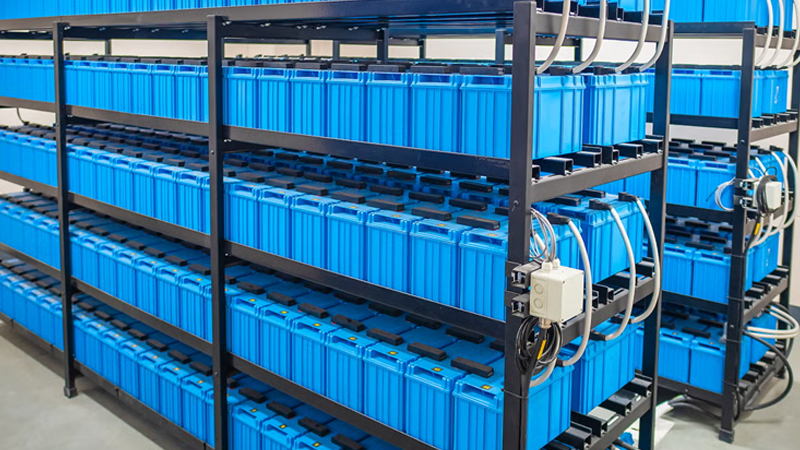
In today’s industrial landscape, power continuity is no longer a support function—it is a core operational requirement. Manufacturing plants, process industries, data centers, EPC projects, and infrastructure facilities depend on uninterrupted, clean power to maintain productivity, protect equipment, and meet delivery commitments.
An industrial online UPS plays a critical role in ensuring downtime-free operations by delivering stable, regulated power even under unstable grid conditions. This blog explains how industrial online UPS systems support mission-critical applications, what buyers should evaluate, and why end-to-end UPS solutions matter for long-term reliability.
The Hidden Cost of Power Interruptions in Industrial Facilities
Even short power disturbances can have serious consequences in industrial environments:
Production stoppages and restart delays
Damage to CNC machines, PLC panels, drives, and automation systems
Data loss in IT and control infrastructure
Batch rejection in pharma, food, and chemical industries
Increased maintenance and replacement costs
For factories operating multiple shifts or continuous processes, power downtime directly impacts revenue, safety, and reputation.
An industrial online UPS is not just backup equipment—it is risk protection for operations.
What Makes an Industrial Online UPS Different?
Unlike offline or line-interactive systems, an online UPS uses double-conversion technology, ensuring:
Zero transfer time
Continuous voltage and frequency regulation
Isolation from grid disturbances
Clean, stable output for sensitive industrial loads
This makes online UPS systems ideal for mission-critical industrial applications where even milliseconds of interruption are unacceptable.
Typical Industrial Applications for Online UPS Systems
Industrial online UPS solutions are widely used across sectors, including:
Manufacturing plants and factories
CNC machines, robotics, and automation lines
Textile, printing, and packaging units
Pharma, food processing, and chemical plants
Data centers, IT rooms, and control rooms
Hospitals, laboratories, and diagnostic centers
Utilities, EPC projects, and infrastructure facilities
In each case, the UPS protects both equipment and operational continuity.
Why Correct UPS Sizing and Design Matter
Many industrial UPS failures occur not because of poor hardware—but due to incorrect system design.
Proper UPS selection requires:
Accurate load analysis (kW vs kVA)
Understanding of starting currents and load behavior
Backup time requirements
Environmental conditions (temperature, dust, vibration)
Generator or solar integration planning
Future load expansion considerations
Oversized systems increase cost. Undersized systems increase downtime risk.
Correct design balances performance, cost, and scalability.
Professional Installation: The Foundation of Reliability
Industrial UPS installation is a specialized task. Professional installation includes:
Proper input/output cabling and earthing
Battery bank layout with ventilation planning
Integration with DG sets and distribution panels
Compliance with electrical safety standards
Site-specific commissioning and testing
Correct installation ensures the UPS performs as designed from day one.
Commissioning & Load Testing: Eliminating Startup Risks
UPS commissioning validates performance under real operating conditions:
Functional testing under load
Battery charging and discharge verification
Alarm, bypass, and protection checks
Power quality and zero-transfer confirmation
This step ensures the UPS is production-ready and reliable before go-live.
AMC & Preventive Maintenance: Protecting Uptime Long-Term
An Annual Maintenance Contract (AMC) is essential for industrial UPS systems. Preventive AMC includes:
Scheduled maintenance visits
Battery health and impedance testing
Cleaning, calibration, and firmware checks
Priority breakdown response
Maintenance reports and lifecycle recommendations
Preventive maintenance reduces unplanned failures and extends UPS and battery life.
Preventive AMC vs Reactive Repairs
| Preventive AMC | Reactive Repair |
|---|---|
| Planned service | Emergency response only |
| Early fault detection | Sudden failures |
| Predictable uptime | High downtime risk |
| Lower lifecycle cost | Higher repair expense |
Battery Management: The Heart of UPS Performance
Batteries determine backup time and reliability. Professional service support ensures:
Optimized charging parameters
Temperature and ventilation monitoring
Battery health testing and lifecycle tracking
Planned replacement before failure
Good battery management prevents unexpected shutdowns during power events.
Designed for Indian Industrial Power Conditions
Industrial facilities in India face challenges such as:
Voltage fluctuations
Grid instability
High ambient temperatures
Frequent generator operation
An industrial online UPS designed for Indian conditions ensures stable performance, longer battery life, and predictable uptime, especially in regions like Tamil Nadu and South India.
Online UPS vs Other Power Backup Options
| Solution | Limitation |
|---|---|
| Offline / Line-Interactive UPS | Transfer delay, unstable output |
| Inverters | Not suitable for sensitive industrial loads |
| Diesel Generators | Startup delay, fuel dependency |
| Online UPS | Continuous, clean power with zero transfer time |
For mission-critical operations, online UPS systems are the preferred choice.
Scalability & Future Expansion Planning
Industrial operations grow. Power systems must scale accordingly.
A well-designed online UPS supports:
Load expansion without system replacement
Battery bank scalability
Parallel or redundant configurations
Future solar or energy storage integration
This protects capital investment and supports long-term growth.
Who Should Consider an Industrial Online UPS?
This solution is relevant for:
Plant heads and factory managers
Electrical and maintenance engineers
Facility and operations managers
EPC contractors and system integrators
Procurement and project teams
UPS decisions are group decisions, not individual purchases—and the system must satisfy all stakeholders.
Why Choose Vivatek
Vivatek delivers industrial online UPS solutions backed by:
Application-specific system design
Professional installation and commissioning
Preventive AMC and service support
Long-term lifecycle reliability
The focus is not just on supplying UPS equipment—but on ensuring uptime, compliance, and operational confidence.
Industrial UPS Buyer’s Checklist
Before finalizing an online UPS, ensure clarity on:
Connected load and growth plans
Required backup duration
Installation environment
Generator or solar integration
AMC and service response expectations
This prevents costly redesigns and emergency replacements later.
Power Continuity Is a Strategic Decision
An industrial online UPS is not a plug-and-play product—it is a critical power infrastructure system. Its true value is realized only when supported by:
Correct design and sizing
Professional installation
Preventive maintenance
Responsive service support
Industries that invest in complete UPS solutions gain predictable uptime, lower lifecycle costs, and long-term peace of mind.
📌 Planning a New UPS Installation or Upgrade?
A technical discussion can help validate capacity, configuration, and support strategy before downtime becomes a problem.
Power continuity begins with the right planning.