
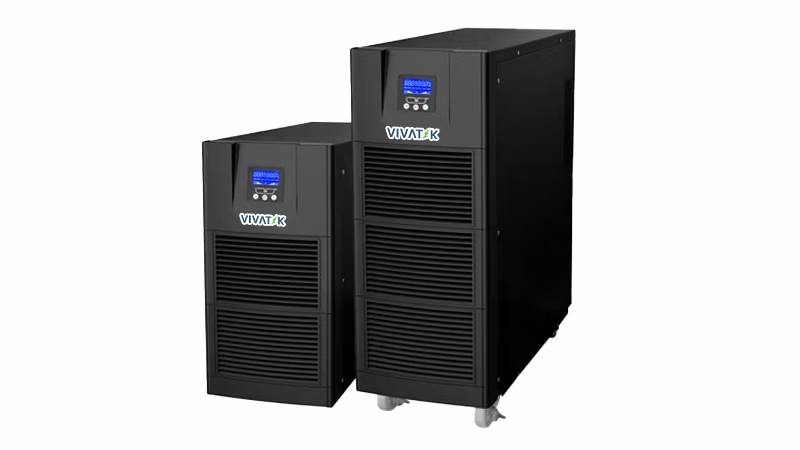
In modern industries, uninterrupted power is not just about keeping machines running—it is about protecting productivity, safety, quality, and reputation. Manufacturing plants, process industries, data centers, utilities, and infrastructure facilities depend on industrial online UPS systems to prevent downtime, equipment damage, and operational disruptions.
Choosing the right industrial online UPS for mission-critical applications requires more than comparing kVA ratings or prices. It involves understanding load behavior, power quality challenges, site conditions, scalability needs, and long-term service support. This guide helps industrial decision-makers select the right online UPS solution with confidence and clarity.
Who Should Use This Guide
This blog is written for:
Plant heads and factory managers
Electrical and maintenance engineers
Facility and operations managers
EPC contractors and system integrators
Procurement and project teams
If you are responsible for uptime, power reliability, or industrial infrastructure, this guide is for you.
What Are Mission-Critical Applications in Industry?
Mission-critical applications are systems where even milliseconds of power interruption can cause serious consequences. These include:
CNC machines and precision manufacturing equipment
PLC panels and industrial automation systems
Process control and instrumentation
Data centers, servers, and IT infrastructure
Hospitals, laboratories, and diagnostic equipment
Utilities, substations, and control rooms
For such applications, only a true online double-conversion UPS can deliver zero transfer time and continuous clean power.
Why Industrial Online UPS Is Essential for Factories
An industrial online UPS continuously supplies power through its inverter, isolating connected loads from grid disturbances. This ensures:
Zero transfer time during power failures
Protection against voltage dips, surges, and harmonics
Stable output for sensitive and non-linear loads
Reliable operation with diesel generators
This makes online UPS systems the preferred choice for factory power backup, automation lines, and mission-critical industrial loads.
Step 1: Correct UPS Sizing for Industrial Loads
Incorrect sizing is one of the most common reasons for UPS failure in factories.
Before selecting an online UPS, clearly define:
Total connected load (kW and kVA)
Starting current of motors and CNC machines
Nature of load (linear or non-linear)
Critical vs non-critical loads
Always plan capacity with safety margin and future expansion in mind. Undersized UPS systems lead to overloads, alarms, and premature failures.
Step 2: Choosing the Right UPS Configuration
Industrial online UPS systems are available as:
Single-phase or three-phase UPS
Transformer-based or transformerless designs
Standalone or parallel redundant systems
For mission-critical applications, industries typically choose:
Three-phase online UPS for balanced load handling
Parallel or N+1 redundancy to eliminate single points of failure
Scalable UPS architecture allows capacity growth without replacing the entire system.
Step 3: Backup Time and Battery Technology Selection
Backup time requirements vary by industry:
5–10 minutes for controlled shutdown
30–60 minutes for process continuity
Long backup for utilities, telecom, and remote sites
Battery considerations include:
VRLA, tubular, or lithium-ion battery technology
Ambient temperature and ventilation
Battery life cycle and replacement planning
Battery monitoring and health diagnostics
Proper industrial UPS battery management is critical to achieving real-world backup performance.
Step 4: Installation Environment & Site Conditions
Industrial UPS systems operate in demanding environments. Consider:
Ambient temperature and humidity
Dust, vibration, and industrial pollution
Floor space for UPS and battery banks
Earthing and electrical infrastructure
UPS systems designed for office use often fail in factories. Always select industrial-grade online UPS solutions built for harsh operating conditions.
Step 5: Integration with Industrial Power Infrastructure
A reliable online UPS must integrate smoothly with:
Diesel generator sets
Solar or hybrid power systems
LT panels and industrial distribution boards
Automation, IT, and control systems
Proper coordination ensures stable operation during generator mode and seamless power transitions.
Step 6: Installation, Commissioning & Service Support
Even the best UPS can fail without professional execution.
Ensure your UPS partner provides:
Detailed site survey and load analysis
Correct installation with safety compliance
Commissioning with load testing
Preventive AMC and trained service engineers
Long-term reliability depends on installation quality and service support, not just the UPS brand.
Industrial Online UPS AMC & Preventive Maintenance
An AMC (Annual Maintenance Contract) is essential for industrial UPS systems. AMC typically includes:
Scheduled preventive maintenance
Battery testing and health checks
Cleaning, calibration, and firmware updates
Priority breakdown response
Preventive AMC reduces downtime risk and extends the life of both UPS and batteries.
Online UPS vs Line-Interactive UPS (Industrial Comparison)
| Feature | Online UPS | Line-Interactive UPS |
|---|---|---|
| Transfer time | Zero | 4–10 ms |
| Power quality | Excellent | Limited |
| Generator compatibility | High | Moderate |
| Industrial suitability | Yes | No |
For mission-critical industrial loads, online UPS is the correct choice.
Compliance, Safety & Standards
For audits, tenders, and regulated industries, ensure compliance with:
IEC 62040 standards
Electrical safety and grounding norms
Factory inspection requirements
Industry-specific power quality guidelines
Documentation and safety compliance protect both operations and approvals.
Scalability & Future Expansion Planning
Industrial power needs grow over time. The right online UPS should support:
Load expansion without replacement
Additional battery banks
Parallel operation for redundancy
Future energy storage or solar integration
Planning scalability early protects capital investment.
Common Mistakes Industries Should Avoid
Selecting UPS based only on price
Ignoring future load growth
Poor battery ventilation
Skipping AMC and preventive maintenance
Using non-industrial service providers
Most UPS failures are avoidable with correct planning.
Final UPS Selection Checklist
Before finalizing, confirm:
UPS capacity and redundancy
Backup time and battery type
Installation and commissioning scope
AMC and service response SLAs
Scalability and lifecycle support
This checklist helps avoid costly redesigns and downtime.
ROI Perspective: Cost of Downtime vs UPS Investment
Even short power interruptions can cause:
Production loss
Material wastage
Equipment damage
Missed delivery commitments
A properly selected and professionally supported industrial online UPS delivers strong ROI by protecting uptime and operational continuity.
Why Industries Choose Vivatek
Industries choose Vivatek for:
Industrial-grade online UPS solutions
Application-specific sizing and engineering
Professional installation and commissioning
Preventive AMC and responsive service
Long-term lifecycle support
The focus is not just selling UPS—but ensuring power continuity.
Final Thought: UPS Is a Long-Term Partnership
An online UPS is not a plug-and-play product. Its real value is realized through:
Correct selection
Professional installation
Preventive maintenance
Reliable service support
Industries that invest in end-to-end online UPS solutions gain predictable uptime, lower lifecycle costs, and long-term peace of mind.
📌 Planning a Mission-Critical UPS Installation or Upgrade?
A technical discussion can help you select the right capacity, configuration, and support model—before downtime becomes a problem.
👉 Contact our technical team for a site-specific UPS recommendation.