
In modern manufacturing plants, production rarely stops because electricity disappears.
It stops because electricity becomes unstable.
A small voltage dip, frequency variation, or phase imbalance lasting milliseconds can shut down PLC logic, trip drives, and reject an entire production batch.
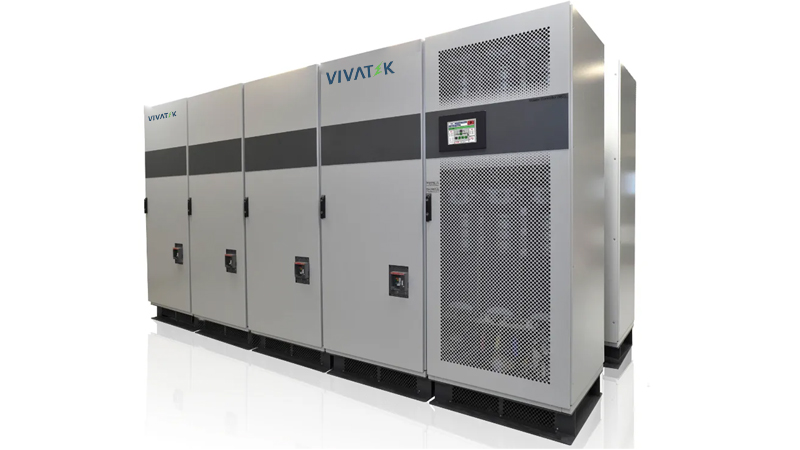
A three phase industrial online UPS for factory power backup protects machines and automation systems by supplying continuous, conditioned power. Instead of restarting machines after disturbances, the process keeps running.
For industries today, power quality matters more than power availability.
Why Manufacturing Industries Need Industrial Online UPS Systems
Factories depend on automation equipment — not just motors.
Control panels, sensors, and CNC machines require precise voltage and frequency.
During a disturbance:
PLC panels reset
CNC coordinates lost
Servo drives trip
SCADA communication fails
Production material becomes scrap
An industrial online UPS system provides zero transfer time power and stabilizes incoming supply, preventing process interruption.
This is why process industries use dedicated factory power backup solutions instead of only generators.
Generator vs Online UPS – Understanding the Difference
| Function | Generator | Industrial Online UPS |
|---|---|---|
| Power restoration | Yes | Yes |
| Instant protection | No | Yes |
| Voltage regulation | No | Yes |
| Frequency correction | No | Yes |
| Automation protection | No | Yes |
| Production continuity | No | Yes |
A generator restores electricity.
An online UPS protects operations.
Both together create a reliable industrial power backup system.
Industrial Applications
A heavy duty online UPS protects operational intelligence inside the plant.
Common uses
UPS for CNC machines
UPS for PLC control panels
UPS for automation systems
UPS for printing & packaging machines
UPS for textile processing
UPS for pharmaceutical manufacturing
UPS for food processing plants
UPS for SCADA & monitoring panels
UPS for production lines
These loads require stable waveform — not simple battery backup.
Real Production Scenario
A plant running continuous manufacturing faces a 1-second voltage dip.
Without UPS
Batch rejected
Machine restart required
Calibration lost
30–60 minutes downtime
With UPS
System continues operating
No material loss
No restart delay
Often one rejected batch costs more than installing a proper industrial UPS.
Hidden Cost of Power Disturbances
Power issues create operational losses:
Scrap material
Idle manpower
Restart calibration time
Delivery delay penalties
Overtime recovery cost
A stable online UPS for manufacturing industry prevents these recurring losses.
How to Know If Your Factory Needs an Online UPS
You likely require an industrial UPS if you notice:
Machines restarting automatically
Random PLC alarms
Drives tripping without overload
Batch inconsistency
Control panel resets during voltage fluctuation
These are power quality problems, not machine faults.
Selecting the Correct UPS Capacity
Choosing based only on kVA leads to failure.
Proper selection considers:
Actual kW load
Motor starting current
Harmonics level
Future expansion
Generator availability
Process sensitivity
Correct engineering ensures reliable operation and avoids oversizing cost.
Required Backup Time
Industrial UPS is not designed for long backup.
Purpose:
Maintain operation during short outage
Allow generator startup
Prevent production restart
Enable controlled shutdown
The goal is continuity, not long runtime.
Installation in Running Plants
Industrial UPS installation does not stop production.
Steps include:
Load analysis
Panel integration
Maintenance window testing
Controlled commissioning
Minimal operational interruption.
Problems Prevented by Industrial UPS
A power conditioning UPS system protects against:
Voltage fluctuation
Phase failure
Harmonics disturbance
PLC restart
Encoder position loss
Instrument calibration error
Data corruption
Most downtime is caused by disturbances, not outages.
Industry-Wise Benefits
Textile plants – prevent drive trips
Printing units – avoid misalignment waste
Pharma plants – avoid batch rejection
Food processing – maintain cycle continuity
CNC machining – prevent scrap components
Common Mistakes When Buying UPS
Selecting inverter instead of online UPS
Oversizing battery unnecessarily
Ignoring harmonics
Not planning expansion
Choosing based only on kVA
Technical evaluation avoids repeated investment.
Long-Term Reliability
Industrial UPS operates as infrastructure equipment.
Proper maintenance includes:
Inspection
Battery monitoring
Preventive service
Reliable systems operate for years without affecting production.
What Changes After Installing UPS
Factories typically observe:
No unexpected machine restart
Stable automation operation
Reduced operator intervention
Consistent product quality
Predictable production output
UPS becomes a silent protection layer.
Request a Technical Recommendation
Instead of guessing capacity, prepare:
Machine list
Critical load details
Backup requirement
Generator availability
Installation location
Based on this, a suitable industrial UPS solution can be recommended.
Final Note
Electricity keeps machines ON.
Power quality keeps production RUNNING.
An industrial online UPS protects manufacturing continuity, reduces rejection, and stabilizes operations.
For plants where downtime costs money, power conditioning becomes essential infrastructure.
Frequently Asked Questions
What size industrial UPS do I need for my factory?
UPS capacity depends on actual kW load, motor starting current, and process sensitivity. A technical load evaluation is recommended instead of selecting based only on kVA rating.
Can a generator replace an online UPS?
No. A generator restores power after failure, while an online UPS provides instant and stable power during disturbances and startup delay.
How much backup time is required for industrial UPS?
Industrial UPS is typically designed for short duration support — enough to maintain operation or allow generator stabilization, not long inverter-type backup.
Will installing UPS stop my production?
No. Installation is planned during maintenance windows and integrated with existing panels to minimize interruption.
What problems does an industrial UPS prevent?
It prevents PLC reset, drive tripping, batch rejection, sensor errors, and automation downtime caused by voltage fluctuations and micro power failures.
Need Help Selecting the Right UPS?
Share your details on WhatsApp:
• Connected load (kW)
• Type of machines
• Required backup time
• Generator availability
A suitable industrial UPS capacity can be recommended for your application.
👉 Click here to WhatsApp us for a quick technical suggestion