
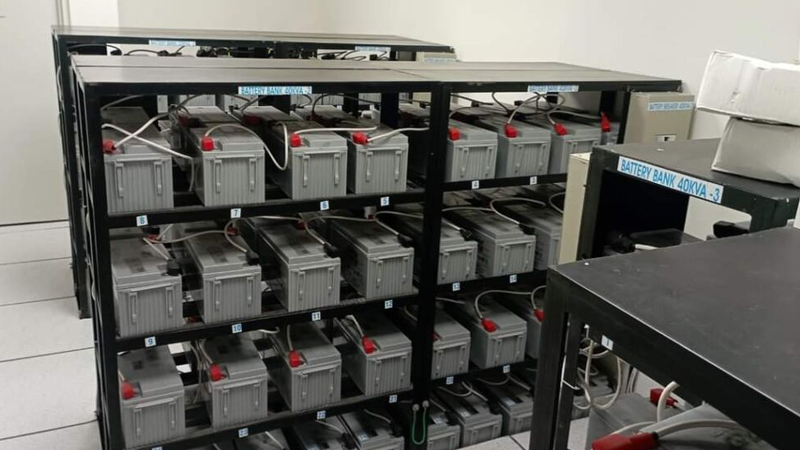
Learn how to size industrial batteries for UPS, solar, and substation systems. Step-by-step calculation guide for engineers with real applications.
Industrial Battery Sizing Guide for Engineers
In industrial applications, battery sizing is one of the most critical steps in designing a reliable power backup system. Incorrect battery sizing can lead to insufficient backup time, frequent failures, and increased operational cost.
Whether you are designing a system for industrial UPS, solar energy storage, or substation DC applications, proper industrial battery sizing ensures reliable performance, long life, and cost efficiency.
Why Industrial Battery Sizing is Important
Incorrect battery sizing can result in:
- Insufficient backup during power outages
- Overloading of battery systems
- Reduced battery life
- Frequent system failures
- Increased maintenance and replacement costs
👉 Proper sizing ensures accurate backup, system reliability, and long-term savings
Step 1: Identify Application Type
Battery sizing depends on where the system is used:
- UPS systems → High discharge, short backup
- Solar systems → Long backup, energy storage
- Substation DC systems → Reliability and long life
- Telecom systems → Continuous low-load backup
👉 Application defines battery type and sizing approach
Step 2: Calculate Load Requirement
Determine total load connected to the system:
- Load in kW or kVA
- Power factor (PF)
- Type of load (critical / non-critical)
Example:
If load = 10 kW
PF = 0.8
👉 kVA = 10 / 0.8 = 12.5 kVA
Step 3: Define Backup Time
Backup time depends on application:
- UPS → 15–60 minutes
- Solar → 2–8 hours
- Substation → Based on system requirement
👉 Backup time directly affects battery capacity
Step 4: Select System Voltage
Industrial battery systems are commonly:
- 48V
- 110V
- 220V
👉 Higher voltage = lower current = better efficiency
Step 5: Battery Capacity Calculation (Ah)
Basic Formula:
Battery Capacity (Ah) = (Load × Backup Time) / System Voltage
Example:
Load = 10 kW
Backup = 1 hour
System voltage = 120V
👉 Ah = (10,000 × 1) / 120 = 83 Ah (approx.)
👉 Add safety factor (20–30%)
Final capacity ≈ 100–110 Ah
Step 6: Choose Battery Type
Based on application:
- VRLA batteries → UPS and telecom
- Lithium batteries → Solar and high-efficiency systems
- Ni-Cd batteries → Substations and harsh environments
👉 Correct battery type improves performance and lifespan
Step 7: Consider Depth of Discharge (DoD)
- VRLA → 50–60% DoD
- Lithium → 80–90% DoD
- Ni-Cd → High tolerance
👉 Higher DoD = better usable capacity
Step 8: Consider Environmental Conditions
- High temperature → reduces battery life
- Dust / humidity → affects performance
👉 Select battery type accordingly
Common Battery Sizing Mistakes
- Ignoring safety factor
- Wrong voltage selection
- Not considering future load expansion
- Choosing battery only based on price
👉 These lead to system failure and higher costs
Quick Battery Sizing Summary
| Parameter | Requirement |
|---|---|
| Load | kW / kVA |
| Backup Time | Minutes / Hours |
| Voltage | 48V / 110V / 220V |
| Battery Type | VRLA / Lithium / Ni-Cd |
| Safety Factor | 20–30% |
Which Battery is Best for Your Application?
- UPS → VRLA / Lithium
- Solar → Lithium
- Substation → Ni-Cd
- Long backup → Lithium
Need Help with Industrial Battery Sizing?
Battery sizing requires technical expertise and real-world experience. Incorrect sizing can lead to downtime, failure, and increased costs.
We support:
✔ Load calculation and battery sizing
✔ Application-based battery selection
✔ System design and integration
✔ Industrial and EPC project support
➡ Get battery sizing support within 1–2 hours
➡ Ensure accurate and reliable system design
📧 Email: sales@anushri.info
📞 Phone: +91 9841698180
📍 Address: No.2/27, Luz Avenue 3rd Street,
Mylapore, Chennai – 600004, Tamil Nadu, India
Final Conclusion
Industrial battery sizing is a critical part of designing reliable power backup systems. By understanding load, backup time, voltage, and battery type, engineers can design efficient and long-lasting systems.
👉 Vivatek – Reliable Industrial Battery Solutions for Accurate System Design