
Reliable Power Is the Backbone of Continuous Production
Modern factories operate automated processes where even a small voltage disturbance affects production quality. CNC machining, PLC automation, robotics, inspection systems, and industrial servers depend on stable electrical power.
Common industrial power issues include:
Voltage dips during heavy load switching
Generator changeover interruption
Harmonics from drives and motors
Sudden outages and spikes
These problems lead to production stoppage, rejected batches, recalibration delays, and delivery penalties.
For this reason, industries implement industrial online UPS systems — not only for backup power but for continuous conditioned power supply.
Who Should Read This Guide
This article supports decision making for:
Plant heads & factory owners
Electrical & maintenance engineers
Automation & PLC engineers
EPC contractors & panel builders
Facility managers & operations teams
Procurement & project departments
Selecting a UPS is a technical + financial decision, not just a purchase.
What Makes a UPS Suitable for Industrial Operations
An online UPS operates using double conversion technology:
AC → DC → Clean AC Output
This ensures:
Zero transfer time during outage
Stable frequency and voltage
Isolation from grid disturbances
Protection from harmonics and surges
This is essential for mission-critical manufacturing loads.
Signs Your Plant Needs a Heavy-Duty Online UPS
Early warning indicators:
Machines restarting randomly
PLC faults during voltage dips
Drives tripping on generator changeover
Data logging interruption
Reduced product consistency
These indicate unstable power affecting productivity.
Designing the UPS System for Industrial Loads
Industrial loads behave differently from office loads due to motor starting currents and harmonic distortion.
Design Inputs Required
Total load (kW/kVA)
Surge current of machines
Non-linear load percentage
Future expansion plan
Ambient temperature & environment
Correct engineering prevents overload trips and overheating.
Correct Capacity Selection
Industrial UPS sizing must consider real operating conditions.
Sizing approach:
Actual Load × Surge Factor × Expansion Margin
Example:
| Parameter | Value |
|---|---|
| Connected Load | 90 kW |
| Power Factor | 0.9 |
| Calculated Load | 100 kVA |
| Future Expansion | +25% |
| Recommended UPS | 125 kVA |
Oversizing wastes budget; undersizing risks downtime.
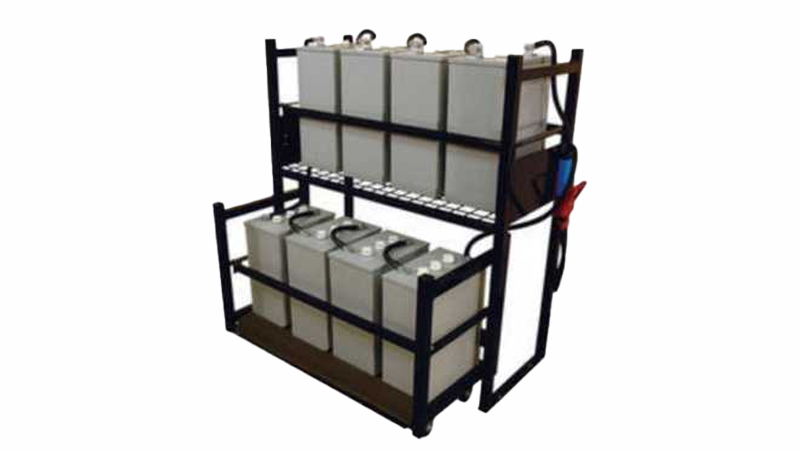
Battery Backup Planning
Battery system determines runtime reliability.
Options
VRLA batteries – standard backup
Tubular batteries – long backup
Lithium batteries – long life & fast recharge
Key Influencing Factors
Temperature
Charging configuration
Maintenance quality
Most UPS failures occur due to battery issues rather than electronics.
Environmental Conditions Affect Performance
Industrial sites often have:
Dust and oil vapour
High temperature
Electrical noise
Mechanical vibration
UPS must be selected considering environmental suitability for long-term reliability.
Installation & Commissioning — The Critical Phase
Proper installation includes:
Correct earthing
Cable sizing
Battery ventilation
Generator coordination
Commissioning checks:
Load test
Transfer verification
Protection operation
Charging calibration
Installation quality determines lifecycle performance.
Preventive Maintenance & AMC
| With Preventive Maintenance | Without Maintenance |
|---|---|
| Predictable runtime | Sudden shutdown |
| Long battery life | Frequent failure |
| Lower lifecycle cost | High repair cost |
Continuous plants require preventive service.
Integration With Plant Power Infrastructure
Industrial UPS must coordinate with:
Utility supply
Diesel generators
Solar hybrid systems
Distribution panels
Improper coordination causes nuisance tripping.
Centralized vs Distributed UPS Architecture
| Approach | Suitable For | Advantage |
|---|---|---|
| Single large UPS | Entire plant | Simplified maintenance |
| Multiple UPS | Critical loads | Lower risk & cost |
Choosing architecture correctly improves reliability.
Cost vs Downtime
Typical observation in factories:
One hour downtime cost exceeds UPS investment impact
Loss includes scrap, labour idle time, restart delays, and penalties.
UPS prevents repeated production loss.
Information Required Before Requesting a Proposal
Prepare:
Load list
Backup duration
Site temperature
Generator details
Installation location
Helps engineering team recommend correct system quickly.
Typical Industrial Applications
Heavy-duty online UPS protects:
CNC machining centers
Injection molding machines
PLC automation panels
Robotics & conveyors
Inspection equipment
Industrial IT systems
Why Industries Choose Vivatek
Industries rely on Vivatek because of:
Application-specific engineering
Correct capacity planning
Installation & commissioning support
Long-term maintenance service
Reliable performance focus
The objective is operational continuity.
Frequently Asked Questions
How is industrial UPS different from commercial UPS?
Designed for harsh environments and heavy loads.
How long backup should be planned?
Depends on shutdown time or process continuity.
Is maintenance required?
Yes — prevents unexpected downtime.
Plan Continuous Power Reliability
Every plant has unique electrical behavior. Selecting UPS only by rating leads to incorrect protection.
A technical evaluation helps determine:
Capacity
Backup duration
Integration method
Maintenance approach
Reliable industrial operation begins with properly engineered power continuity.