
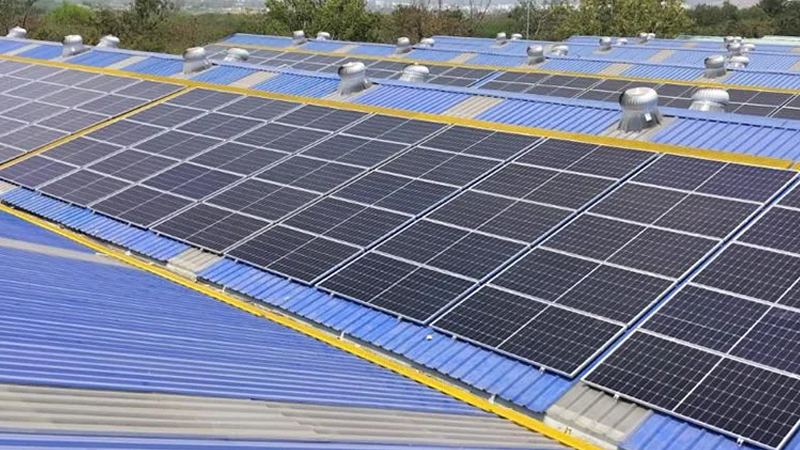
Captive Solar vs Group Captive explained with ROI, payback & cost comparison. Get FREE industrial solar feasibility study from ASPL.
If your factory electricity bill is ₹50 lakhs to ₹5 crores annually, you are likely exploring alternatives to reduce power cost.
Two popular options in India are:
Captive Solar
Group Captive Solar
But which one is better for your industry?
Choosing the wrong structure can:
Reduce ROI
Increase compliance complexity
Extend payback period
Affect long-term savings
Choosing the right structure can:
Reduce electricity cost by 20–50%
Improve industrial solar ROI
Stabilize long-term energy cost
Optimize open access benefits
Let’s clearly understand Captive Solar vs Group Captive for industrial consumers.
What Is Captive Solar?
Captive Solar means:
Your company installs a solar plant (usually rooftop or ground-mounted) and consumes the power directly.
Key Features:
✔ 100% ownership
✔ On-site generation (rooftop)
✔ Lower capital cost than open access
✔ No third-party dependency
✔ Faster payback (3–5 years typically)
Captive solar is common for:
MSME manufacturing units
Engineering factories
Textile mills
Warehouses
Automobile plants
It is ideal when rooftop space is available.
What Is Group Captive Solar?
Group Captive Solar is an open access model.
In this structure:
A solar power plant is developed (usually off-site)
Multiple industries invest equity (minimum 26%)
Each consumer must consume minimum 51% of allocated energy
Power is wheeled through grid via open access
Group captive is used when:
✔ Rooftop space is insufficient
✔ Very high power consumption
✔ Industries want lower per-unit solar tariff
Captive Solar vs Group Captive – Key Differences
| Factor | Captive Solar | Group Captive Solar |
|---|---|---|
| Location | On-site | Off-site |
| Ownership | 100% company-owned | Shared ownership |
| Capital Investment | Higher upfront (own plant) | Shared equity model |
| Open Access Charges | Not applicable (rooftop) | Applicable |
| Regulatory Complexity | Low | Higher |
| Ideal For | MSME & mid-size units | Large energy consumers |
Understanding this comparison is critical before investment.
Financial Comparison – Which Offers Better ROI?
Let’s take an example.
Factory consumption: 10 lakh units per year.
Captive Rooftop Solar:
Investment: Based on plant size
Savings: ₹7–9 per unit offset
Payback: 3–5 years
25-year savings: Significant
Group Captive Solar:
Lower per-unit tariff (often 20–40% below grid tariff)
Lower capital investment (shared equity)
Payback depends on shareholding structure
Includes open access charges
Group captive may offer lower per-unit energy cost — but involves regulatory complexity.
Captive rooftop offers simplicity and strong ROI.
Want to Know Which Model Fits Your Industry?
ASPL offers FREE Captive vs Group Captive Evaluation.
You receive:
✔ EB tariff analysis
✔ Load pattern evaluation
✔ Open access feasibility
✔ Solar plant capacity sizing
✔ Payback comparison
✔ 10-year savings projection
Share last 3 EB bills.
Receive structured financial comparison within 48 hours.
When Captive Solar Is Better
Captive solar is ideal if:
✔ You have sufficient rooftop space
✔ You want full ownership
✔ You prefer lower compliance complexity
✔ You want faster payback period
✔ You operate during daytime shifts
Industrial Rooftop Solar for Manufacturing Units is often the simplest and most stable model.
When Group Captive Is Better
Group captive is suitable if:
✔ Your power consumption is very high
✔ Rooftop space is insufficient
✔ You want lower per-unit tariff
✔ You are comfortable with open access compliance
Large engineering industries, automobile plants, and heavy machinery units may explore group captive.
Risks to Consider in Group Captive Model
Before choosing group captive:
Open access policy changes
Wheeling & banking charges
Cross-subsidy surcharge
Minimum consumption requirement
Equity compliance
Regulatory environment must be evaluated carefully.
Industrial Solar ROI – Captive vs Group Captive
Both models can deliver strong industrial solar ROI.
However:
Captive Rooftop:
✔ Faster payback
✔ Simpler management
✔ Direct energy offset
Group Captive:
✔ Lower per-unit energy rate
✔ Suitable for large consumers
✔ Requires compliance management
Decision must be based on financial modeling.
Demand Charges & Solar Structure
Captive rooftop solar reduces:
✔ Daytime grid dependency
✔ Maximum demand draw
✔ Demand charge exposure
Group captive reduces per-unit tariff but does not directly reduce on-site peak demand in same way as rooftop solar.
This is an important financial difference.
What Happens If You Delay Decision?
If tariff increases ₹1.5 over next 5 years:
For 10 lakh units/year:
Extra annual cost ≈ ₹15 lakhs
5-year impact ≈ ₹75 lakhs
That amount could fund a solar investment.
Delay increases opportunity cost.
Common Questions Industry Owners Ask
Is group captive risky?
It depends on regulatory stability and compliance structure.
Which model has shorter payback?
Captive rooftop typically offers 3–5 year payback.
Can MSMEs opt for group captive?
Possible, but compliance and minimum consumption rules must be evaluated.
Why Choose ASPL?
ASPL, the solar division of Anushri Systech Private Limited, provides:
✔ Detailed EB tariff analysis
✔ Captive vs group captive financial modeling
✔ Industrial solar feasibility study
✔ Payback period calculation
✔ Open access evaluation
✔ Industrial solar EPC services
We focus on measurable financial clarity before execution.
How to Decide the Right Solar Model
Step 1 – Share last 3 EB bills
Step 2 – Consumption & demand analysis
Step 3 – Rooftop capacity assessment
Step 4 – Captive vs group captive ROI comparison
Step 5 – Final recommendation
Clear. Transparent. Data-driven.
FREE Captive vs Group Captive Consultation
If you are planning industrial solar:
Get your FREE comparison report from ASPL.
Includes:
✔ Model comparison
✔ ROI calculation
✔ 10-year savings forecast
✔ Risk evaluation
Make your decision based on numbers – not assumptions.
Final Thought
Captive Solar vs Group Captive is not about trends.
It is about:
ROI
Payback period
Tariff structure
Regulatory clarity
Long-term cost stability
For many industries, captive rooftop solar offers simplicity and faster recovery.
For very large consumers, group captive may provide tariff advantage.
The right choice depends on your consumption pattern and financial goals.
📞 Contact ASPL today and find out which solar model is best for your industry.
Turn your electricity expense into long-term savings.