
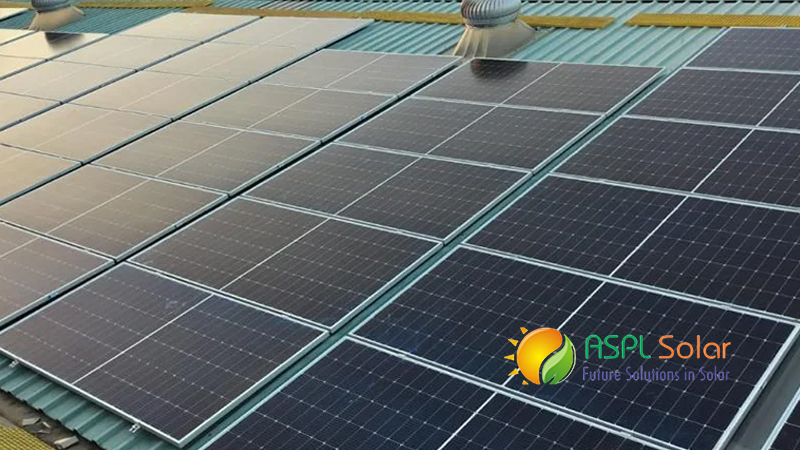
Solar power for commercial buildings in Tamil Nadu has evolved from a cost-saving option into a core infrastructure investment for factories, offices, warehouses, hospitals, educational institutions, and large commercial campuses. With rising electricity tariffs, grid constraints, and sustainability mandates, commercial solar adoption is now a strategic decision rather than a short-term experiment.
At ASPL, we design and implement high-performance commercial solar power systems that combine engineering reliability, regulatory compliance, digital monitoring, and long-term financial value—without using or depending on third-party brand positioning.
Why Commercial Solar Is Growing Rapidly in Tamil Nadu
Tamil Nadu offers one of the most favorable environments in India for commercial solar power due to:
High annual solar irradiance across most districts
Strong industrial and commercial electricity demand
Daytime-heavy load profiles in factories and offices
Grid parity already achieved for commercial tariffs
Growing focus on energy security and ESG compliance
For most commercial buildings, solar power directly offsets high-cost daytime grid electricity, making it financially compelling from day one.
Key Benefits of Solar Power for Commercial Buildings
1. Major Reduction in Electricity Costs
Commercial rooftop and captive solar systems typically reduce grid power consumption by 30% to 70%, depending on roof area, sanctioned load, and operating hours. Over the system lifetime, this results in predictable and significantly lower energy costs.
2. Strong ROI and Long-Term Payback
Commercial solar systems are designed for a 25+ year operating life. Most projects in Tamil Nadu achieve payback within 3.5 to 5 years, followed by decades of low-cost power generation.
3. Energy Security and Operational Stability
Solar reduces dependency on grid supply, minimizes exposure to tariff escalation, and improves resilience against voltage fluctuations and power shortages—critical for production-driven facilities.
4. Sustainability, ESG & Corporate Responsibility
By adopting solar power, commercial buildings reduce carbon emissions, improve sustainability metrics, and align with corporate ESG goals, green building standards, and stakeholder expectations.
Types of Solar Power Solutions for Commercial Buildings
Rooftop Solar Systems
Ideal for factories, warehouses, offices, hospitals, malls, and educational institutions. Rooftop solar utilizes unused roof space without requiring additional land and integrates seamlessly with existing electrical infrastructure.
Ground-Mounted Solar for Large Campuses
Suitable for industrial estates, institutions, and commercial campuses with available land. Ground-mounted systems allow higher capacities, easier maintenance access, and future scalability.
Captive and Group Captive Solar
For high-energy consumers, captive and group-captive solar structures enable long-term energy cost optimization, open access power usage, and better control over electricity procurement.
How to Size Solar Power for a Commercial Building
Correct system sizing is critical for performance and ROI. At ASPL, sizing is based on:
Actual electricity consumption data
Daytime vs nighttime load profile
Roof orientation, shadow analysis, and structural capacity
Sanctioned load and transformer capacity
Future load expansion plans
A well-sized commercial solar plant maximizes self-consumption, minimizes export losses, and ensures regulatory compliance.
Cost of Solar Power for Commercial Buildings in Tamil Nadu
Rather than focusing on headline prices, commercial solar costs depend on several factors:
System capacity and design complexity
Type of mounting structure
Electrical and protection requirements
Monitoring, automation, and communication features
Compliance and approval scope
Commercial buildings can choose between capital investment (CAPEX) or third-party solar models, depending on financial strategy and risk appetite.
Solar Net Metering & Approvals in Tamil Nadu
Commercial solar installations require coordination with local utilities and authorities. Typical processes involve:
Technical feasibility and system design approval
Electrical safety and protection verification
Grid synchronization and testing
Energy accounting and metering integration
ASPL manages the complete approval lifecycle to ensure smooth commissioning and long-term compliance.
Technology Used in Modern Commercial Solar Systems
ASPL deploys industrial-grade, future-ready technologies, including:
High-efficiency photovoltaic modules
Advanced inverter architectures
SCADA-enabled real-time monitoring
Secure communication protocols and encrypted data access
Grid-compliant protection and control systems
Systems are engineered to perform reliably under Tamil Nadu’s heat, humidity, dust, and coastal conditions.
Maintenance, Monitoring & Performance Assurance
Commercial solar systems are designed for reliability but require structured oversight. Key aspects include:
Preventive maintenance and health checks
Performance monitoring and anomaly detection
Remote diagnostics and alerting
Long-term performance tracking and reporting
Proactive maintenance ensures stable generation, predictable savings, and extended asset life.
Solar Power, Grid Outages & Business Continuity
Standard grid-connected solar systems automatically shut down during grid outages to ensure safety. However, commercial buildings can integrate hybrid or backup configurations to support critical loads during power failures, depending on operational requirements.
Lifecycle & Long-Term Value of Commercial Solar
A commercial solar plant is a long-term asset. Over its lifecycle:
Modules deliver consistent output with gradual performance degradation
Power electronics may require mid-life upgrades
Systems can be expanded, upgraded, or repowered as energy needs grow
Solar power supports long-term competitiveness and operational resilience.
Solar + LED Lighting Integration for Commercial Buildings
Many commercial facilities further optimize energy usage by integrating solar-powered LED lighting, including:
Outdoor and campus lighting
Parking areas and pathways
Industrial yards and security zones
High-efficiency LED systems combined with solar generation reduce consumption, maintenance, and operational costs.
Industries That Benefit Most from Commercial Solar
Solar power is particularly effective for:
Manufacturing and industrial units
Textile and garment factories
IT parks and office complexes
Hospitals and educational institutions
Warehouses, logistics hubs, and cold storage
Each system is engineered based on actual operating conditions, not generic assumptions.
Environmental Impact of Commercial Solar Power
A commercial solar installation significantly reduces carbon emissions over its lifetime, helping organizations meet sustainability targets while contributing to cleaner air and reduced dependence on fossil fuels.
Why Choose ASPL for Commercial Solar in Tamil Nadu
ASPL focuses on engineering-driven, compliance-ready, and performance-oriented solar solutions. Our approach includes:
Detailed site assessment and feasibility analysis
Robust system engineering and quality execution
End-to-end project management
Long-term monitoring, service, and support
We build solar systems as infrastructure assets, not just installations.
Solar Power as a Strategic Asset for Commercial Buildings
For commercial buildings in Tamil Nadu, solar power is no longer optional. It is a strategic investment that delivers predictable energy costs, operational stability, sustainability compliance, and long-term financial returns.
Businesses that adopt solar today position themselves for a more resilient, efficient, and future-ready tomorrow.
Rooftop Structural Readiness for Commercial Solar
Before installing solar power on a commercial building, rooftop structural readiness is a critical factor. Most delays and long-term performance issues arise not from solar equipment, but from inadequate roof assessment.
For commercial buildings in Tamil Nadu, rooftops typically fall into two categories:
RCC (concrete) roofs used in offices, hospitals, malls, and institutions
Metal or sheet roofs common in factories, warehouses, and industrial sheds
A proper assessment includes:
Roof age and remaining service life
Load-bearing capacity for solar modules and mounting structures
Waterproofing condition and drainage layout
Wind load resistance based on local climatic conditions
ASPL evaluates roof suitability and mounting strategy to ensure the solar system operates safely without compromising the building structure or warranty.
Fire Safety, Risk Management & Insurance Considerations
Fire safety is a legitimate concern for commercial solar installations, especially in factories and high-occupancy buildings. Modern solar systems are designed with multiple layers of electrical and physical protection to minimize risk.
Key safety considerations include:
Segregated DC cable routing and proper insulation
Use of certified protection devices and isolators
Adequate spacing for heat dissipation and maintenance access
Compliance with electrical safety and fire norms
From an insurance perspective, professionally designed and installed commercial solar systems are generally accepted by insurers when safety standards are followed. Proper documentation, system design, and maintenance records help ensure smooth insurance coverage without operational risk.
Impact of Solar Power on Electrical Systems & Equipment
A common question from industrial and commercial users is whether solar power affects sensitive machinery or electrical equipment. When designed correctly, solar systems integrate seamlessly with existing electrical infrastructure.
Key points addressed during system design include:
Power quality and voltage stability
Harmonic control and grid synchronization
Compatibility with motors, drives, HVAC systems, and automation equipment
Protection against back-feed and electrical faults
ASPL ensures that commercial solar systems enhance energy efficiency without disrupting production processes or equipment performance.
Digital Monitoring, Reporting & Performance Visibility
Modern commercial solar plants are data-driven assets. Continuous monitoring ensures transparency, accountability, and predictable performance over the system’s life.
A typical commercial solar monitoring setup provides:
Real-time power generation data
Historical performance analysis
Fault alerts and performance deviation tracking
Monthly and annual energy reports
These insights support energy audits, sustainability reporting, internal reviews, and long-term performance optimization. Digital visibility turns solar power into a managed business asset rather than a passive installation.
Future Expansion & Scalability of Commercial Solar Systems
Commercial buildings evolve, and energy demand often grows over time. A well-designed solar power system should allow for future expansion without major rework.
Scalability considerations include:
Provision for additional rooftop or ground-mounted capacity
Electrical infrastructure sized for future loads
Compatibility with emerging technologies such as energy storage or EV charging
Flexibility to adapt to regulatory or operational changes
ASPL designs solar systems with future readiness in mind, allowing businesses to scale their renewable energy footprint as operations expand.
Commercial Solar Project Timeline: What to Expect
Understanding the project timeline helps businesses plan with confidence. While timelines vary by project size and approval process, a commercial solar installation typically follows these stages:
Site survey and feasibility assessment
System design and engineering
Regulatory approvals and documentation
Procurement and installation
Testing, commissioning, and grid integration
During installation, business operations are generally unaffected, as work is planned to minimize disruption. Clear coordination ensures smooth execution from start to finish.
End-of-Life, Repowering & Sustainability Responsibility
Commercial solar systems are long-term assets with an operational life of 25 years or more. Over time, businesses have multiple options:
Continue operating the system with reduced but stable output
Upgrade or repower with newer, higher-efficiency modules
Decommission responsibly with material recovery and recycling
Planning for end-of-life management aligns with sustainability goals and ensures responsible asset lifecycle management. Solar power supports not just energy savings, but long-term environmental stewardship.
Ready to Explore Solar Power for Your Commercial Building?
ASPL can help you evaluate feasibility, design the right system, manage approvals, and deliver a high-performance solar solution tailored to your business needs.