
In today’s industrial and digital infrastructure, power requirements rarely remain fixed. Data centers expand, factories add automation, hospitals upgrade systems, and infrastructure projects scale in phases. In such environments, a Modular UPS system from 10kW to 100kW offers a future-ready approach to power protection—combining scalability, redundancy, and high availability without unnecessary upfront investment.
At VIVATEK, modular UPS systems are engineered for B2B and mission-critical applications, where uptime, operational continuity, and lifecycle efficiency are essential. This blog is written for data center operators, factory owners, EPC contractors, consultants, and procurement teams evaluating modular UPS solutions for long-term use.
What Is a Modular UPS System (10kW–100kW)?
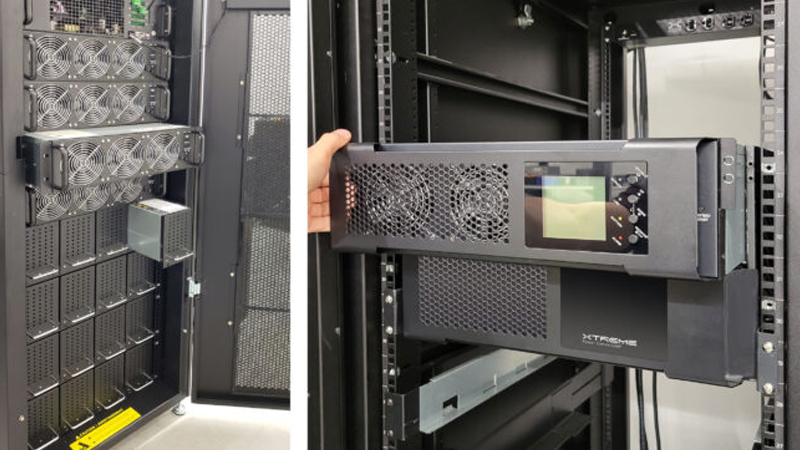
A modular UPS system is a scalable power backup architecture built using hot-swappable power modules, typically in blocks such as 10kW. These modules are installed within a common UPS cabinet that supports capacity expansion and redundancy.
Unlike traditional fixed-capacity UPS systems, a modular UPS allows:
Incremental capacity growth
Built-in redundancy (N+1 / N+X)
Faster service with minimal downtime
Improved efficiency across varying load levels
A 10kW–100kW modular UPS system is especially suitable for environments where load growth is planned or unpredictable.
Why Modular UPS Systems Are Preferred in Modern Facilities
Traditional UPS systems require forecasting future load and investing upfront. In contrast, modular UPS systems align investment with actual demand.
Key benefits include:
Scalability: Add capacity as the load grows
High availability: Redundancy protects against module failure
Reduced downtime: Hot-swappable modules enable live maintenance
Optimized efficiency: Systems operate closer to optimal load
Lower lifecycle cost: Pay for capacity only when required
For organizations planning expansion, modular UPS systems support both current operations and future growth.
Typical Applications of Modular UPS (10kW–100kW)
Modular UPS systems are widely used in:
Data Centers & IT Infrastructure
Servers, networking equipment, cloud and edge computingIndustrial Automation & Manufacturing
Control rooms, PLC systems, SCADA infrastructureHospitals & Healthcare Facilities
Diagnostic equipment, IT systems, critical care supportCommercial & Institutional Buildings
Command centers, campuses, research facilitiesInfrastructure & Utility Projects
Monitoring systems, telecom facilities, control centers
These applications benefit from high uptime, flexibility, and serviceability.
VIVATEK’s Engineering Approach to Modular UPS Systems
At VIVATEK, modular UPS systems are developed with a B2B-first engineering philosophy, focusing on long-term reliability rather than short-term specifications.
Core design principles include:
Standardized, hot-swappable power modules
Intelligent load sharing between modules
High efficiency across partial and full loads
Scalable cabinets supporting 10kW to 100kW
Service-friendly design to minimize MTTR
Each system is configured after understanding actual load profiles, redundancy needs, site constraints, and future expansion plans.
Redundancy & High Availability (N+1 / N+X)
Redundancy is a core advantage of modular UPS systems.
N+1 redundancy allows one module to fail without affecting the load
N+X redundancy provides higher availability for critical environments
Fault isolation prevents single-point failures
Maintenance and module replacement can be done without shutdown
This makes modular UPS systems ideal for high-availability and zero-downtime environments.
Energy Efficiency & Operational Advantages
Modular UPS systems adapt to actual load demand, improving efficiency compared to oversized fixed systems.
Operational benefits include:
Reduced energy losses at partial loads
Lower operating and cooling costs
Improved thermal performance
Better utilization of installed capacity
For organizations focused on efficiency and sustainability, modular UPS systems deliver measurable long-term value.
Installation, Commissioning & Maintenance Benefits
Compared to conventional UPS systems, modular UPS solutions offer:
Faster installation and commissioning
Simplified maintenance procedures
Reduced downtime during service
Easier future upgrades
These advantages are especially valuable in live facilities where downtime impacts operations.
Compliance & Industrial Standards Consideration
Modular UPS systems are typically evaluated against relevant electrical safety, power quality, and performance standards. During project planning, factors such as redundancy design, protection mechanisms, and operational safety are reviewed to align with industrial audits, EPC documentation, and internal approval processes.
This supports reliable operation and long-term compliance across critical facilities.
How Buyers Choose the Right Modular UPS Capacity
When evaluating a modular UPS system in the 10kW–100kW range, buyers typically assess:
Current connected load (kW / kVA)
Expected load growth over time
Required redundancy level
Space and layout constraints
Maintenance and service strategy
A structured evaluation ensures the UPS system balances availability, scalability, and cost efficiency.
Designed for B2B & Project-Based Procurement
Modular UPS systems are well suited for:
Data center and IT infrastructure projects
Industrial automation and control systems
EPC-led installations
Institutional and infrastructure deployments
Their flexibility and serviceability make them ideal for long-term operational planning.
📞 Start with a Technical Discussion
If you are evaluating a Modular UPS system from 10kW to 100kW for a data center, factory, hospital, or infrastructure project, the most effective first step is a technical discussion.
VIVATEK works with organizations to:
Assess current and future load requirements
Define redundancy and scalability needs
Recommend the right modular configuration
Support long-term reliability and service planning
You can engage at any stage of your project. The focus is technical clarity before commercial decisions.
FAQ
Q1. What is the main advantage of a modular UPS over a traditional UPS?
Modular UPS systems provide scalability, redundancy, and easier maintenance, making them ideal for growing and mission-critical facilities.
Q2. Can capacity be expanded without shutting down the system?
Yes. Modular UPS systems support hot-swappable power modules, allowing expansion without downtime when properly designed.
Q3. Are modular UPS systems suitable for industrial environments?
Yes. Modular UPS systems are widely used in industrial control rooms, automation systems, and infrastructure projects.
Q4. Is a modular UPS cost-effective in the long run?
While initial investment varies, modular UPS systems often reduce long-term costs through better efficiency, scalability, and reduced downtime.
Final Perspective
A Modular UPS system (10kW–100kW) is not just a power backup solution—it is a scalable power architecture designed for growth, resilience, and operational continuity. For organizations planning expansion, redundancy, and high availability, modular UPS systems offer unmatched flexibility and lifecycle value.
Planning a Modular UPS Project?
Share your load range, redundancy requirement, and application.
Our team can help you evaluate the right 10kW–100kW modular UPS configuration.