
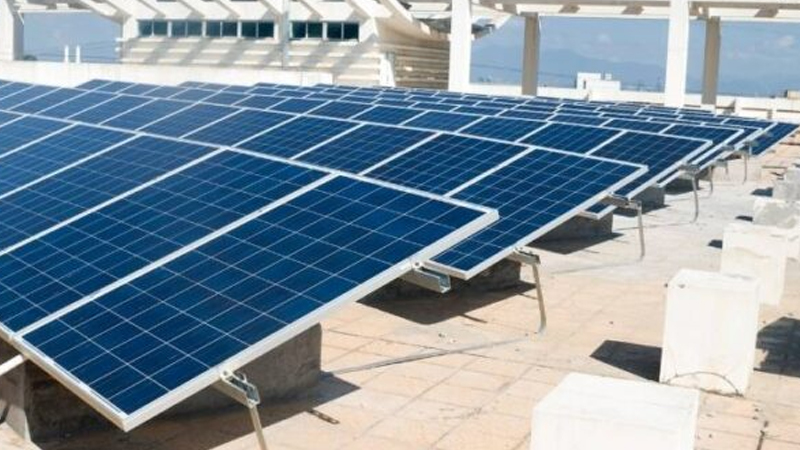
5 Mistakes Industries Make Before Installing Solar. Avoid ROI loss & long payback. Get FREE solar feasibility study from ASPL today.
Installing industrial solar is not just a technical decision.
It is a financial decision.
Every year, many manufacturing units install Rooftop Solar for Manufacturing Units or evaluate Open Access Solar in Tamil Nadu – but make mistakes that increase project risk, extend the Solar Payback Period for Industries, and reduce Industrial Solar ROI Tamil Nadu.
If your factory has a high EB bill and you are planning solar, avoid these 5 costly mistakes.
Mistake 1: Not Doing Proper EB Bill Analysis
Most factories directly ask:
What is the Industrial Solar Plant Cost?
How many kW system do we need?
But they skip the most important step:
Detailed EB Bill Analysis.
Without proper EB analysis:
❌ Wrong system sizing
❌ Incorrect ROI calculation
❌ Ignoring demand charge reduction with solar
❌ Not evaluating Open Access Charges in Tamil Nadu
Every Industrial Solar Feasibility Study must begin with:
✔ 12-month EB bill analysis
✔ Load pattern study
✔ Tariff category verification
✔ Maximum demand evaluation
✔ Solar vs Grid Electricity Cost Comparison
Solar sizing without EB analysis is guesswork.
Mistake 2: Oversizing the Solar Plant for 100% Offset
Many industries believe:
“Let’s install enough solar to eliminate the EB bill.”
This is not always smart.
Why?
✔ Net Metering Policy in Tamil Nadu for Businesses may limit export
✔ Daytime load may not match generation
✔ Demand charges still apply
✔ Oversizing increases Solar Payback Period for Industries
Ideal solar capacity usually offsets 50–80% of daytime consumption.
Correct sizing improves Industrial Solar ROI Tamil Nadu.
Mistake 3: Ignoring Open Access Charges in Tamil Nadu
Large industries often consider:
✔ Group Captive Solar Tamil Nadu
✔ Open Access Solar in Tamil Nadu
But they calculate only solar tariff and ignore:
Wheeling charges
Transmission charges
Banking charges
Cross-subsidy surcharge
Ignoring Open Access Charges in Tamil Nadu distorts savings projections.
Proper financial modeling ensures accurate payback period.
Mistake 4: Choosing EPC Based Only on Lowest Cost
This is extremely common.
Industries compare:
“Who gives lowest per kW price?”
But Industrial Solar EPC Services Tamil Nadu should be evaluated on:
✔ Design quality
✔ Load analysis
✔ Compliance support
✔ Net metering documentation
✔ Open access structuring
✔ Long-term performance monitoring
Low price without proper design reduces solar investment return.
Solar is a 20–25 year asset.
Not a short-term purchase.
Mistake 5: Not Calculating Long-Term ROI Properly
Solar decisions should not be based only on installation cost.
Factories must evaluate:
✔ 10-year electricity savings projection
✔ Long-term electricity cost stability
✔ Demand charge reduction with solar
✔ Solar Maintenance Cost for Industrial Plants
✔ Tariff escalation protection
Industrial energy cost optimization requires long-term thinking.
Factories that analyze only upfront cost miss the bigger picture.
Rooftop Solar vs Open Access – Wrong Model Selection
Another major mistake is choosing wrong model.
Rooftop Solar for Manufacturing Units is ideal when:
✔ Rooftop space is available
✔ Consumption is moderate
✔ Daytime load is high
Open Access Solar in Tamil Nadu is ideal when:
✔ Consumption is high (>10 lakh units/year)
✔ Multi-location factories
✔ Rooftop area is insufficient
Wrong model → lower Industrial Solar ROI Tamil Nadu.
Real Impact of These Mistakes
When mistakes happen:
Payback period increases from 3–4 years to 6+ years
ROI reduces
Regulatory complications arise
Savings potential drops
Avoiding these mistakes ensures strong Solar Payback Period for Industries.
What Smart Industries Do Instead
Before installing solar, smart factories:
✔ Conduct detailed EB Bill Analysis
✔ Evaluate Rooftop + Open Access options
✔ Calculate Industrial Solar ROI Tamil Nadu properly
✔ Include Open Access Charges in Tamil Nadu in modeling
✔ Review Solar Maintenance Cost for Industrial Plants
✔ Plan for long-term electricity cost stability
Solar is financial engineering — not just installation.
Why Choose ASPL?
ASPL, the solar division of Anushri Systech Private Limited, provides:
✔ Detailed Industrial Solar Feasibility Study
✔ Rooftop Solar system sizing
✔ Open Access Solar in Tamil Nadu modeling
✔ Group Captive Solar Tamil Nadu structuring
✔ ROI & payback modeling
✔ Net Metering compliance support
✔ Long-term monitoring
We calculate first.
We install later.
FAQ
What are the biggest mistakes industries make before installing solar?
The biggest mistakes include skipping EB Bill Analysis, oversizing the system, ignoring Open Access Charges in Tamil Nadu, choosing EPC only by price, and not calculating long-term ROI.
Does oversizing increase Solar Payback Period for Industries?
Yes. Oversizing reduces system utilization and increases payback period.
Should factories evaluate Open Access Solar before rooftop solar?
High-consumption factories should evaluate Open Access Solar in Tamil Nadu and Group Captive Solar Tamil Nadu along with rooftop options.
How can industries improve Industrial Solar ROI Tamil Nadu?
By conducting proper Industrial Solar Feasibility Study, calculating demand charge reduction with solar, and modeling 10-year electricity savings projection.
Is solar maintenance expensive for industries?
Solar Maintenance Cost for Industrial Plants is relatively low compared to long-term savings and ROI benefits.
FREE Solar Risk & ROI Assessment
Before installing solar, get a FREE risk and ROI assessment from ASPL.
Includes:
✔ EB bill review
✔ Correct solar capacity recommendation
✔ Solar Payback Period for Industries
✔ Industrial Solar ROI Tamil Nadu
✔ Open access feasibility
✔ 10-year electricity savings projection
📩 Share last 3 EB bills.
Receive structured financial report within 48 hours.
No obligation.
Only financial clarity.
Final Thought
5 Mistakes Industries Make Before Installing Solar are avoidable.
Solar can:
Reduce electricity cost
Improve profit margins
Protect against tariff hikes
Deliver long-term electricity cost stability
But only when structured correctly.
The real question is:
Are you installing solar emotionally
Or calculating it strategically?
Factories that plan properly gain competitive advantage